In academia, novelty decides publication; in business, customers who change behavior and pay decide survival. Francois Chaubard’s talk explains why founders must retire an old scorecard and learn to understand the world.
In academia, novelty decides publication; in business, customers who change behavior and pay decide survival. Francois Chaubard’s talk explains why founders must retire an old scorecard and learn to understand the world.
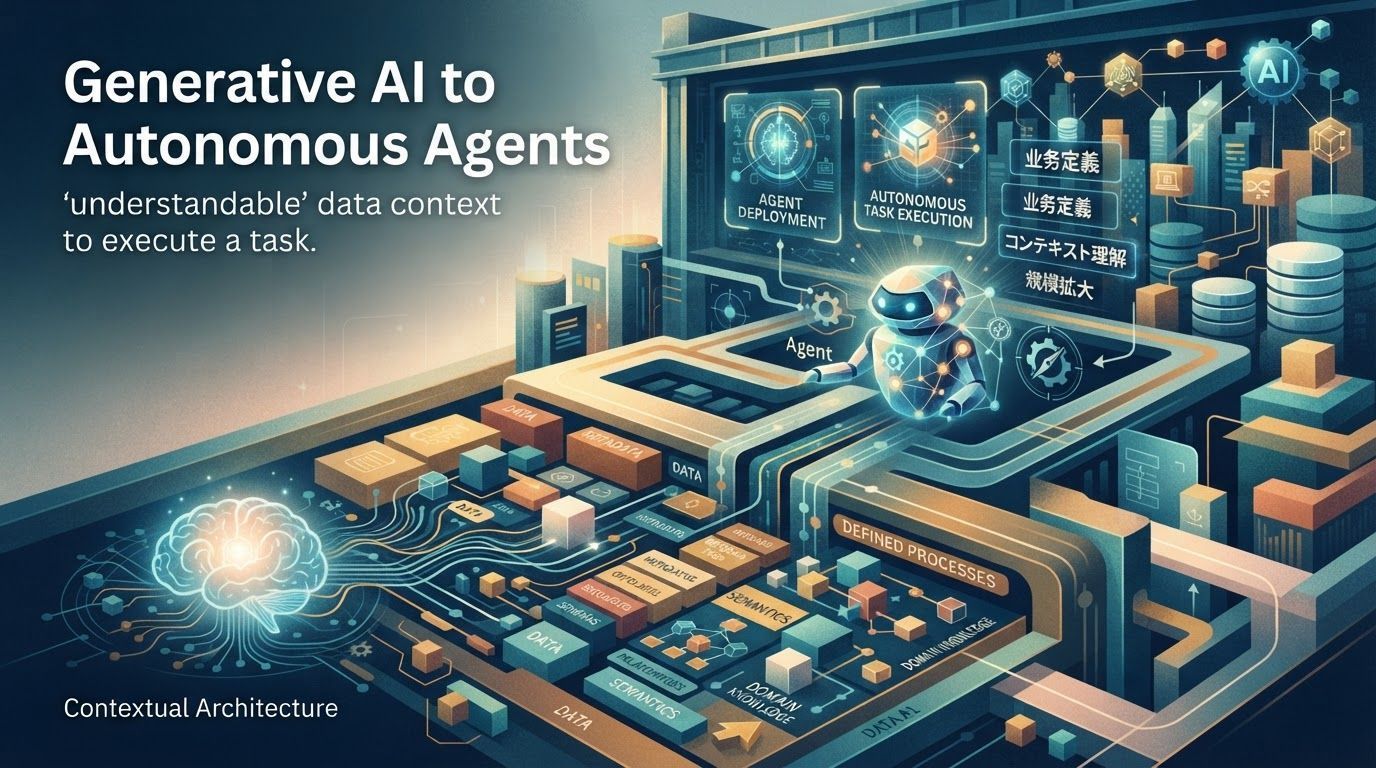
Generative AI is moving from answering questions in a chat box to pursuing goals as an autonomous agent. Drawing on a Google Cloud talk, this article explains why many hallucinations are really missing business definitions, why proofs of concept hit cost, latency, governance, and reproducibility walls at scale, and how a context architecture — data sources, metadata, a semantic layer, and calculation logic — addresses them. It also covers a five-category, 20-run comparison and demos in banking and marketing.
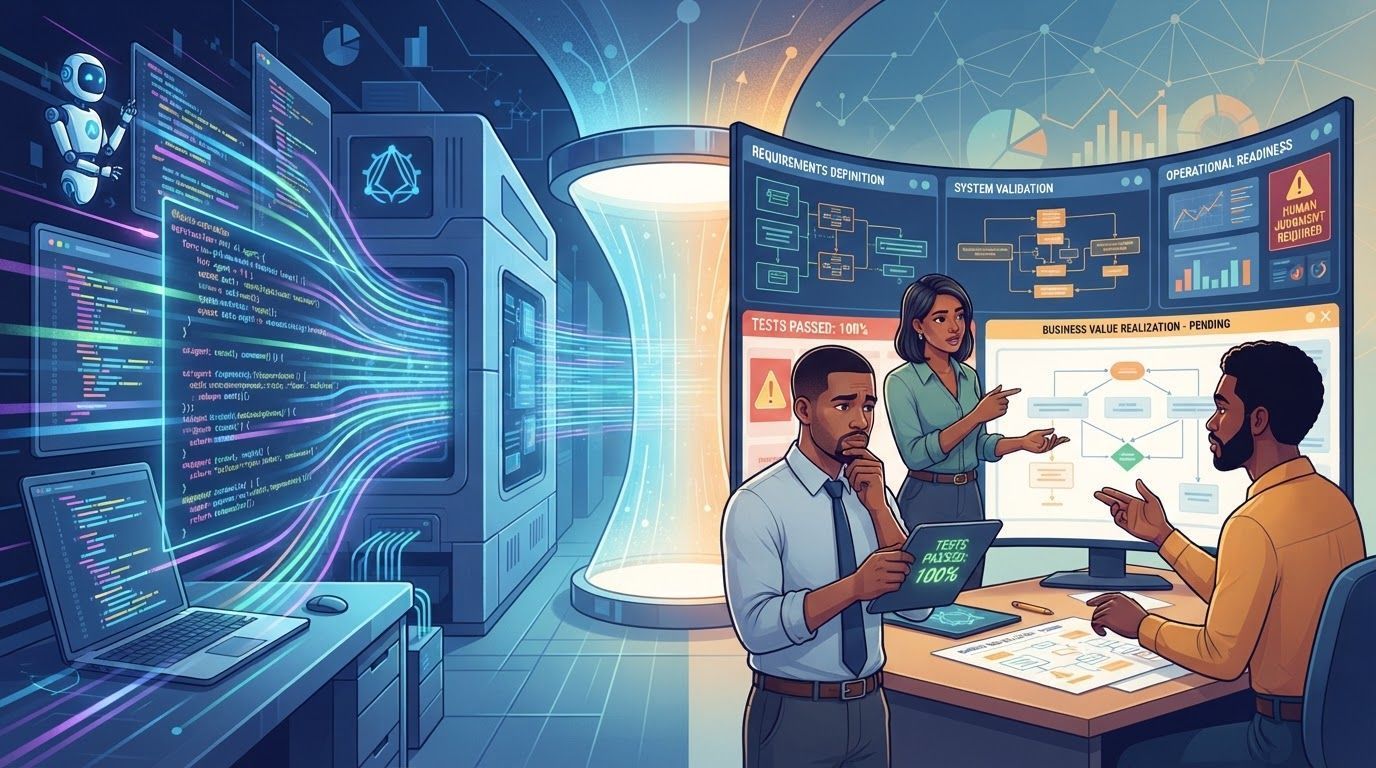
When AI makes coding faster, the bottleneck does not disappear; it moves to requirements, articulation of business knowledge, and verification. Passing tests do not prove product value, and the scarcest people are those who can connect customers, business, and engineering. Drawing on finance and telecom examples, the article examines where AI belongs, what must remain human, and how organizations should start.
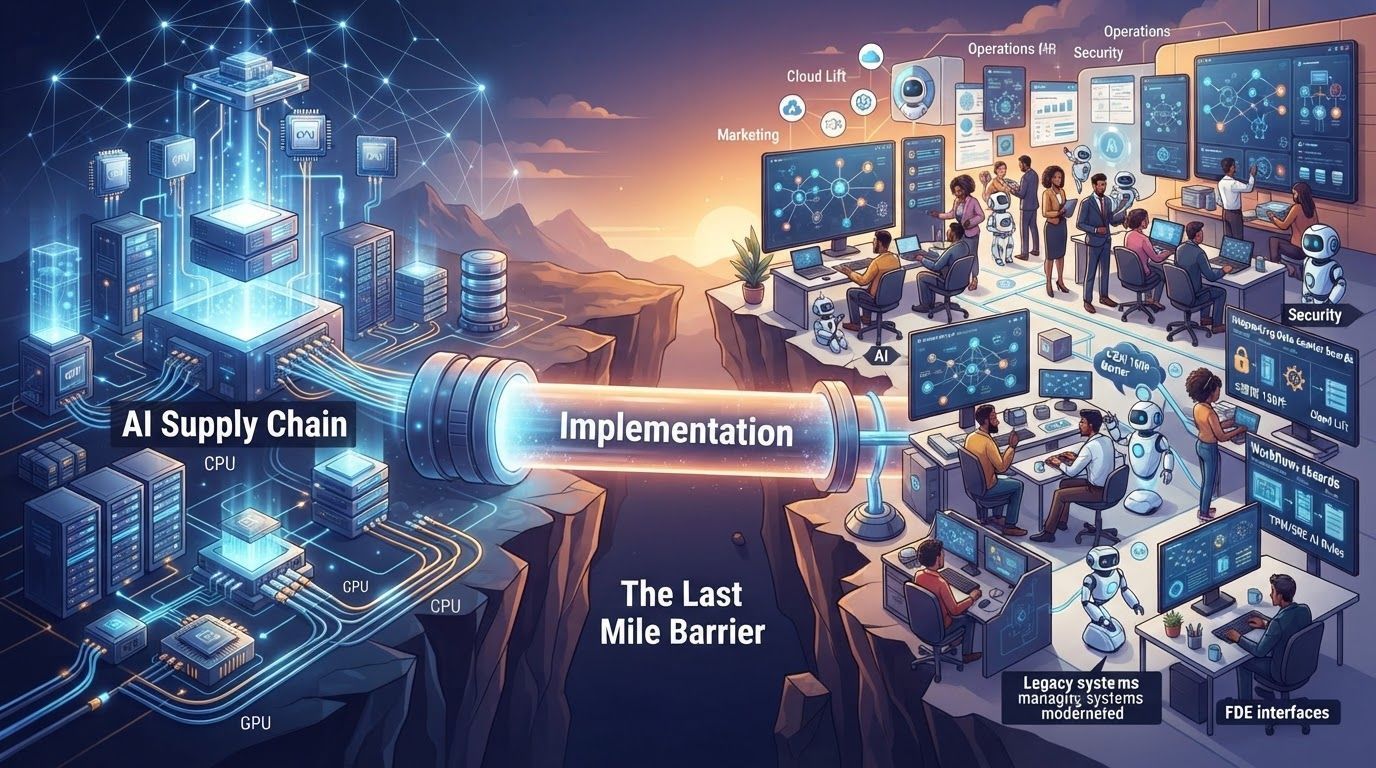
In enterprise AI, the bottleneck is not the model but implementation. A SoftBank speaker places implementation at the end of a chain running from semiconductors and data centers to power and storage, then describes agents across every department, a June security service, the five FDE levels and the system-design judgment that matters most, and why mainframes, COBOL, and missing specs make cloud lift a prerequisite. A six-week batch of 150 requests now takes one person five to eight hours.
Legacy modernization and legacy migration are often used interchangeably. Think of a two-story house: cutting a window into the ground-floor storeroom to run a shop means leaving the house intact and adding an API layer — that is Modernization. Moving to the CBD and redesigning for live-work is Migration; rebuilding the internals as well makes it Re-architect or even Replace. The two are not parallel options: moving is a subset of modernization. To decide, ask whether the load-bearing walls still hold, whether the constraint is the house or the land, and whether the old floor plan can be remodeled for the new business.
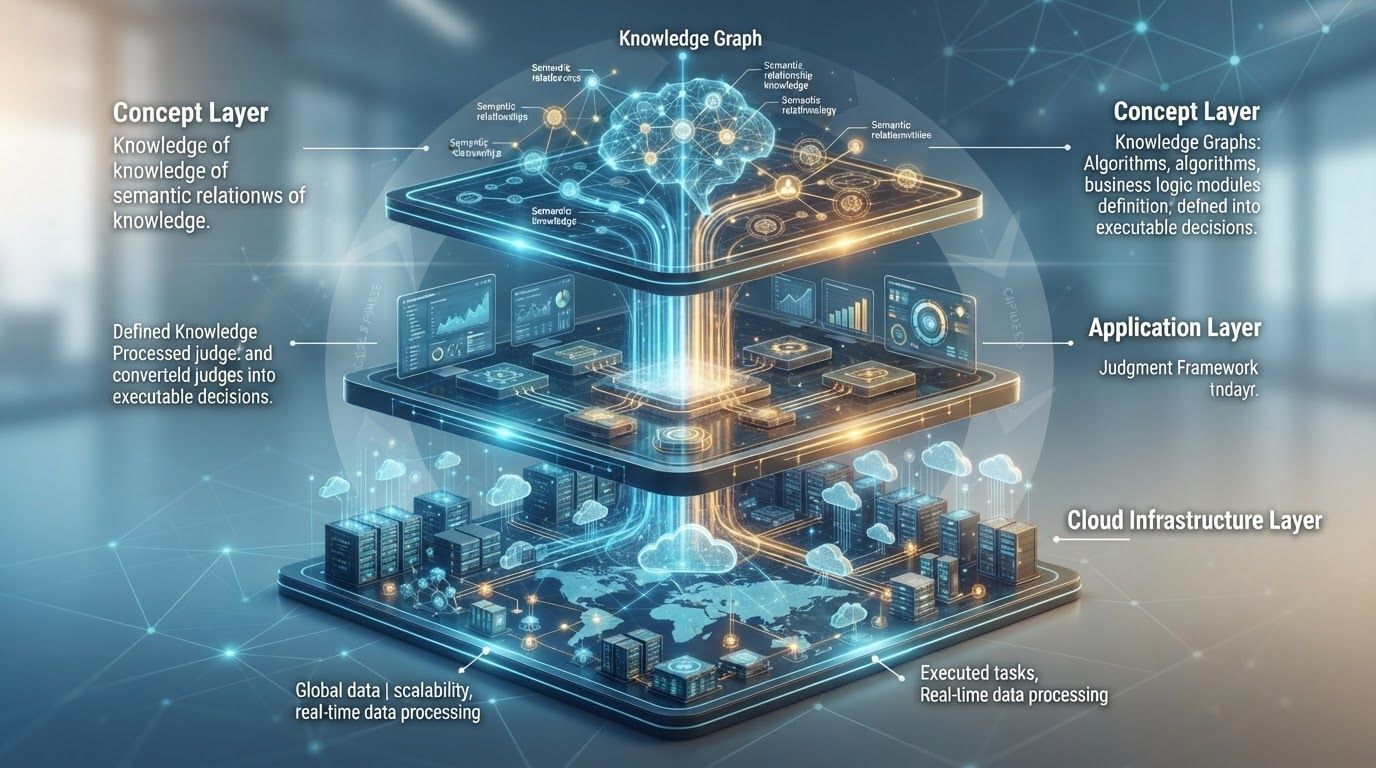
Most enterprise AI proposals stop at “you need a knowledge graph.” This article breaks the problem into three layers: the concept layer that defines what knowledge looks like, the application layer that extracts business logic and makes it judgeable, and the cloud infrastructure layer that lets judgment actually execute. It also covers a judgment framework built on five cycles and six capabilities, a modernization approach that wraps legacy systems in MCP-accessible services, and why intelligence without execution is worthless.
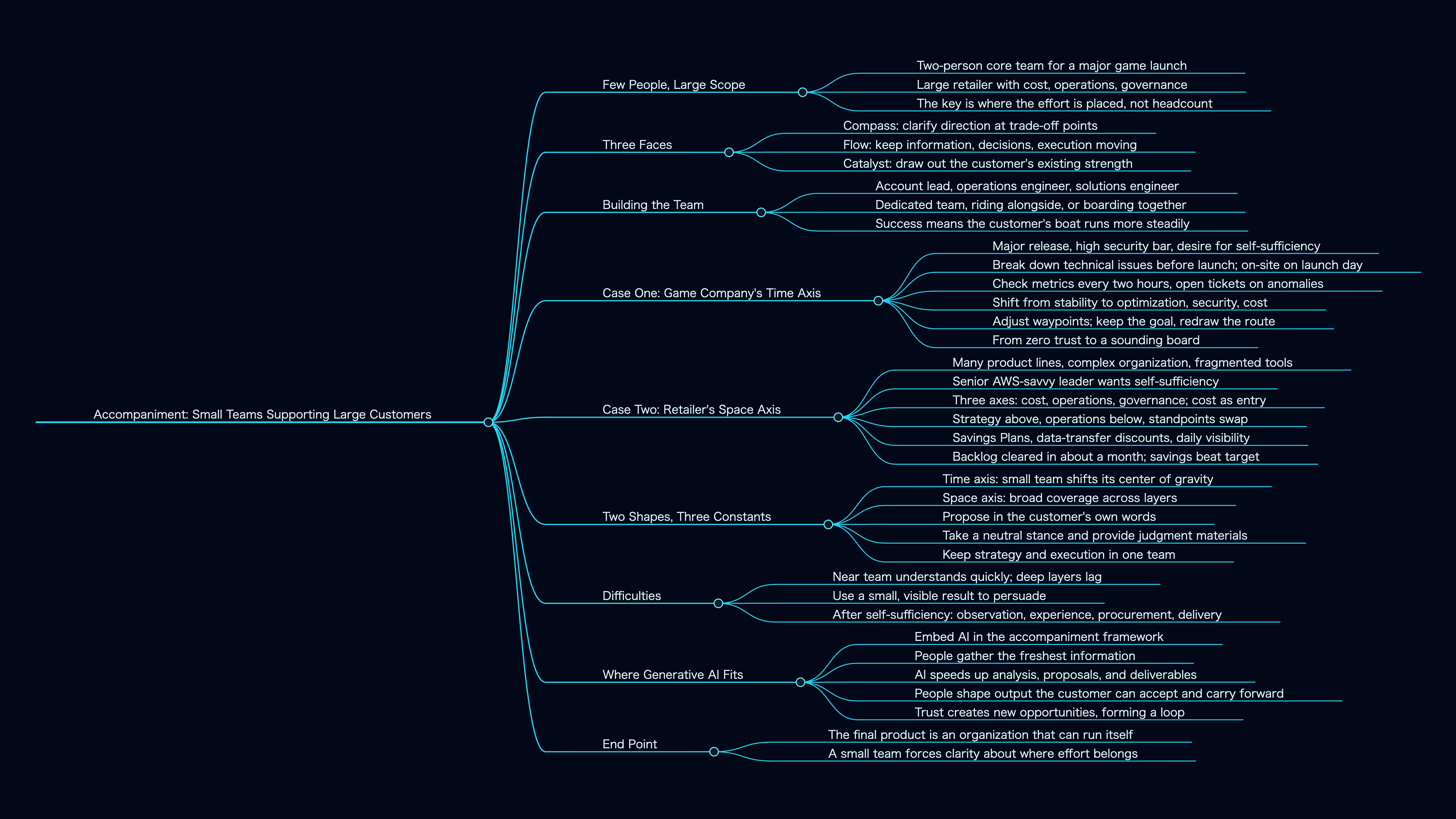
I attended a talk by an expert from Classmethod—who oversees Enterprise Service—on how small teams can support major enterprise clients. Drawing on two contrasting case studies—a gaming company and a large-scale retail enterprise—the speaker explained the concept of "co-piloting" (hands-on, long-term support) through three distinct roles: the compass, the process, and the catalyst. The presentation covered shifting a team’s focus across both temporal and spatial dimensions, and the importance of keeping strategy and execution within the same team. The discussion concluded by exploring the ongoing value of a support team even after a client achieves self-sufficiency, as well as the integration of generative AI into this co-piloting framework.
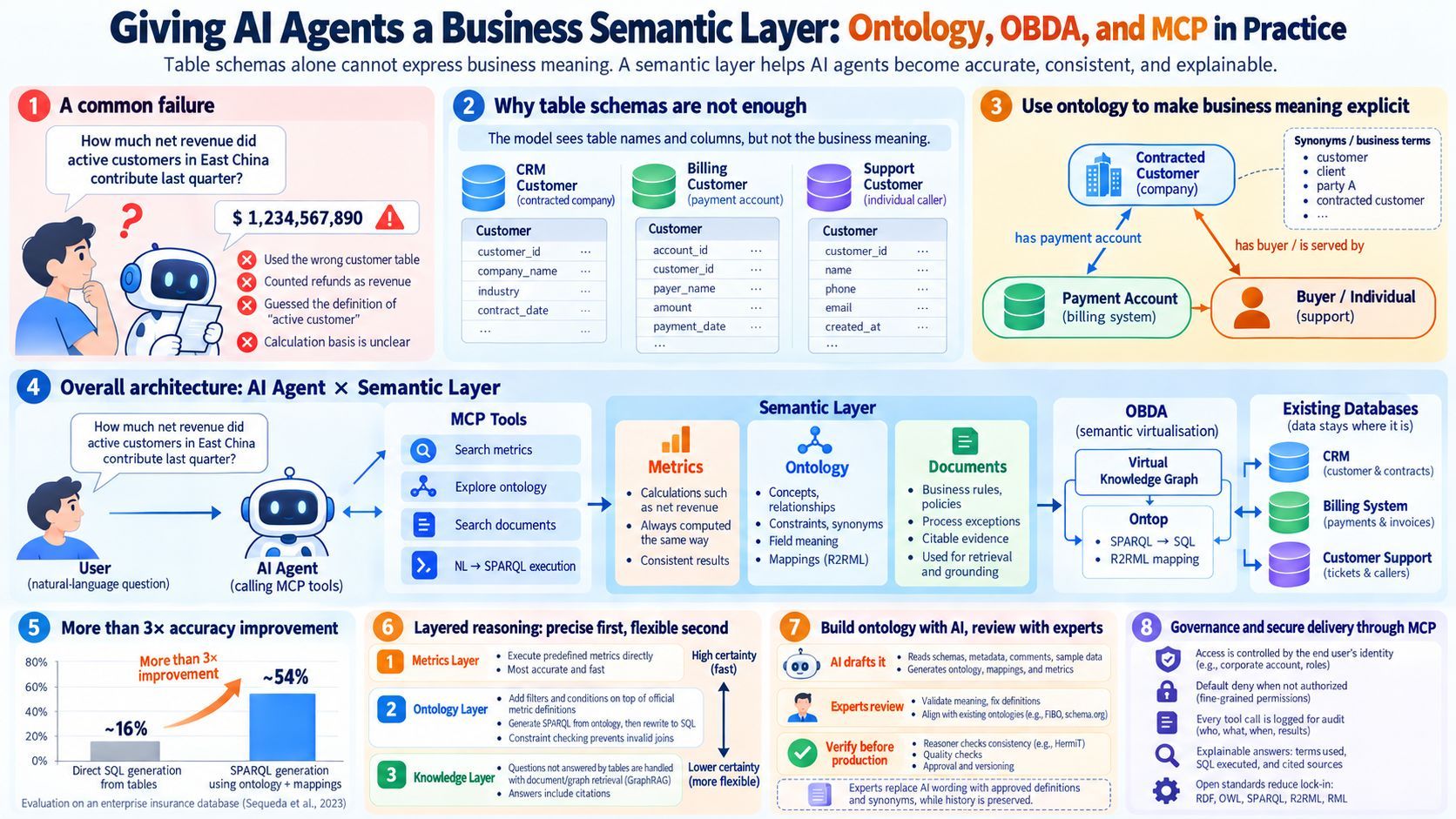
Putting a table schema in the prompt does not teach an AI agent what the business means, so it can still return a number that looks professional but is wrong. Drawing on an insurance-industry benchmark where GPT-4's execution accuracy rose from about 16% to about 54%, this article explains the semantic layer built from metrics, an ontology, and documents; how OBDA maps the ontology onto existing data; and how layered resolution balances determinism with flexibility. It also covers AI-drafted, expert-approved ontologies, MCP delivery, identity-aware governance, and five practical recommendations.
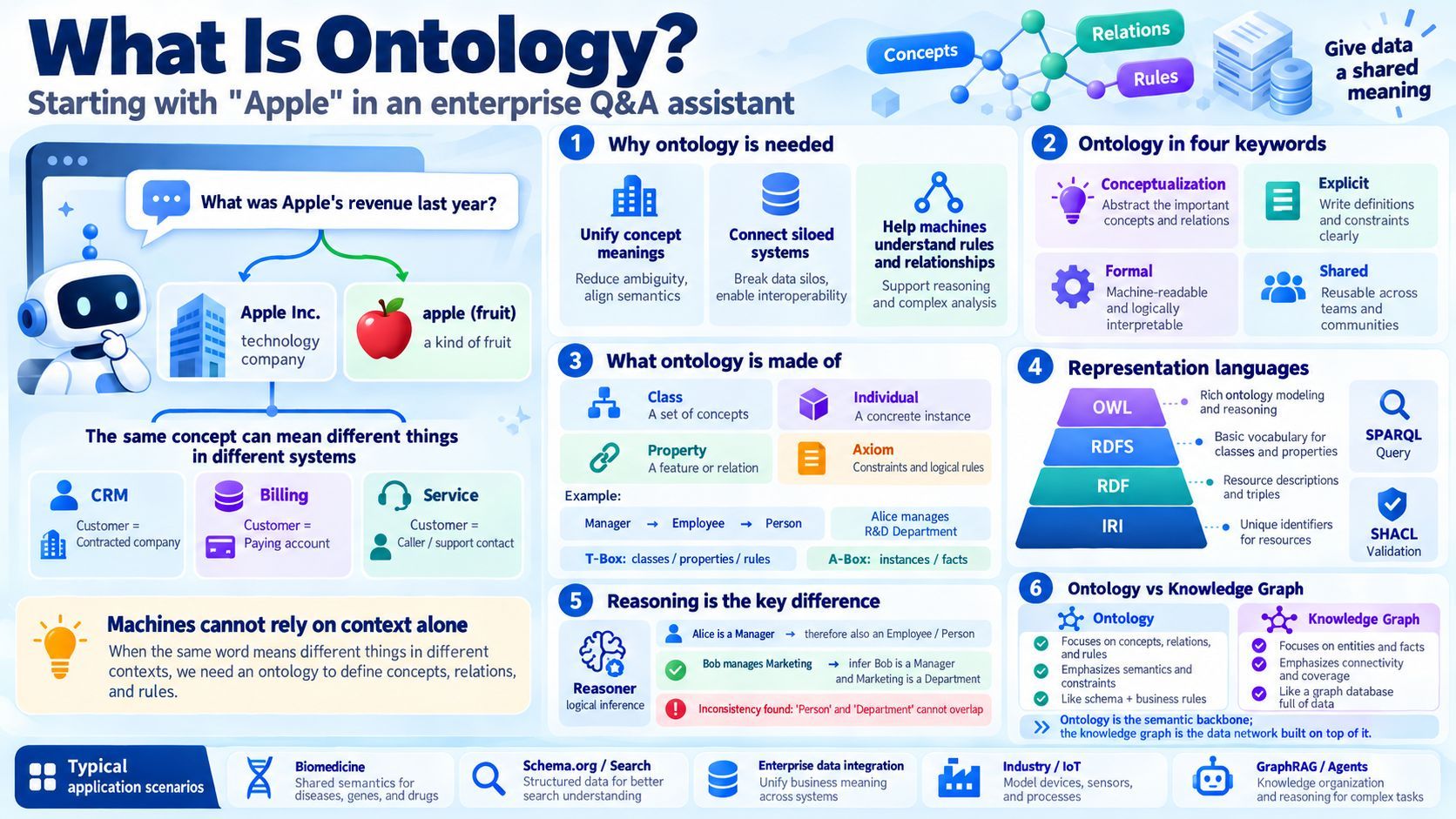
A machine cannot tell that "Apple" means a company rather than a fruit, or that three tables all named Customer mean different things, without an explicit semantic model: an ontology. This article traces the idea from philosophy to Gruber's and Studer's definitions, breaks down classes, individuals, properties, and axioms, and covers RDF, RDFS, OWL, and reasoners. It surveys real uses in biomedicine, Schema.org, enterprise data integration, industry and IoT, and the LLM era, then explains how ontology differs from a knowledge graph and how to start building one.
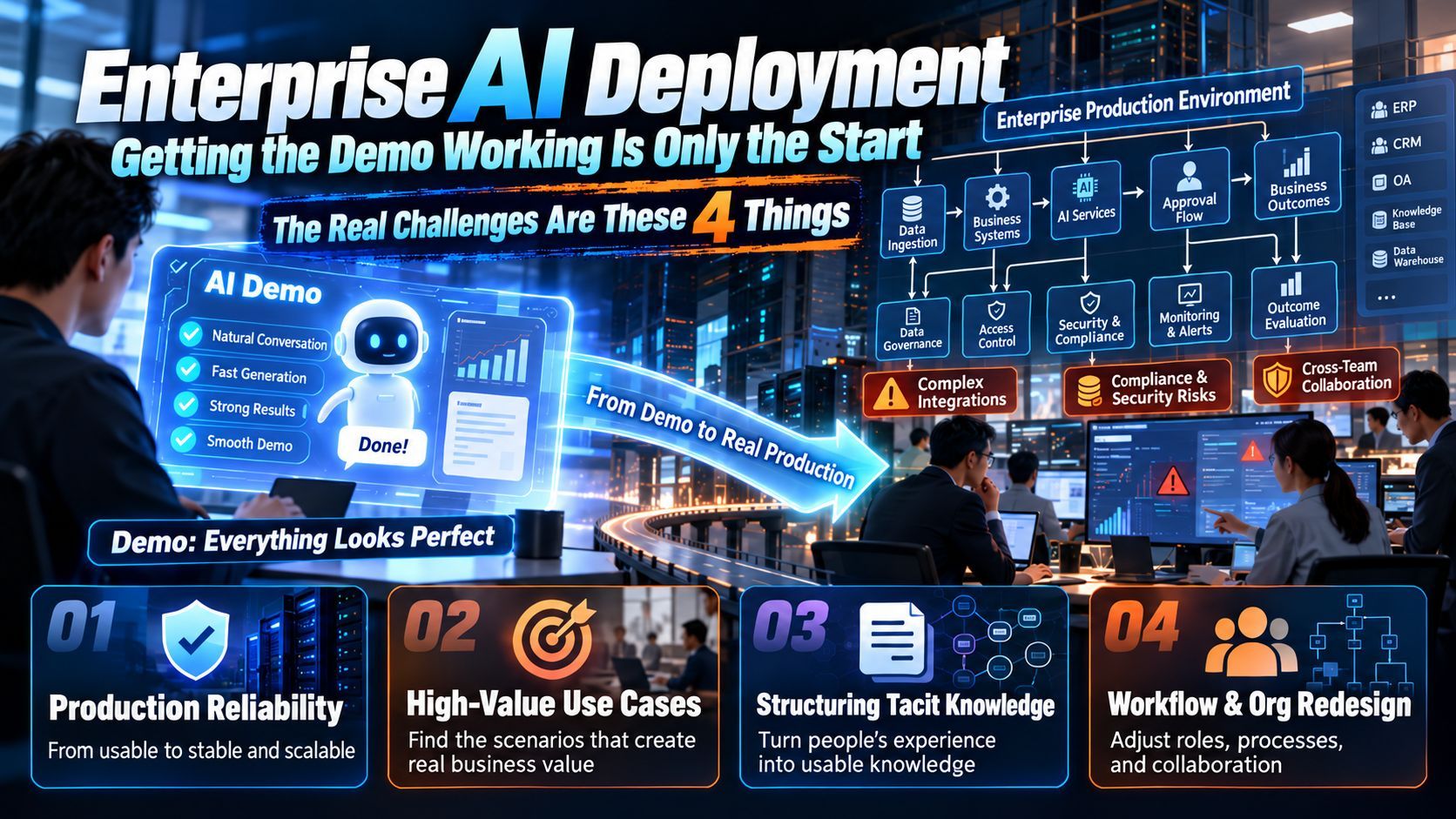
Using the Tencent Research Institute's FDE report as a lens, this article lays out four problems that recur in enterprise AI adoption: mistaking a working demo for a shippable product, building an AI application without choosing a high-value scenario, assuming AI can do what employees already do well, and confusing individual productivity with organizational productivity. Drawing on AI customer service and ERP examples, it explains the gap between demo and production and why tacit knowledge must be turned into usable context, then offers three fixes: don't measure the adoption cycle by demo speed, organize small teams where business and technology share accountability, and have senior leadership personally drive process, responsibility, and assessment changes.