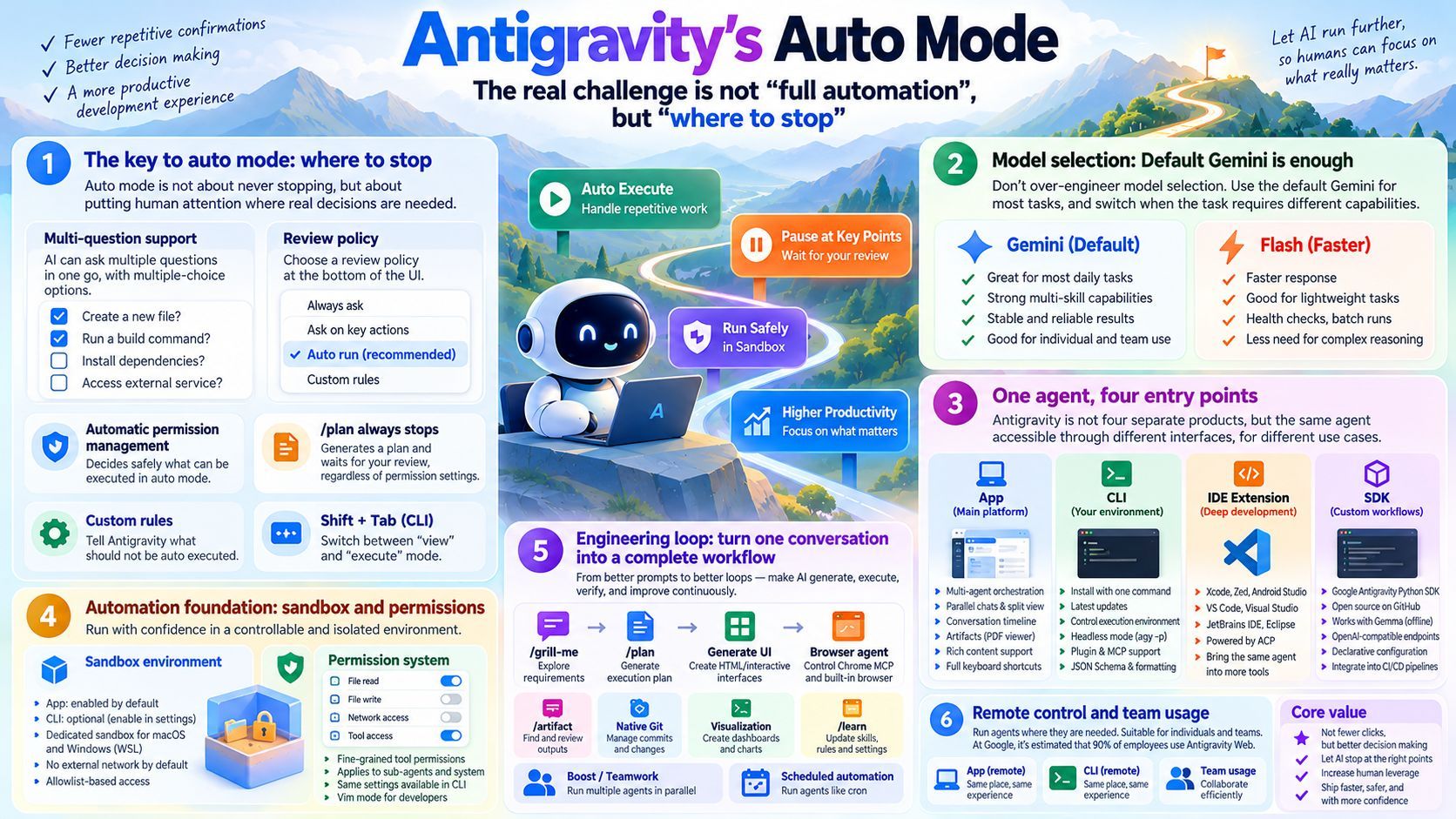
Google Antigravity isn't chasing a smarter 'full auto' switch. It's building layered control: multi-select questions, review policies, auto permissions, a hard stop in /plan, Shift-Tab and rules in the CLI. The article then maps the four entry points—App, CLI, IDE, and SDK—along with macOS and Windows sandboxes, permission rules, Git worktrees, /learn, and scheduling automation, using demos and audience Q&A to show how auto mode can move fast without giving up judgment.
Google Antigravity isn't chasing a smarter 'full auto' switch. It's building layered control: multi-select questions, review policies, auto permissions, a hard stop in /plan, Shift-Tab and rules in the CLI. The article then maps the four entry points—App, CLI, IDE, and SDK—along with macOS and Windows sandboxes, permission rules, Git worktrees, /learn, and scheduling automation, using demos and audience Q&A to show how auto mode can move fast without giving up judgment.
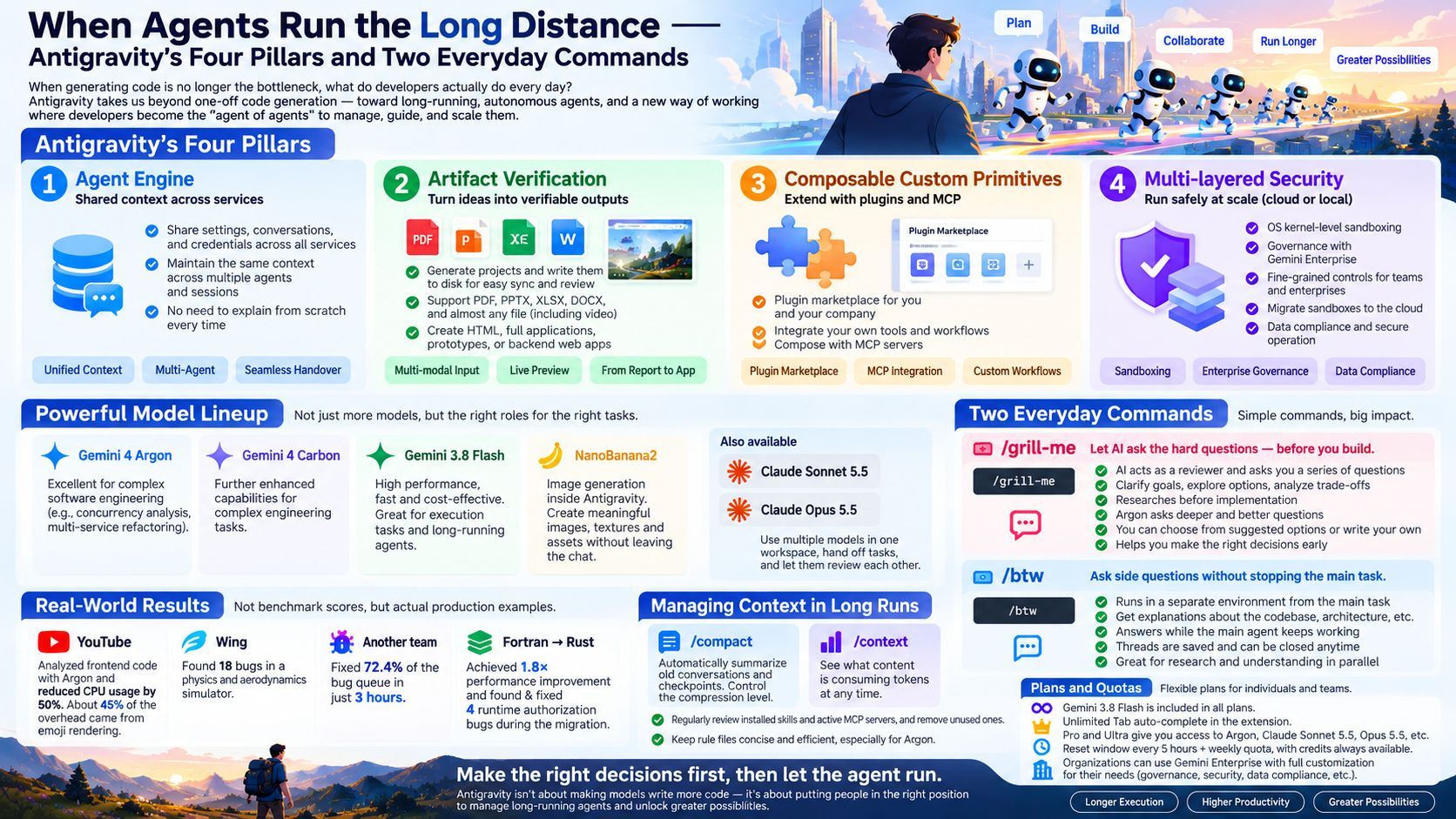
Antigravity is moving from code generation to managing long-running agents. Here are its four pillars, how Argon and Flash divide the work, what production cases show, and the two commands I use most: grill-me and /btw.
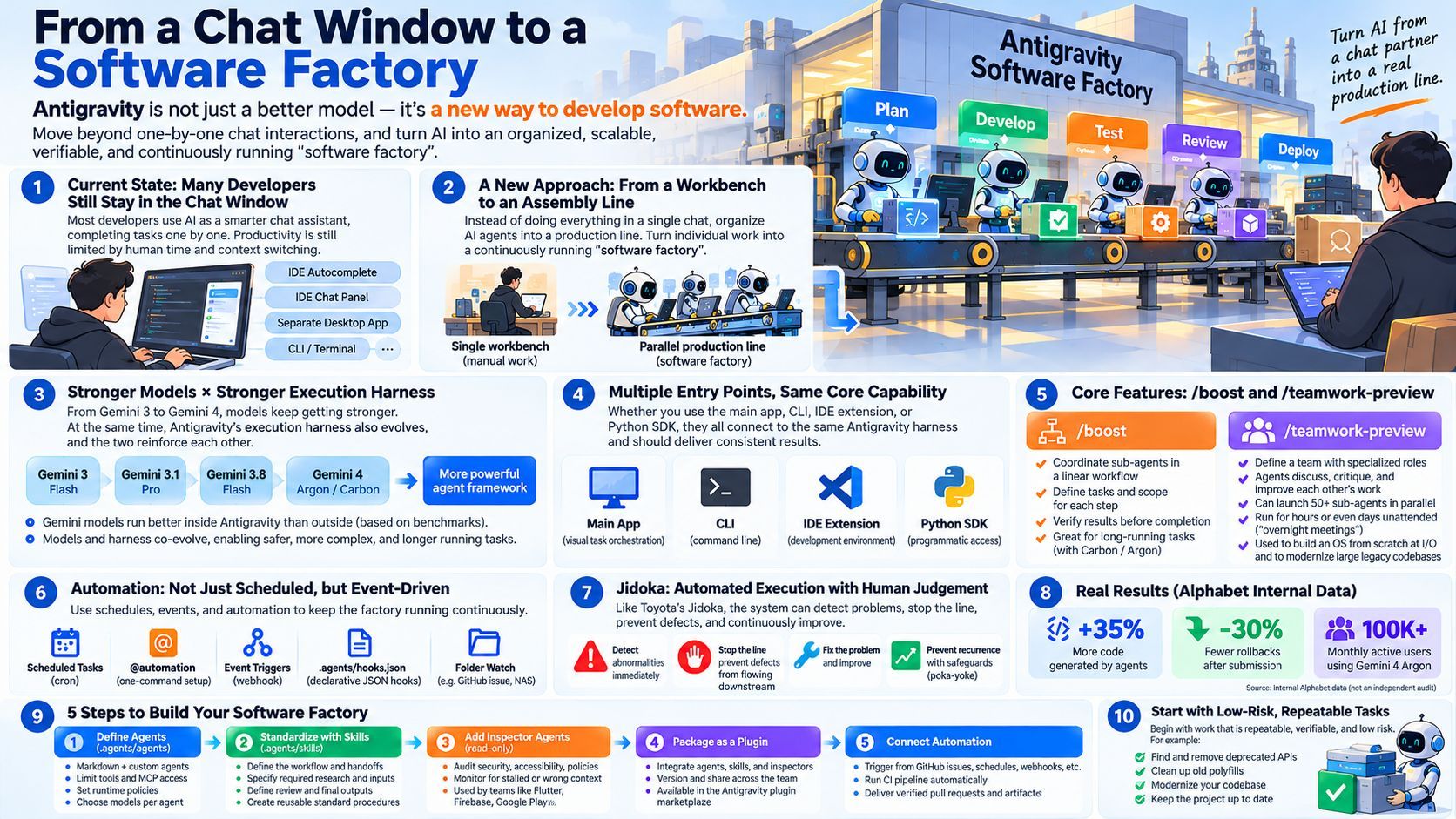
At the Antigravity deep dive, a Google developer relations engineer argued that AI-assisted programming should move beyond a smarter chat partner toward a “software factory” designed as a parallel assembly line. The article traces the co-evolution of models and harnesses, structured delegation with /boost and Teamwork Preview, cron- and hook-driven automation, a stop-and-verify discipline borrowed from Toyota's Jidoka, state persistence through .gemini/brain, and five steps for building a line.