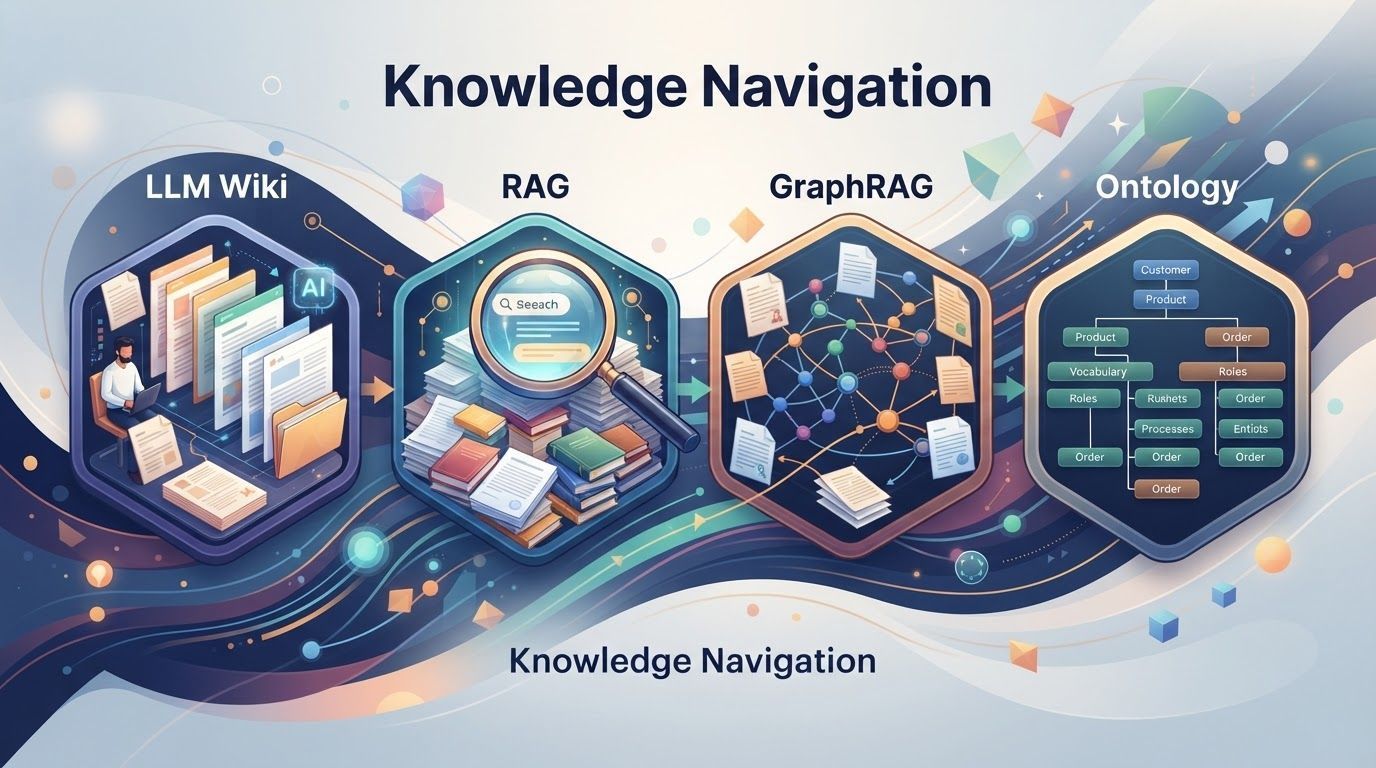
LLM Wiki organizes personal notes, RAG answers from enterprise documents, GraphRAG traces relationships across documents, and ontology unifies business semantics. This article compares how each works, where it breaks down, and how to combine them—and why their “graphs” differ.
Ontology, knowledge graphs, knowledge bases, and data middle platforms mostly predate LLMs, yet they are back in the spotlight. Drawing on a knowledge graph he built himself, the author explains how the four relate and what LLMs actually changed in ingestion, querying, traceability, and agent execution.
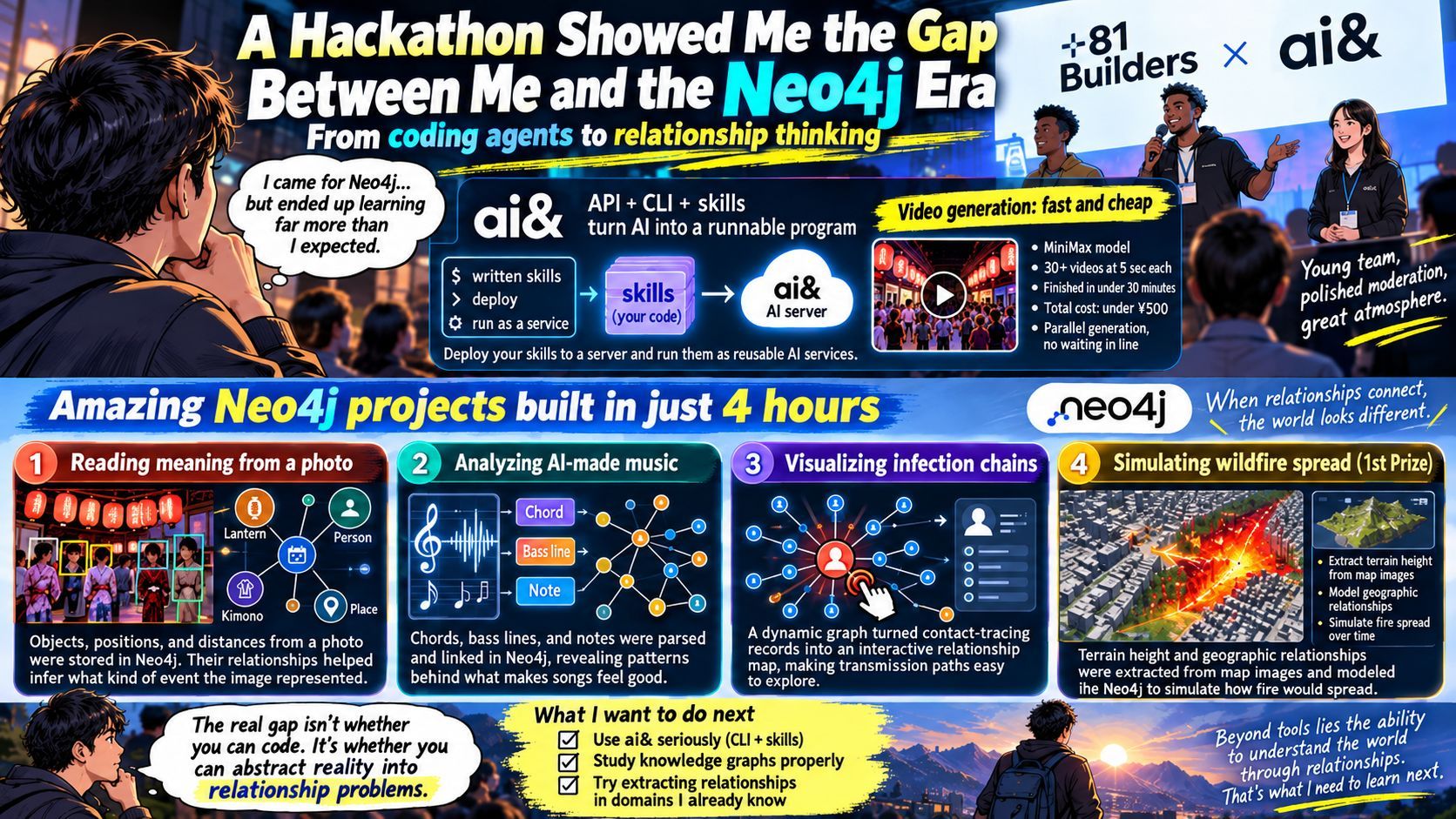
I joined a hackathon hosted by +81 Builders , where ai& showed how its CLI and skills turn an AI service into a deployable server, and MiniMax video generation proved fast and inexpensive. The bigger shock was what participants built with Neo4j in four hours: relationship analysis of photos, music analysis, a dynamic contact-tracing graph, and a fire-spread simulation. The experience made me realize that coding-agent fluency is no longer enough, and that I need to learn knowledge graphs.
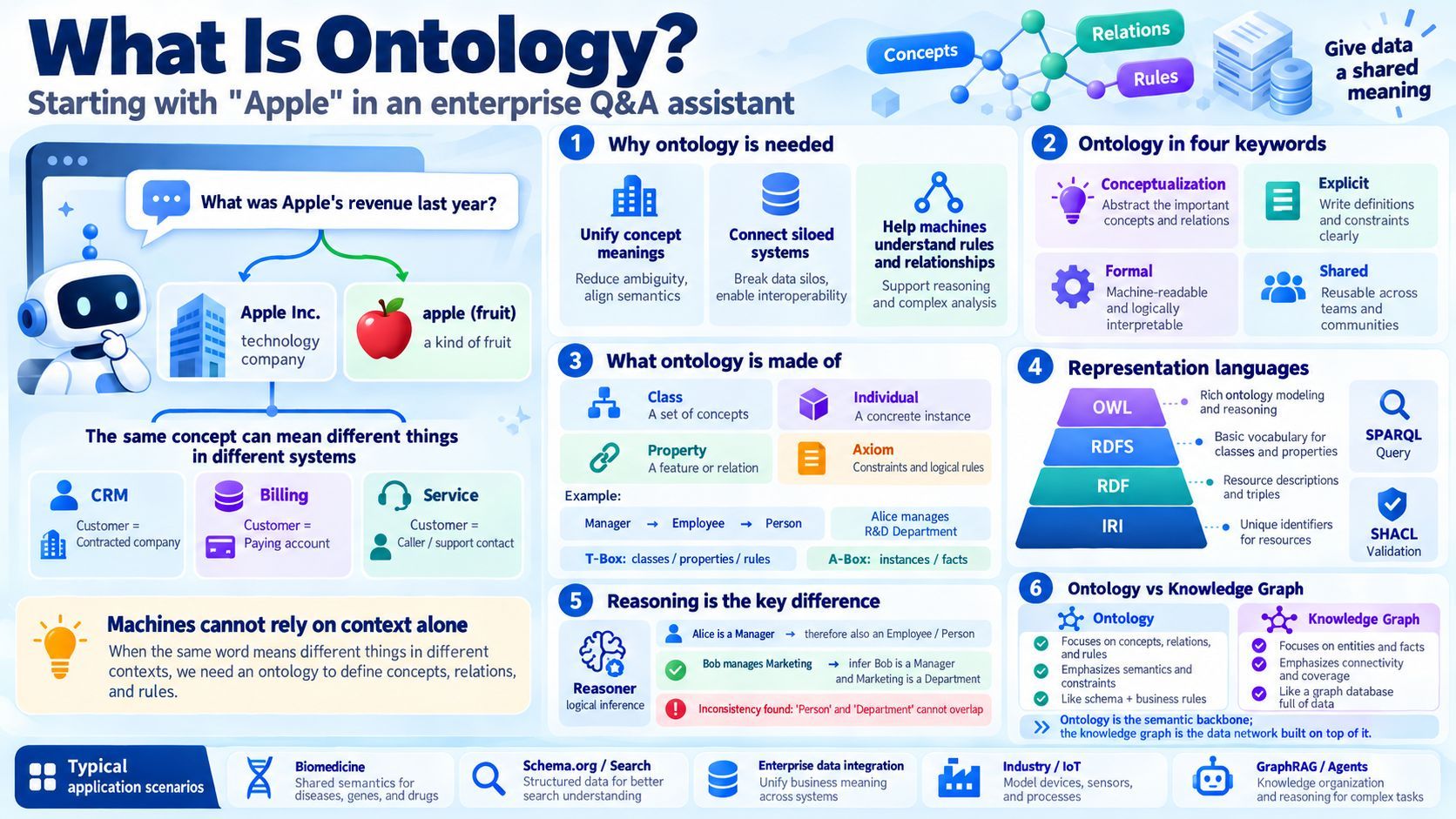
A machine cannot tell that "Apple" means a company rather than a fruit, or that three tables all named Customer mean different things, without an explicit semantic model: an ontology. This article traces the idea from philosophy to Gruber's and Studer's definitions, breaks down classes, individuals, properties, and axioms, and covers RDF, RDFS, OWL, and reasoners. It surveys real uses in biomedicine, Schema.org, enterprise data integration, industry and IoT, and the LLM era, then explains how ontology differs from a knowledge graph and how to start building one.