
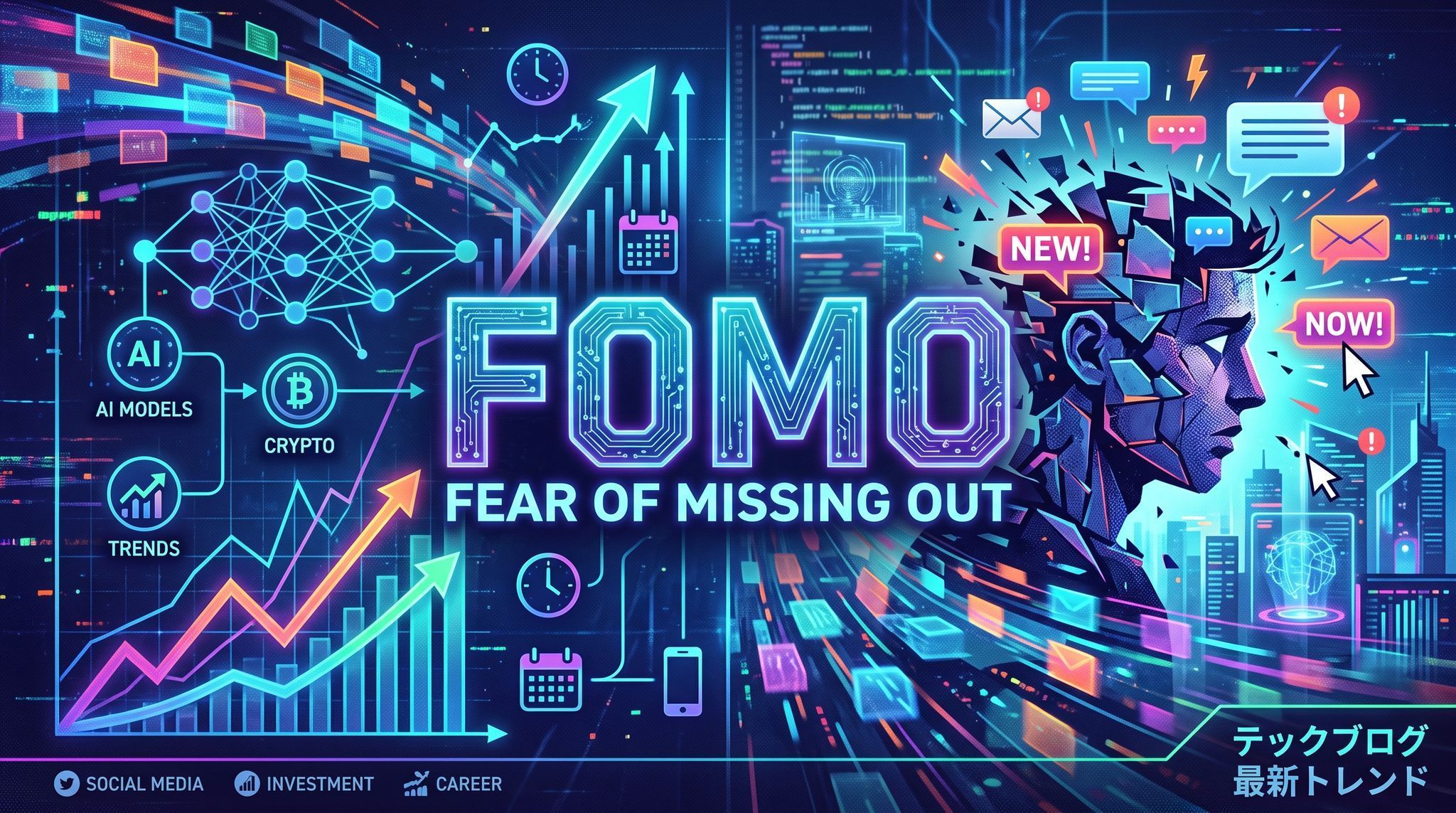
What is FOMO? Origins, Rise to Popularity, and Its New Role in the AI Era
An overview of the term FOMO (Fear Of Missing Out), exploring its origins from early 2000s academic research and Harvard Business School to its spread through social media and crypto. It highlights how FOMO manifests today as tech and career anxiety amidst rapid AI developments, while introducing JOMO as a healthy response.

What is "FOMO"? From Its Origins to Its Key Role in the AI Era
FOMO (*Fear Of Missing Out*) refers to the pervasive apprehension that others might be having rewarding experiences, capitalizing on opportunities, or engaging with new trends from which one is absent.
While it is now one of the most widely used pieces of internet slang, its origins go back much further than most people realize—and its meaning continues to evolve alongside technology.
1. Where and When Did FOMO Originate?
The concept of FOMO emerged in the early 2000s, progressing from academic consumer research to business school slang, and ultimately into the official dictionary:
- 1996–2000: Academic Roots
Marketing strategist Dr. Dan Herman conducted the first academic research on consumer anxiety regarding missing out, publishing a paper in 2000 that established the theoretical groundwork for the concept.
- 2004: Coining the Acronym "FOMO"
Patrick McGinnis, then a student at Harvard Business School, coined the acronyms FOMO (*Fear of Missing Out*) and FOBO (*Fear of Better Options*) in an article titled *"McGinnis’ Two FO’s"* for the student newspaper, *The Harbus*.
- 2011–2013: Mainstream Adoption & Dictionary Entry
With the rapid rise of smartphones and social media platforms (Facebook, Twitter, Instagram), FOMO became a mainstream term covered extensively by global media. In 2013, it was officially added to the *Oxford English Dictionary*.
2. How Did It Become So Popular?
FOMO grew from campus slang into a global cultural phenomenon driven by three main factors:
- Social Media Information Overload: The constant feed of curated "highlight reels"—vacations, parties, career milestones—creates a persistent, magnified feeling of exclusion.
- Marketing & Consumer Culture: Businesses quickly capitalized on this psychological trigger, using tactics like limited-time offers and exclusive product drops to drive impulse spending.
- The Crypto & Stock Booms (2017–2021): During the meteoric rise of Bitcoin, NFTs, and meme stocks, buying in out of "FOMO" became a widely recognized term for retail investors racing into the market out of fear of missing out on life-changing returns.
3. How Is FOMO Used in the AI Era?
In today's landscape of rapid generative AI developments, FOMO has taken on new life as the anxiety of being left behind by technological change.
① Tech Anxiety Among Developers & Creators
With new AI models, open-source frameworks, and agent architectures launching almost daily, tech professionals face AI-induced FOMO—a constant underlying fear that stepping away from X (Twitter) or GitHub for even a few days will leave them obsolete.
② Strategic Fear in Enterprise & Venture Capital
- Phenomenon: Tech giants, startups, and venture capitalists are locked in a high-stakes race to secure GPUs and invest in AI ventures.
- Application: Many organizations feel compelled to launch "AI First" initiatives—even without a clear business model—simply because "everyone else is doing it," and failing to participate risks alienating investors and markets.
③ Career Disruption Anxiety for Professionals
Everyday professionals worry that failing to master prompt engineering or integrate AI tools will cost them their competitive edge. This drives a surge in buying AI courses and subscribing to multiple AI software tools just to stay afloat.
Summary & Counter-Trends
Whether it's the early fear of missing a weekend party, the financial fear of missing out on a market rally, or today's anxiety over being outpaced by AI, the core of FOMO remains the same: a lack of control and security in an era of rapid change and information overload.
In response to this exhaustion, a counter-movement has emerged: JOMO (*Joy Of Missing Out*). JOMO encourages people to embrace disconnecting, step back from relentless trends, and find satisfaction in the present moment.