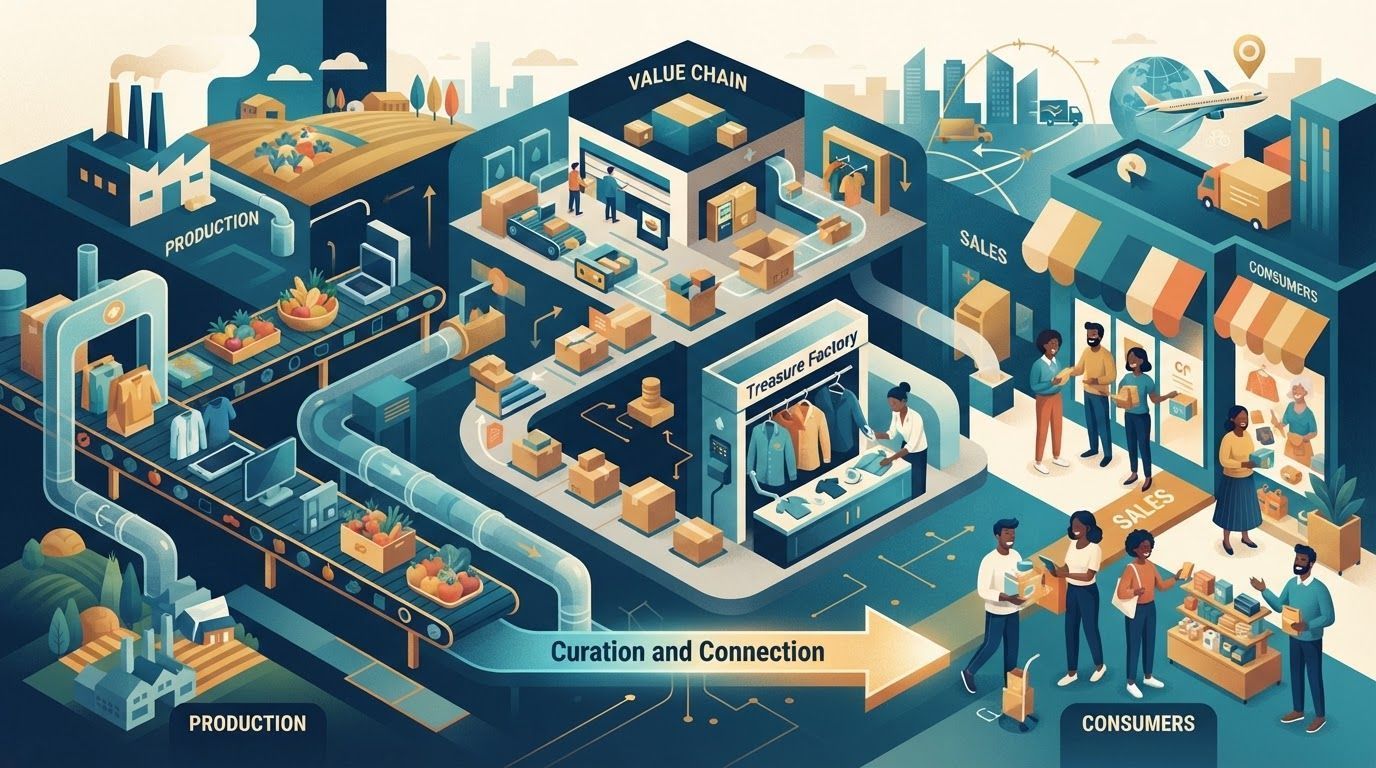
This post breaks down the distribution and retail model: companies make nothing, buy from producers, sell to customers, and earn the spread. It explains the two axes—matching power and the value chain—through Treasure Factory, which cleans and repairs secondhand goods for a 55.9% gross margin. It then examines the model's two weaknesses, easy imitation and thin profitability, and why general supermarkets and trading houses are moving toward combined models.
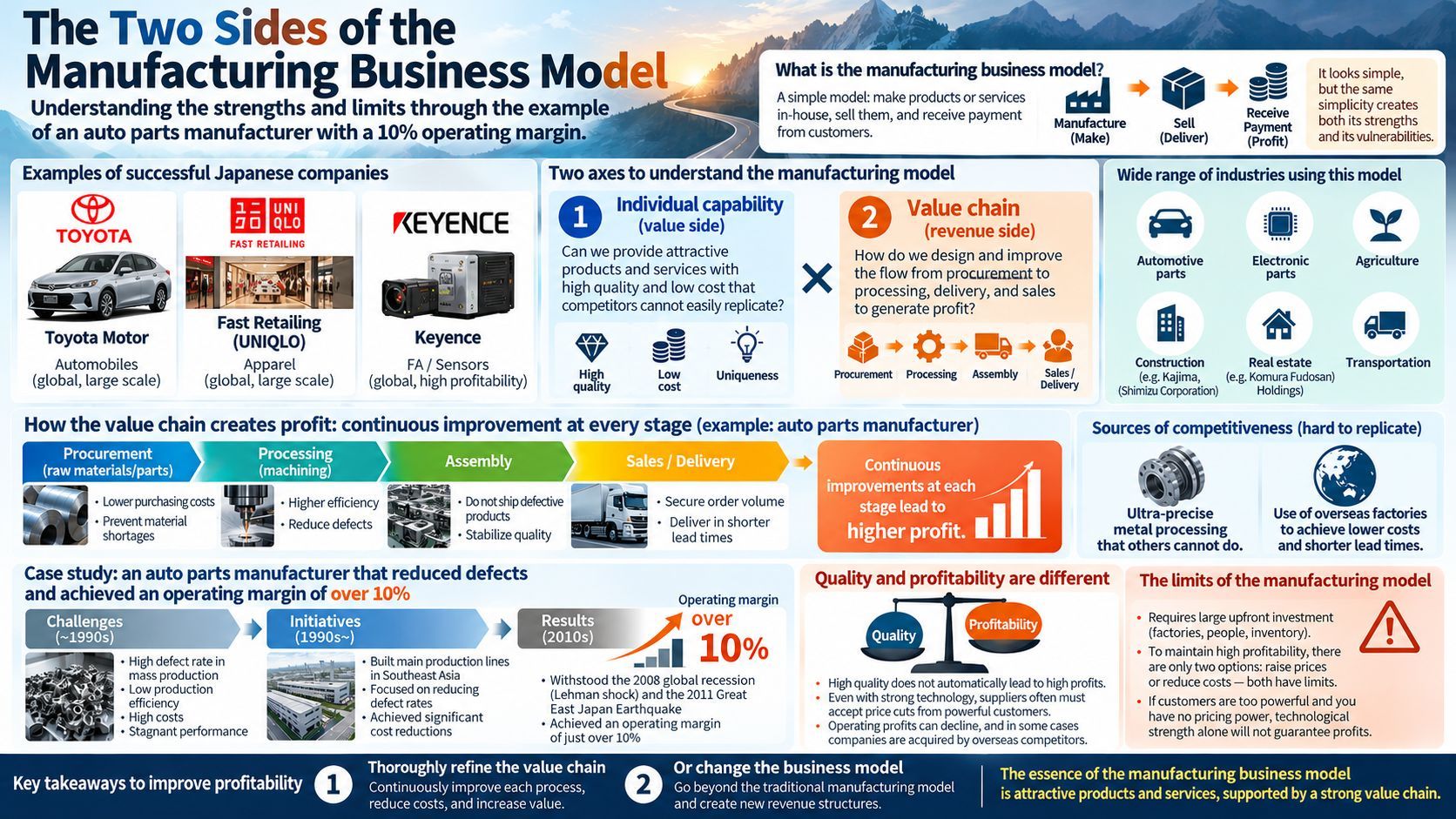
The make-and-sell model looks simple: a company manufactures and sells its own products and is paid by customers. Yet its strengths and its fragility come from the same place. Two axes matter: standalone strength—high quality, low cost, and things rivals cannot do—and the way revenue is earned across the value chain of procurement, processing, and delivery. One ultra-precision parts maker stagnated on mass-production defects, moved its main line to Southeast Asia in the 1990s, and improved defects so thoroughly that it held an operating margin above 10 percent through the 2008 recession and the 2011 earthquake. But quality and profit margin are different things: a supplier that cannot refuse price-cut demands does not recover, and was acquired. The only ways out are to overhaul the value chain or change the model.
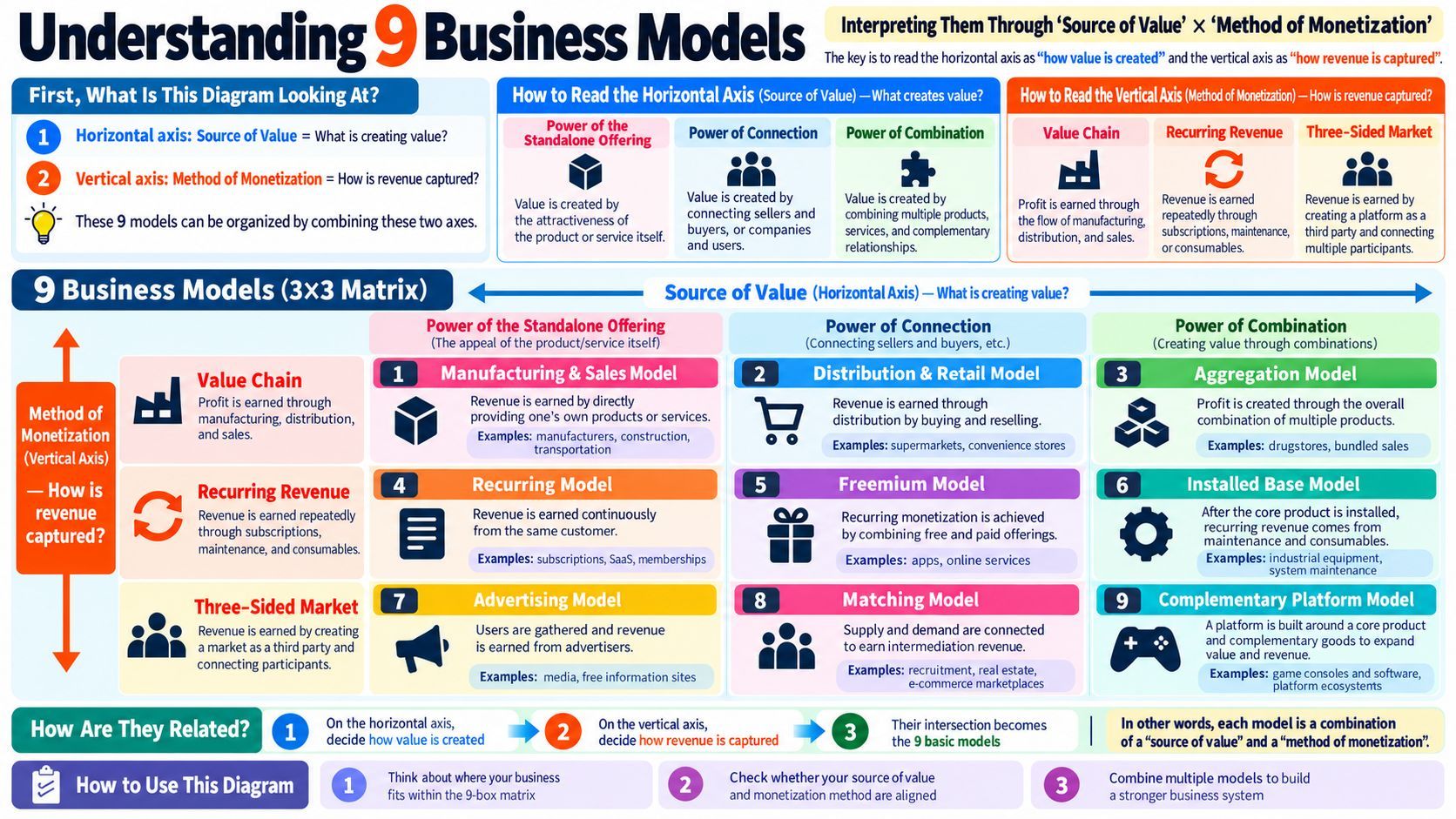
This article uses a single 'transaction map' to organize business models along two axes: value creation (the power of a single product, of combination, and of alliance) and revenue capture (value chain, recurring, and the three-party market). It then walks through nine models — manufacturing, distribution and retail, combination, recurring, freemium, installed base, advertising, matching, and platform — showing how even complex businesses reduce to basic moves and how the map works as a tool for reading strategy across industries.