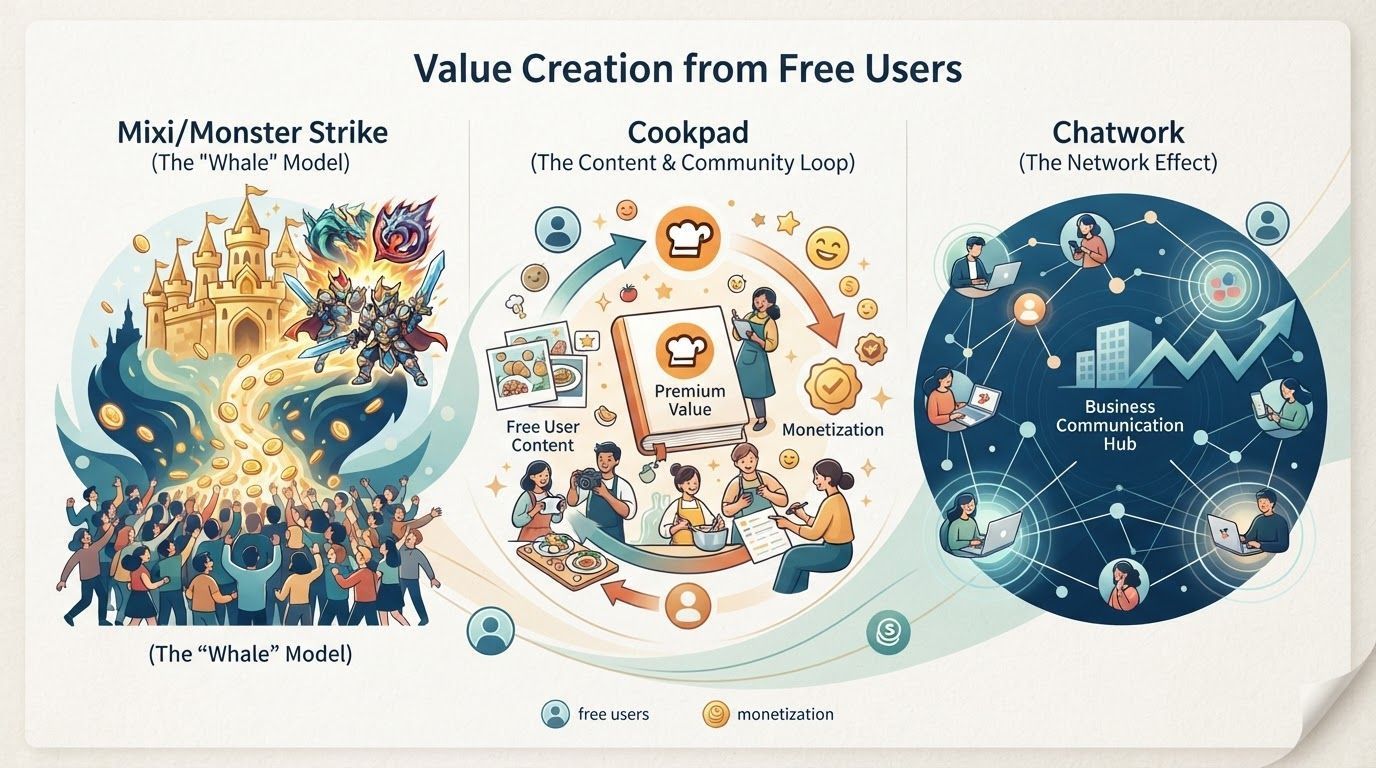
Freemium is often treated as a price list: attract people with a free tier, then convert some of them into payers. But what really decides whether it works is the value the free side produces. Through Mixi's reliance on a few heavy spenders, Cookpad's community of free recipe writers, and Chatwork's use of free users to build network scale, this article compares three revenue structures, their vulnerabilities, and why low marginal costs let SaaS growth eventually turn into profit.
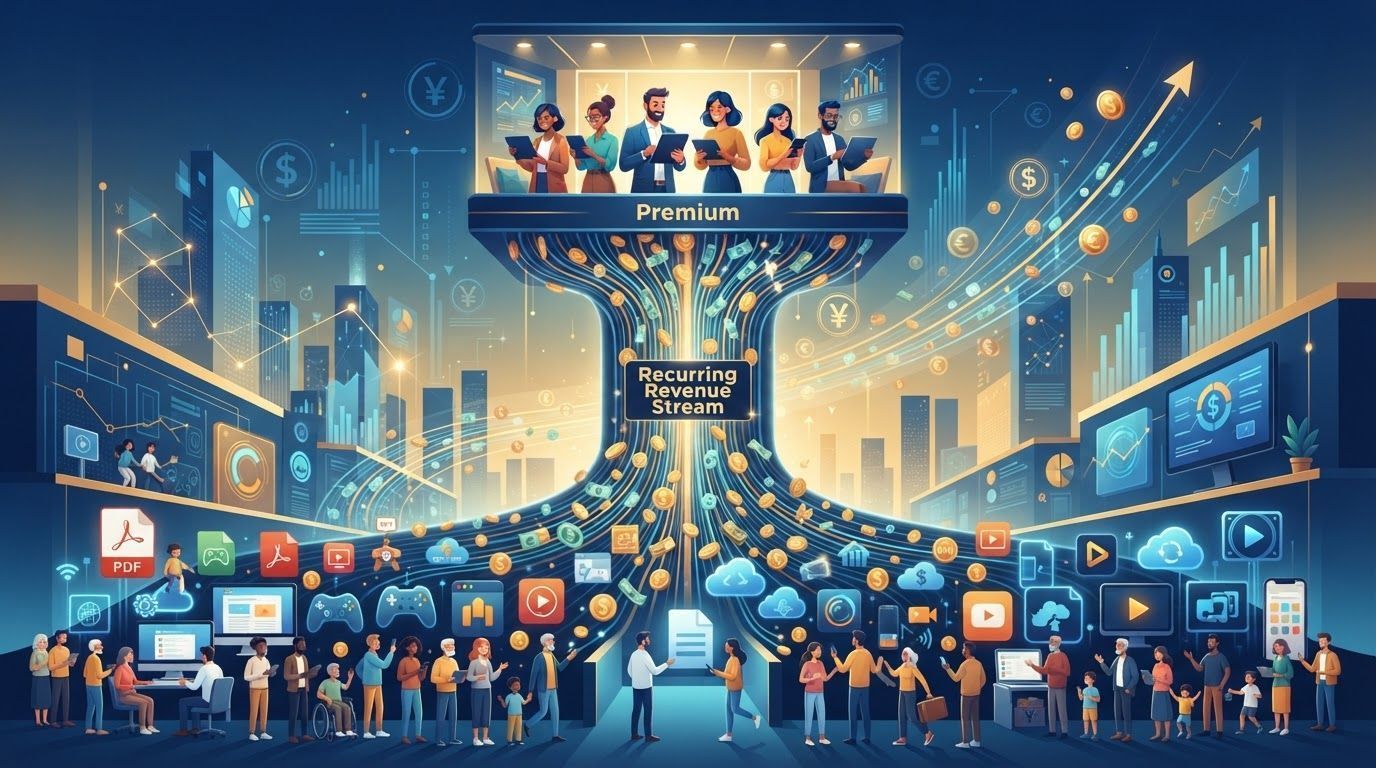
Freemium joins "free" and "premium" into one word: a minority of paying users supports a majority of free users. Chris Anderson's 2009 book Free helped the model spread. Adobe's free PDF reader and free-to-play mobile games are classic cases. The article argues that freemium is not a one-time sale: it depends on recurring revenue, and on gathering enough free users so that some of them will keep paying.
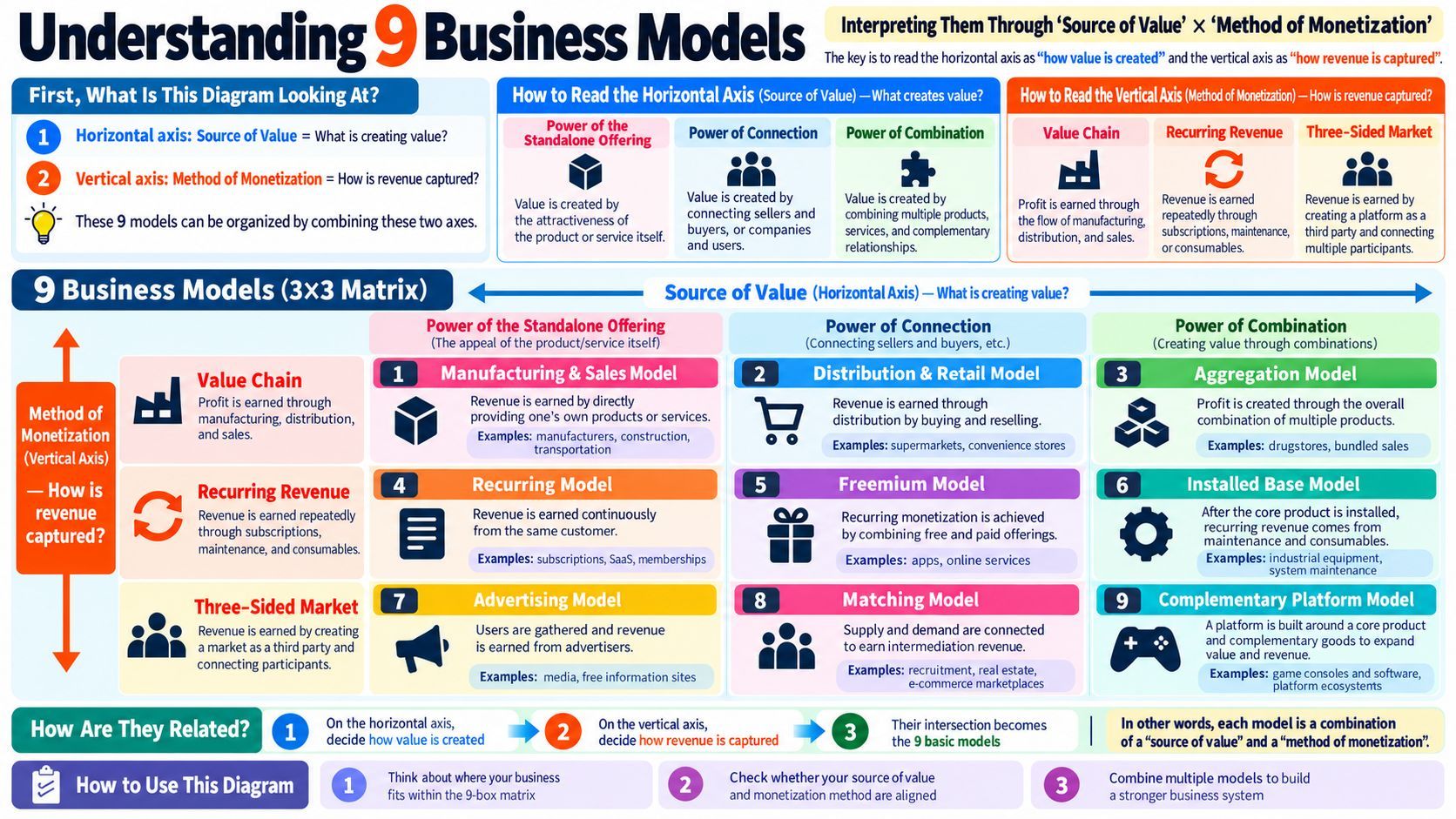
This article uses a single 'transaction map' to organize business models along two axes: value creation (the power of a single product, of combination, and of alliance) and revenue capture (value chain, recurring, and the three-party market). It then walks through nine models — manufacturing, distribution and retail, combination, recurring, freemium, installed base, advertising, matching, and platform — showing how even complex businesses reduce to basic moves and how the map works as a tool for reading strategy across industries.