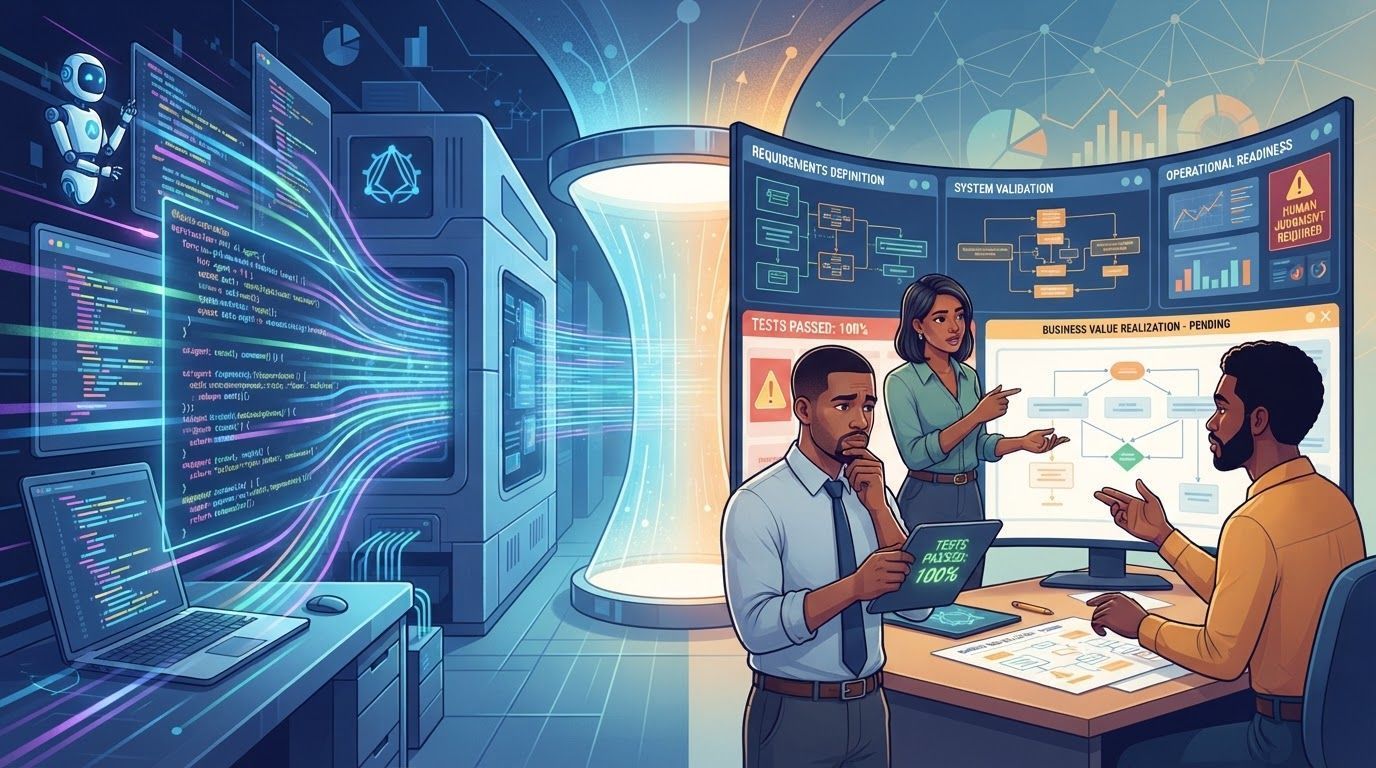
When AI makes coding faster, the bottleneck does not disappear; it moves to requirements, articulation of business knowledge, and verification. Passing tests do not prove product value, and the scarcest people are those who can connect customers, business, and engineering. Drawing on finance and telecom examples, the article examines where AI belongs, what must remain human, and how organizations should start.
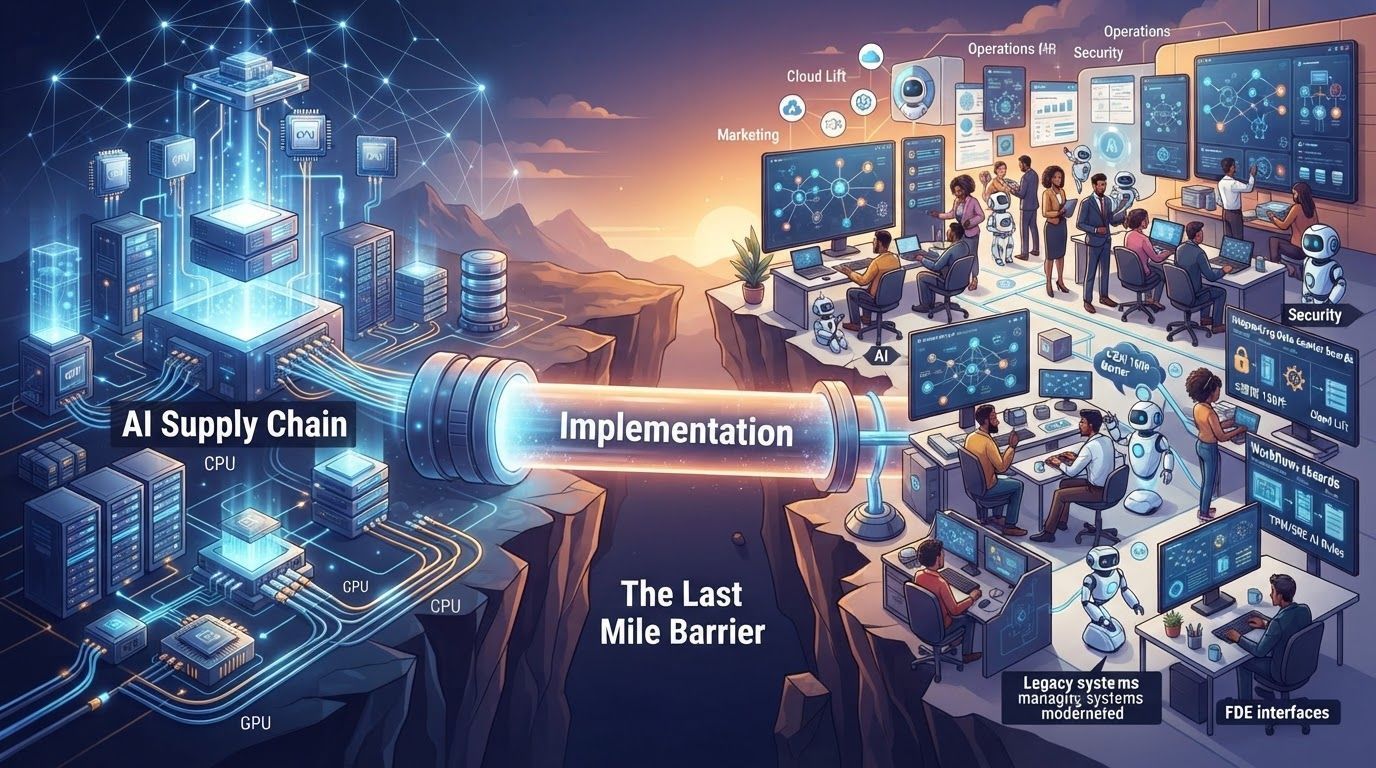
In enterprise AI, the bottleneck is not the model but implementation. A SoftBank speaker places implementation at the end of a chain running from semiconductors and data centers to power and storage, then describes agents across every department, a June security service, the five FDE levels and the system-design judgment that matters most, and why mainframes, COBOL, and missing specs make cloud lift a prerequisite. A six-week batch of 150 requests now takes one person five to eight hours.
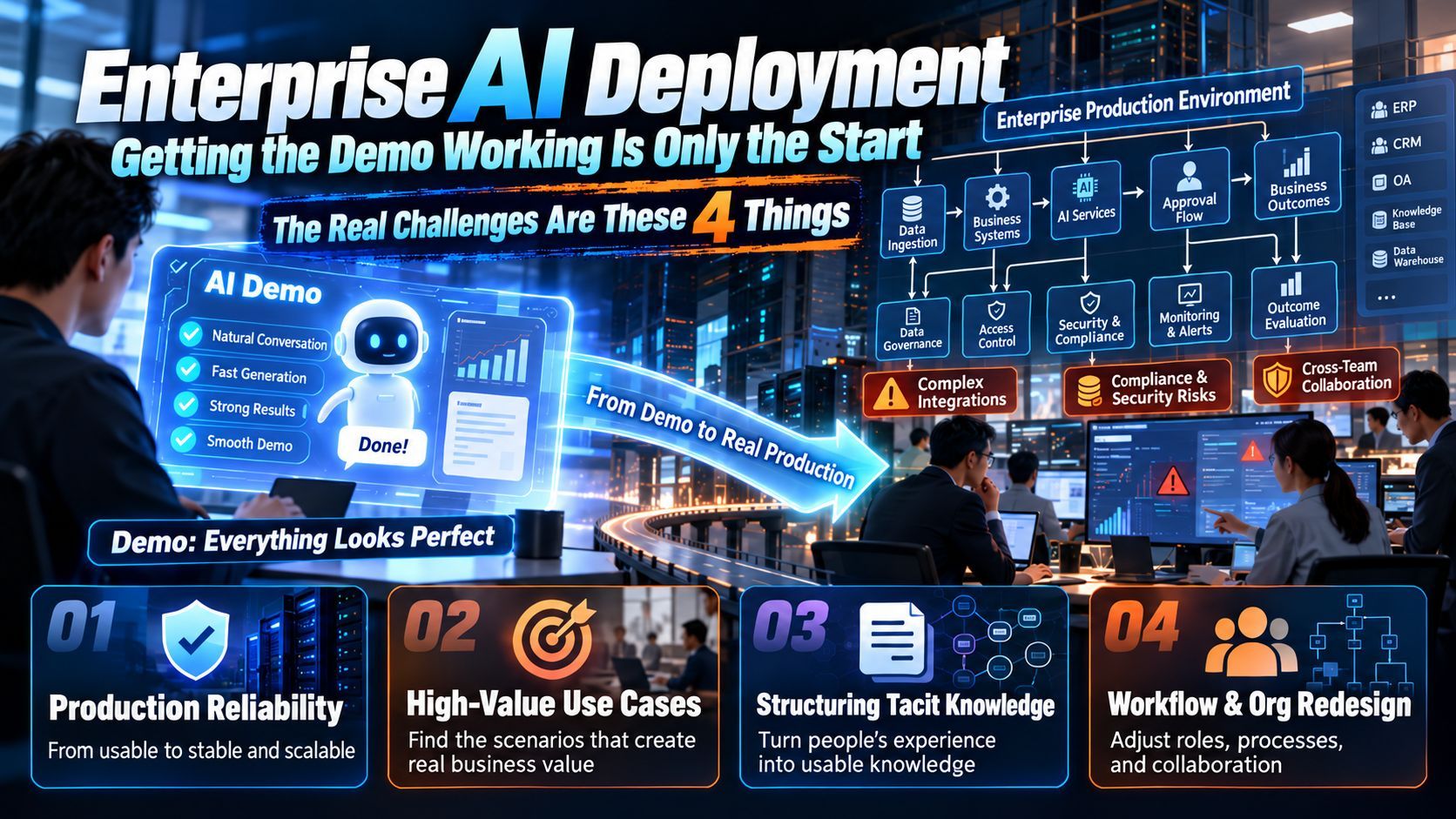
Using the Tencent Research Institute's FDE report as a lens, this article lays out four problems that recur in enterprise AI adoption: mistaking a working demo for a shippable product, building an AI application without choosing a high-value scenario, assuming AI can do what employees already do well, and confusing individual productivity with organizational productivity. Drawing on AI customer service and ERP examples, it explains the gap between demo and production and why tacit knowledge must be turned into usable context, then offers three fixes: don't measure the adoption cycle by demo speed, organize small teams where business and technology share accountability, and have senior leadership personally drive process, responsibility, and assessment changes.
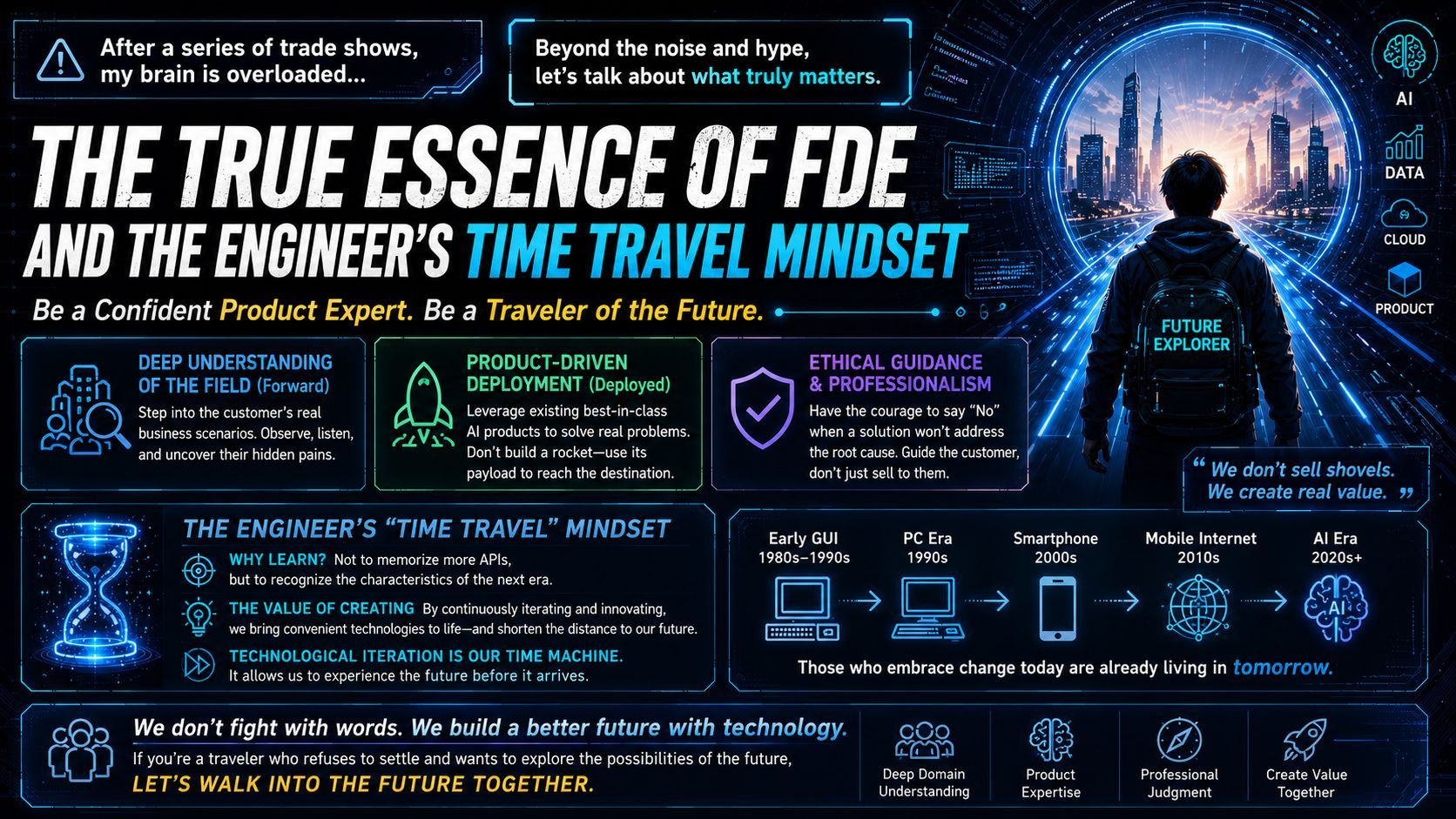
Reflecting on the aftermath of recent trade shows, this post redefines the role of a "Forward Deployed Engineer (FDE)". It argues that true FDE is not just fulfilling requests, but deeply understanding client pain points and providing product-driven, expert-led solutions. Furthermore, it explores the concept of continuous learning as a "time machine" that allows engineers to experience the future today. This is an invitation for those who reject the status quo and seek to build the future together.
I attended a presentation featuring OpenAI Japan at another event, and here are my candid, on-the-spot impressions. While I was deeply impressed by the polite and attentive support from the OpenAI Japan staff, I walked away with serious reservations regarding their FDE (Frontier Development Engineer) strategy. In particular, the apparent lack of a solid corporate strategy left me with a strong sense of urgency, making this experience a turning point for me to reconsider my own positioning in the future AI industry.
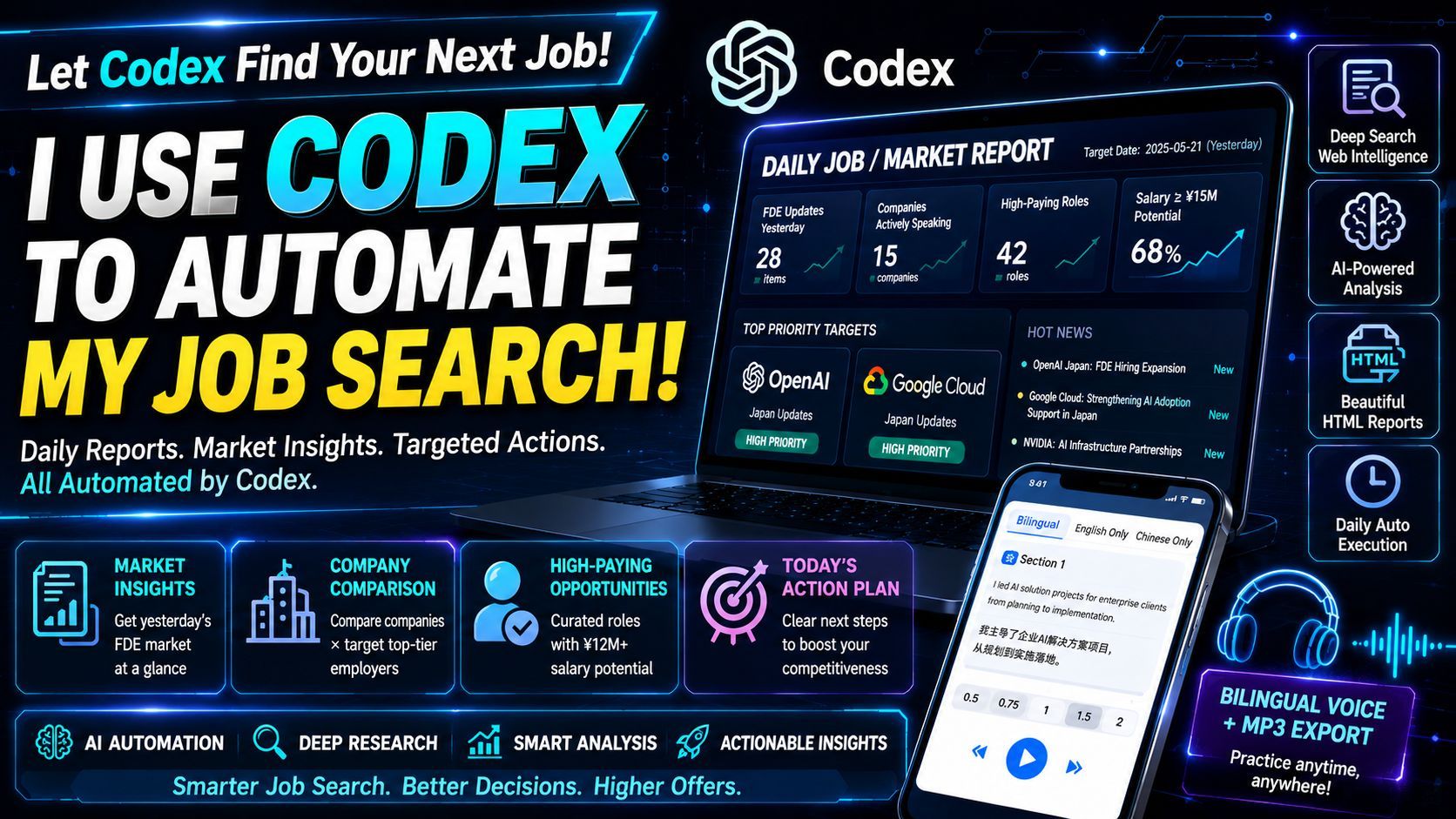
This article reveals specific methods for advanced task and learning automation using the AI Agent "Codex." It covers everything from automatically generating market research reports for FDEs (Forward Deployed Engineers) and building custom web-based tools for English pitch practice based on your resume, to synthesizing MP3 audio files for on-the-go learning.
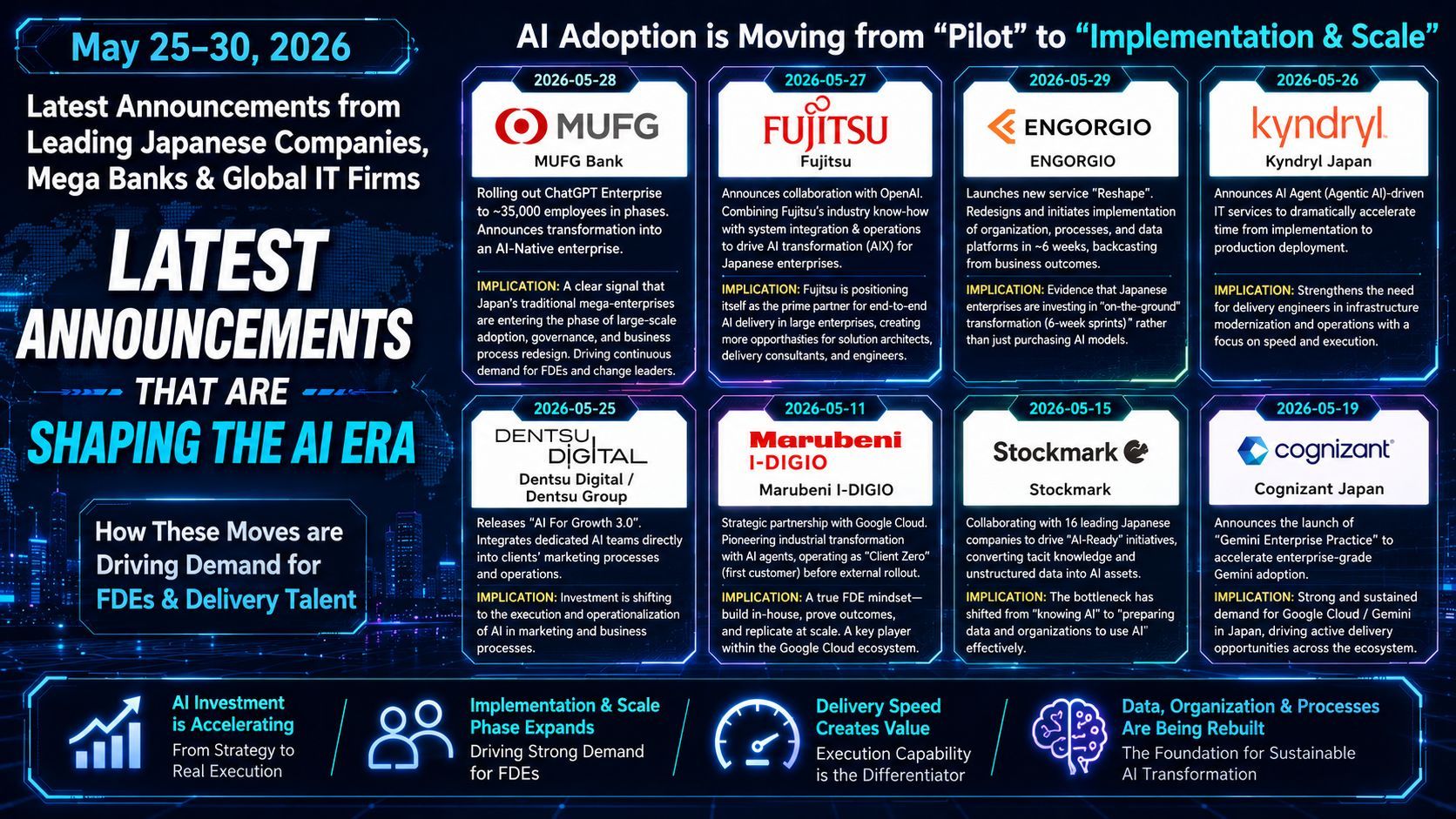
The AI implementation boom has officially moved past the "Proof of Concept (PoC)" phase and entered the era of "Large-Scale On-Site Transformation." By analyzing the latest movements of megabanks and major IT vendors, this article unpacks the rapidly growing demand for FDEs (Forward Deployed Engineers), who hold the key to this market shift. Beyond mere technical prowess, we dive deep into the rising importance of "delivery-focused skills"—diving into the client's trenches to restructure data and organizations—and present concrete career strategies for engineers.
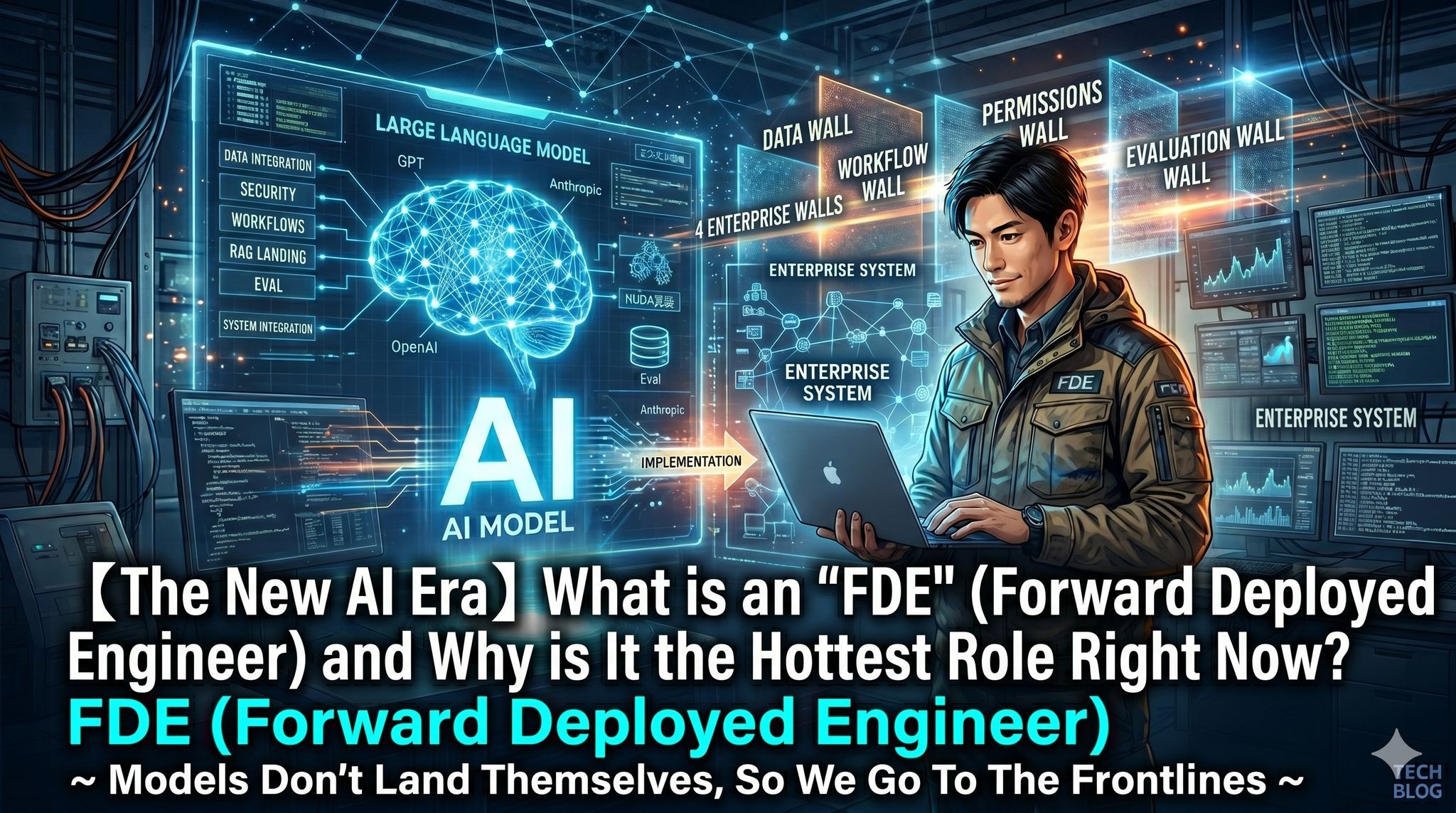
The cutting edge of the AI industry has officially shifted from simply "researching smarter models" to "implementing them to actually work in production." This article unpacks the critical role of the Forward Deployed Engineer (FDE)—the ultimate catalyst for AI's real-world adoption. We will break down the hyper-practical and gritty skillset required for these engineers to physically smash through the "four enterprise walls" of data, security, and complex workflows to inject and operationalize AI directly into corporate infrastructures.