
DeepSeek Harness Official Desktop Release: Voice Input Plugin & Analysis of Core AI Audio Models
This post reviews the newly released official Desktop version of DeepSeek Harness, highlighting seamless configuration migration from the CLI version and the new Voice Input plugin. It also explores the M5Stack AI-8850 hardware kit discovered through SenseVoice, providing a breakdown of five key AI audio models including Whisper, MeloTTS, CosyVoice2, and 3D-Speaker-MT.

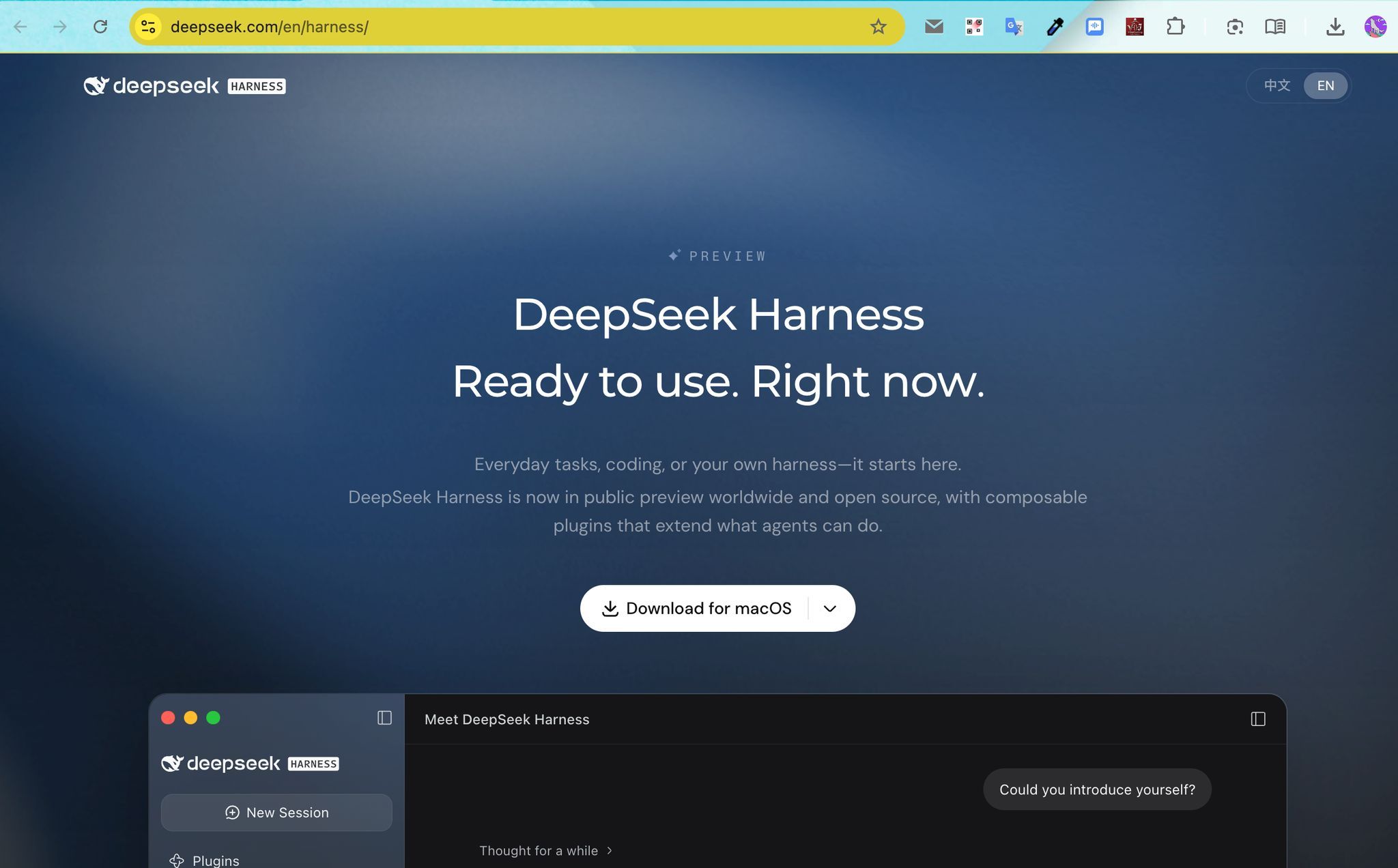
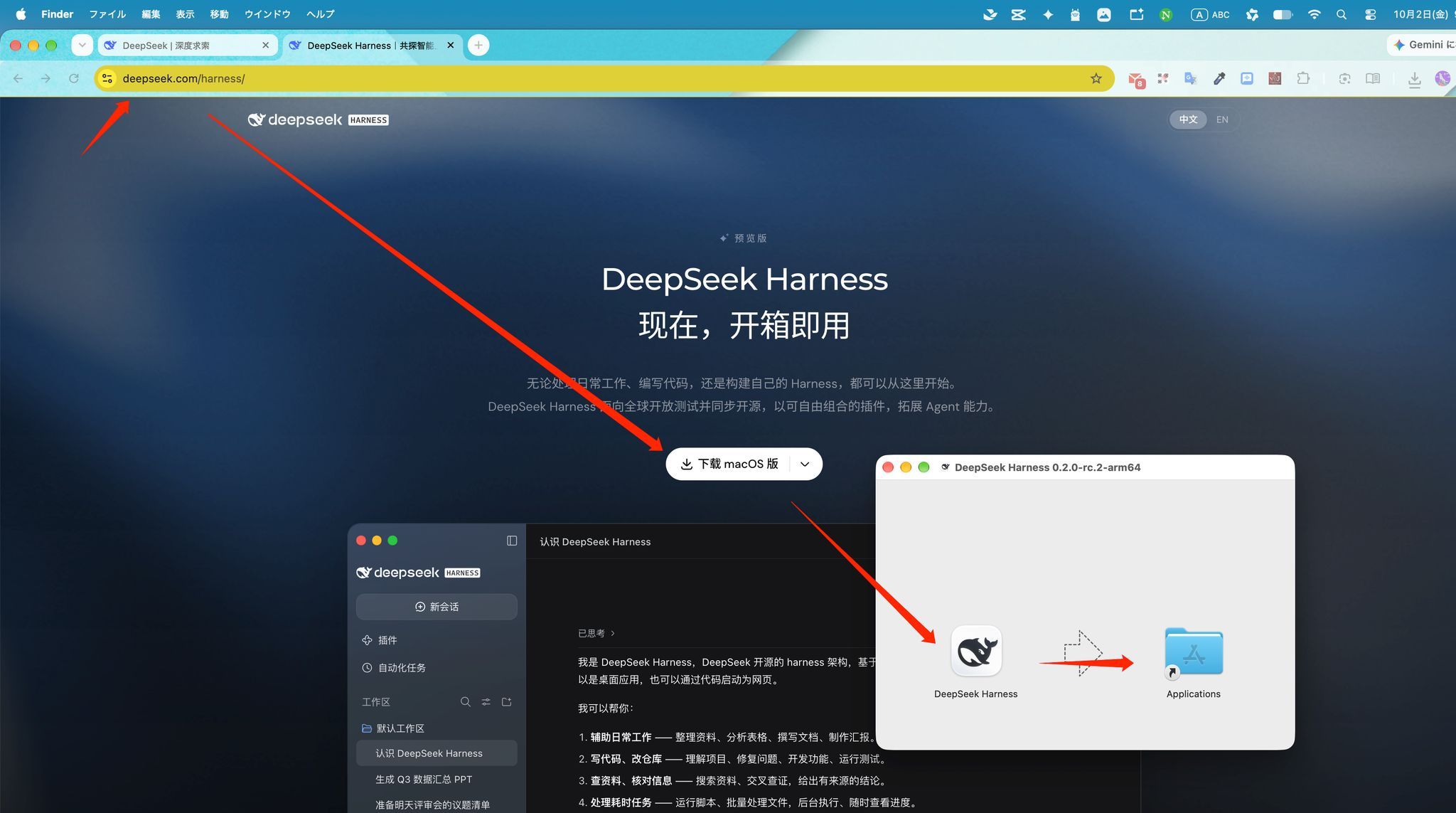
Flash News: Official Desktop Version of DeepSeek Harness is Here!
I took it for a test drive right away, and two major highlights stood out:
- Seamless Migration: If you previously used the command-line interface (CLI) version of DeepSeek Harness, all your original configuration files and settings are automatically inherited. Zero re-setup required!
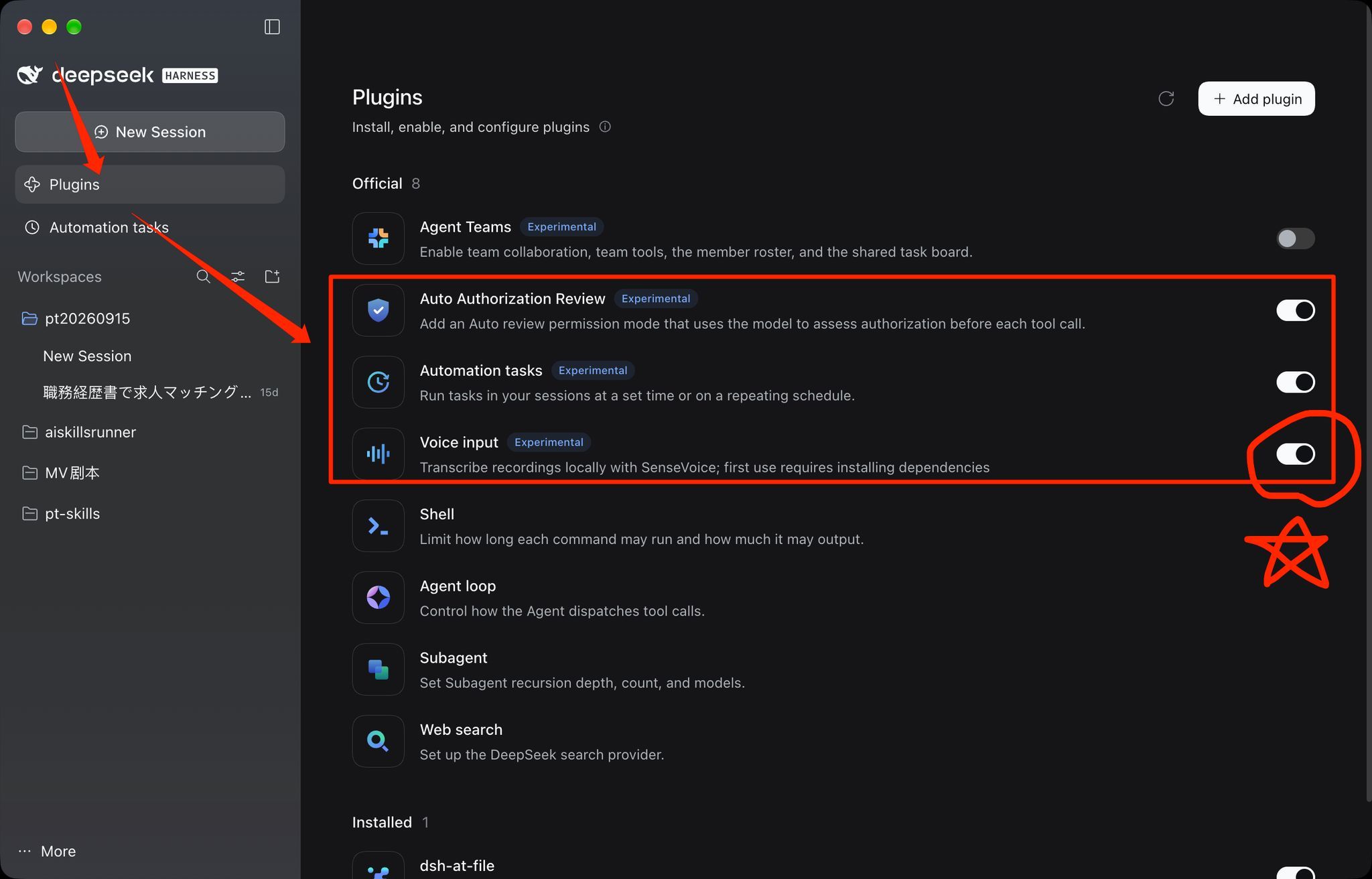
- Built-in Voice Input: The team thoughtfully introduced a new "Voice Input" feature (plugin), which makes daily interactions noticeably smoother and more efficient.
DeepSeek Harness is rapidly evolving and getting better with every update!
公式サイト:https://www.deepseek.com/harness/
Unexpected Discovery: Unearthing a Hardware Hidden Gem
While setting up the Voice Input plugin, I noticed it utilizes a model named SenseVoice under the hood. Driven by curiosity, I dug deeper into the hardware ecosystem supporting it and stumbled upon a intriguing piece of gear: the "M5Stack AI-8850 LLM Acceleration M.2 Kit 8GB (AX8850)".
This M.2 card provides an all-in-one local deployment stack for various AI models, including the full suite of AI audio models I'm particularly interested in.
Here is a quick breakdown of the 5 core AI voice models featured in this setup:
1. Whisper
- Developer: OpenAI
- Core Function: Automatic Speech Recognition (ASR / Speech-to-Text).
- Highlights: An end-to-end multilingual speech recognition model built on the Transformer architecture. It features exceptional noise robustness and zero-shot learning capabilities across 99+ languages, making it ideal for meeting transcriptions and video subtitle generation.
2. MeloTTS
- Developer: MIT & MyShell.ai
- Core Function: Text-to-Speech (TTS).
- Highlights: A lightweight, high-quality multilingual speech synthesis library. Its primary advantage is extremely low compute overhead—enabling real-time voice synthesis even on standard CPUs without a discrete GPU. It's a perfect fit for edge computing and low-cost deployments.
3. SenseVoice
- Developer: Alibaba Tongyi Lab (FunAudioLLM Team)
- Core Function: Multilingual Audio Understanding Foundation Model.
- Highlights: Beyond high-accuracy ASR, it supports Speech Emotion Recognition (SER) and Audio Event Detection (AED—e.g., applause, laughter, coughing). Its "Small" variant utilizes a non-autoregressive architecture that processes 10 seconds of audio in just ~70ms (about 15x faster than Whisper-Large), making it ideal for real-time interactive apps.
4. CosyVoice2
- Developer: Alibaba Tongyi Lab
- Core Function: High-Fidelity Speech Synthesis & Voice Cloning.
- Highlights: A next-generation speech generation LLM. It supports ultra-low latency (150ms) bidirectional streaming synthesis and zero-shot voice cloning using just a few seconds of reference audio. Users can also control emotion and prosody using natural language prompts, delivering remarkably human-like audio quality.
5. 3D-Speaker-MT
- Developer: Alibaba Tongyi Lab
- Core Function: Speaker Verification & Diarization.
- Highlights: An open-source multimodal speaker recognition toolkit. Beyond identifying *who* is speaking, it performs precise speaker diarization to segment and label different speakers in multi-party conversations. It also handles overlapping speech detection and integrates visual cues (like lip movement) for accurate multi-modal tracking in smart meeting systems.
Summary
In short, the core building blocks for an advanced AI voice system are neatly structured across three key pillars:
- Whisper & SenseVoice handle "Listening & Comprehension" (accurate transcription and emotion/context awareness);
- MeloTTS & CosyVoice2 handle "Expression" (lightweight execution and ultra-realistic speech synthesis/cloning);
- 3D-Speaker handles "Identification" (distinguishing and isolating different speakers).
With hardware and software integrating so seamlessly, the local AI audio ecosystem is maturing fast—paving the way for next-level interactive experiences on both desktop and edge devices!