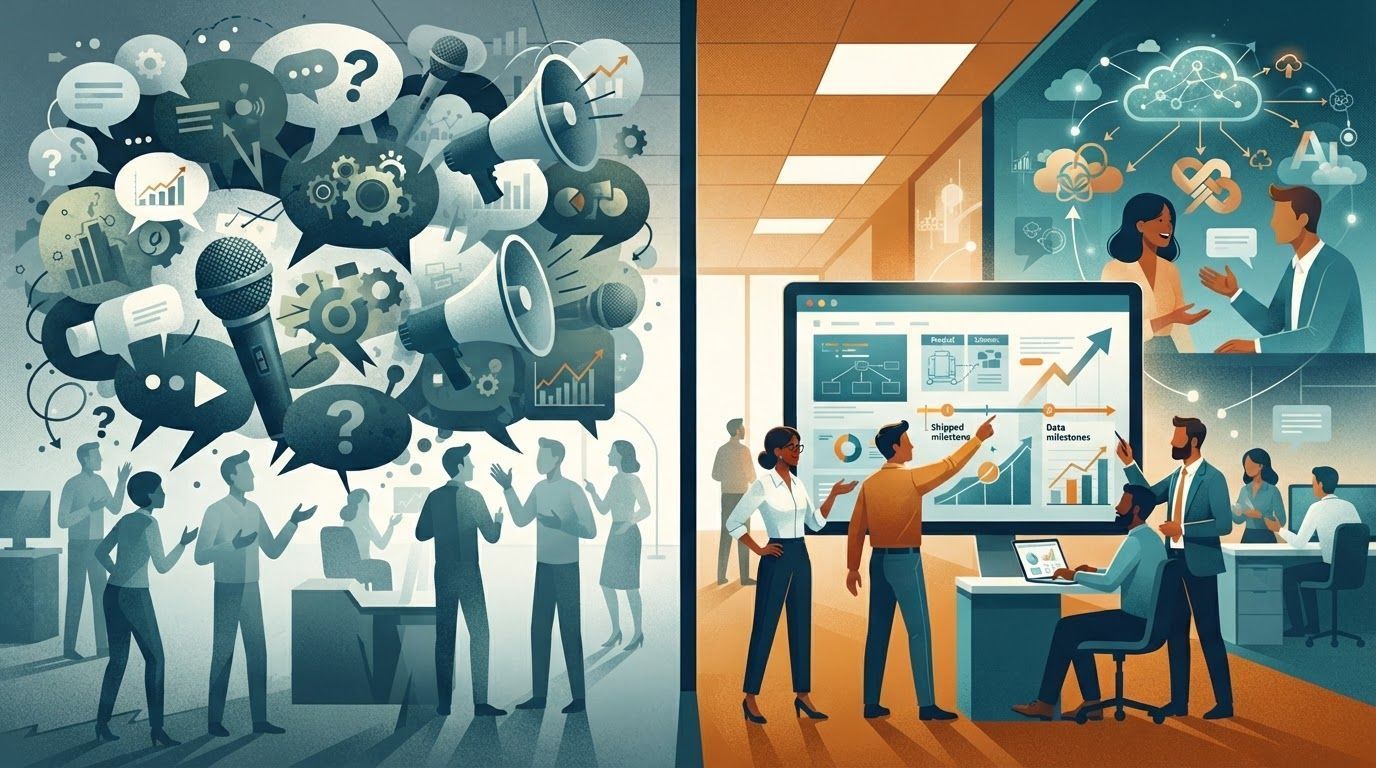
A month into a new job, the author hits the same wall he left behind: plenty of drive, no outlet for it. He traces the problem to a culture where talk outweighs action—endless arguments, concepts outnumbering shipped products. Drawing on his experience with Japanese clients, he argues for fixing the inside first: daily reporting, joint planning, and solid work before going out to knock on doors. He then pushes further: in the AI era software products are losing value, and the edge moves to cloud partnerships, cross-selling, and the ability to read people, adjust their state, and inspire them through narrative.
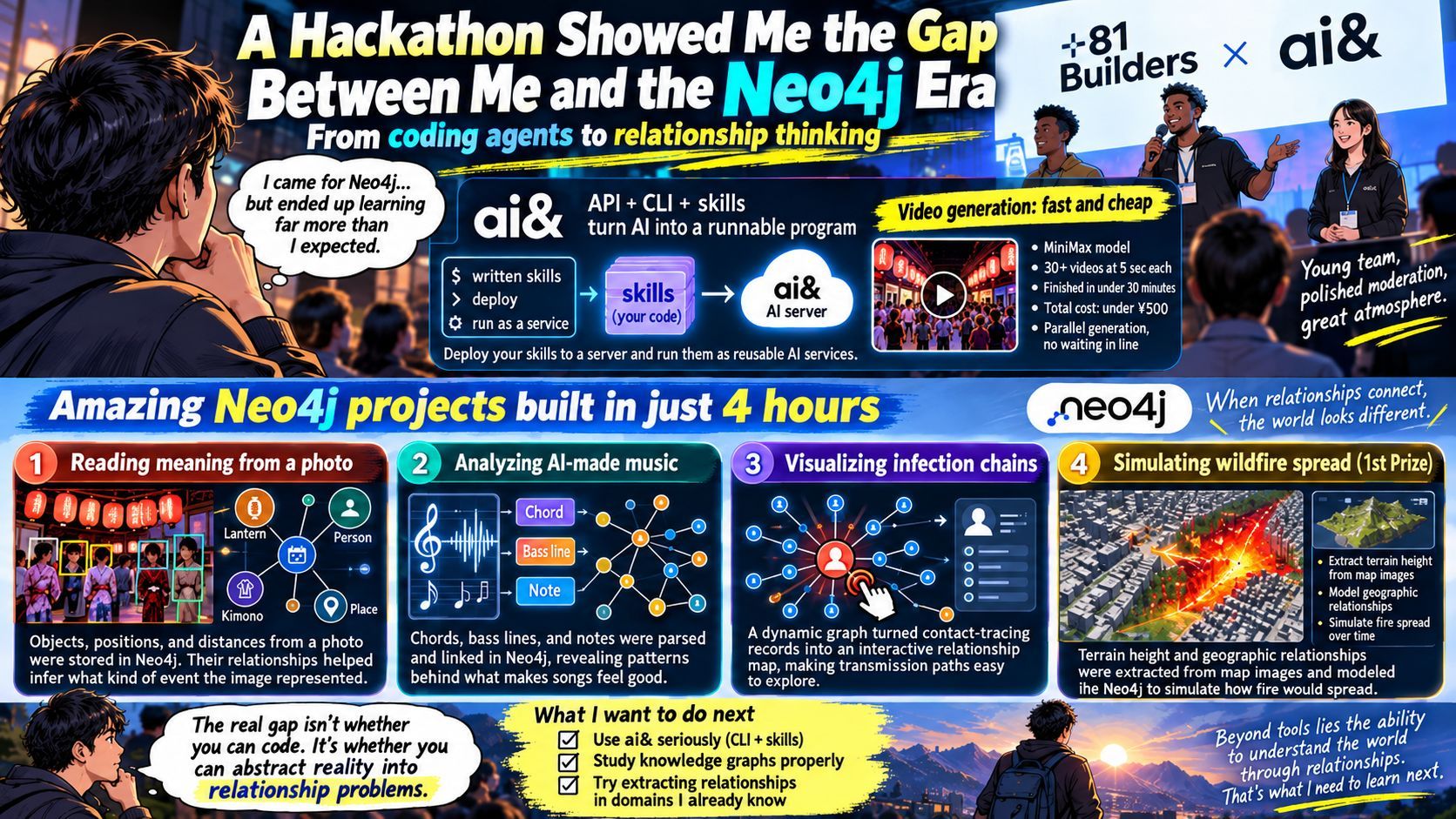
I joined a hackathon hosted by +81 Builders , where ai& showed how its CLI and skills turn an AI service into a deployable server, and MiniMax video generation proved fast and inexpensive. The bigger shock was what participants built with Neo4j in four hours: relationship analysis of photos, music analysis, a dynamic contact-tracing graph, and a fire-spread simulation. The experience made me realize that coding-agent fluency is no longer enough, and that I need to learn knowledge graphs.
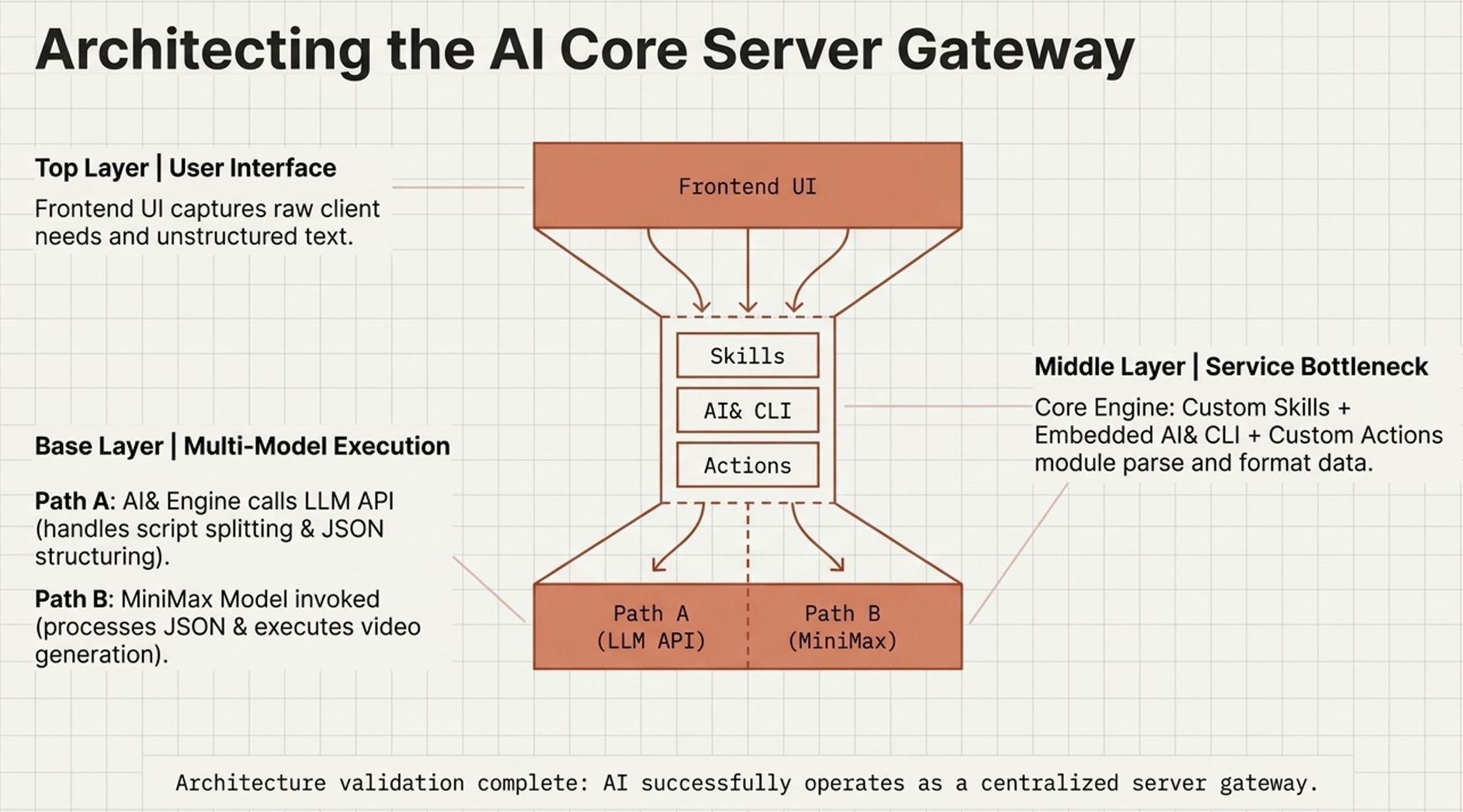
At a hackathon I built a tool that turns a story or blog post into video, validating three layers. The first automatically splits a story into sections, generates prompts, characters, and voiceover, then produces video section by section. The second wraps the AI& CLI in a service layer, using skills to drive the AI LLM API so non-programmers can use it. The third writes the voiceover first and uses it as a reference for MiniMax to generate visuals—a sound-driven approach. All three validations succeeded.
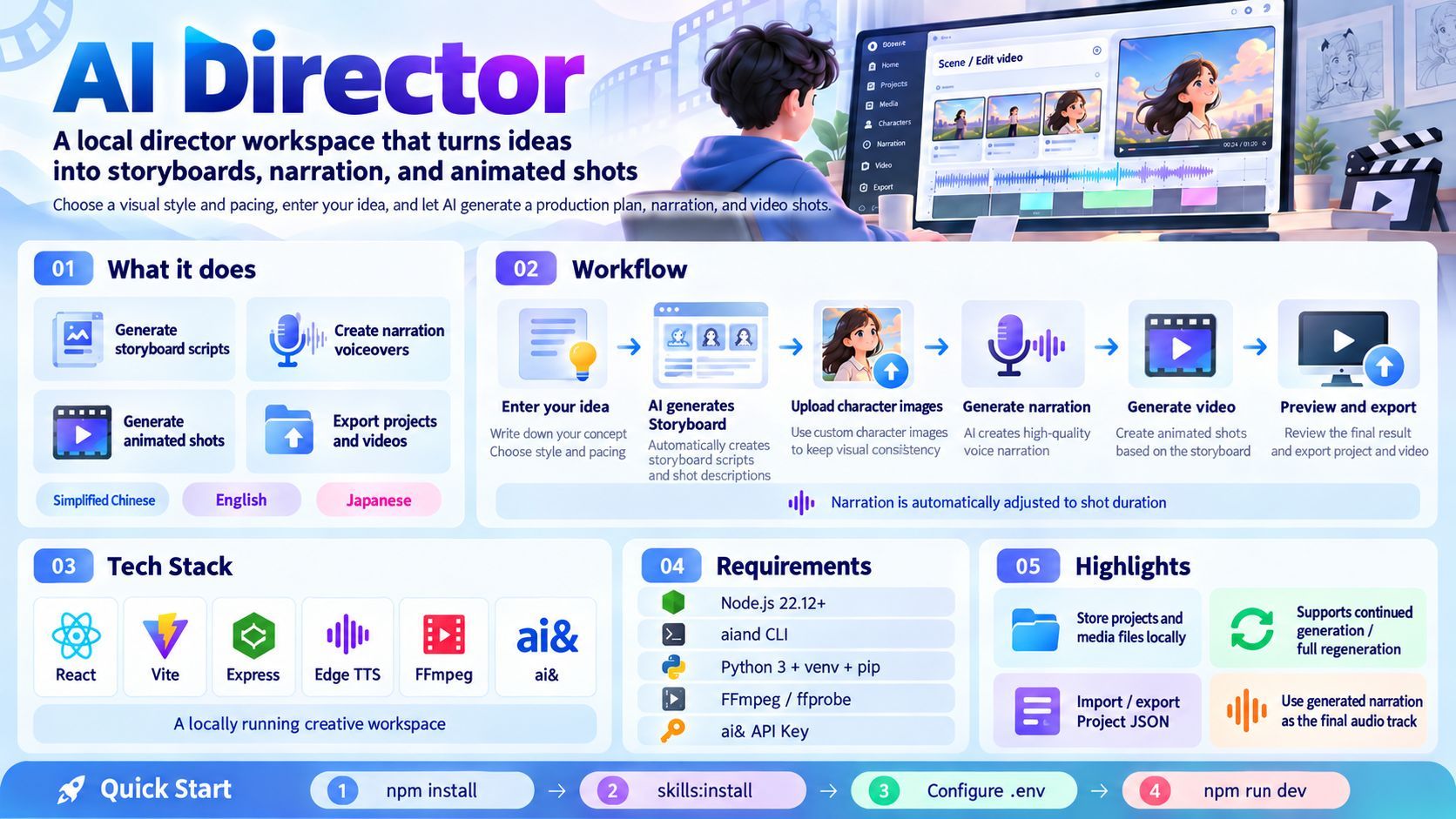
AI Director is a local director's workspace that breaks an idea into a storyboard, characters, voiceovers, and shots. It constrains AI output with validated project JSON, fits Edge TTS narration to each shot's duration, and generates video through ai&'s MiniMax H3. This article walks through the production flow, timeline handling, the boundaries of paid tasks, the local-first data design, and the engineering choice to load and validate the Skill explicitly.
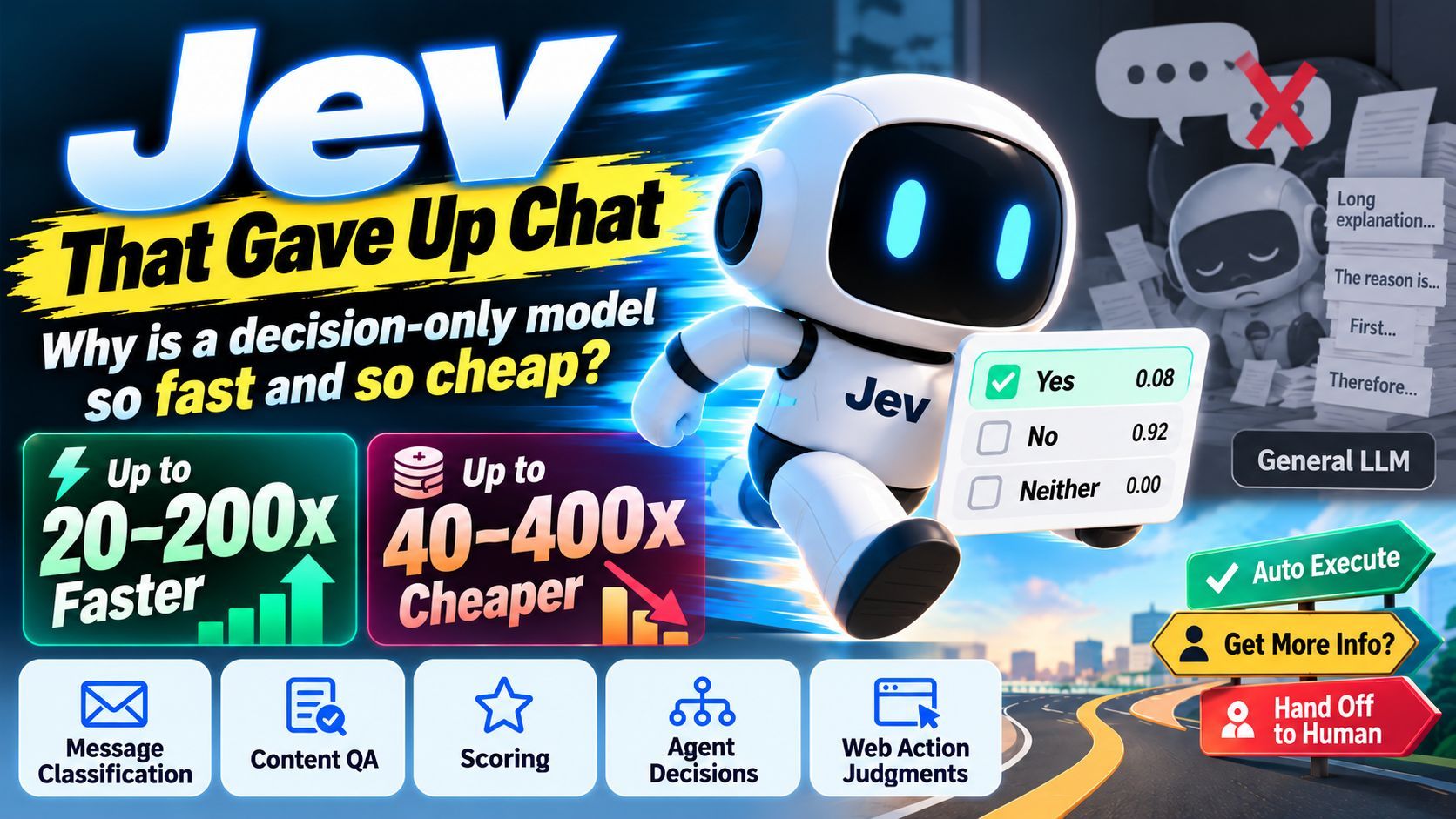
TypeSafe AI's Jev does not write; it returns decisions and their probabilities. In official tests it is up to about 193.6 times faster than a general-purpose LLM and about 444.6 times cheaper, at $0.042 per million input tokens with free output. Called with a state and a question, it answers as Noul, Choice, or Score, and is trained with RLCD so its calibrated probabilities can drive automatic routing—a division of labor among judging, generating, and executing.
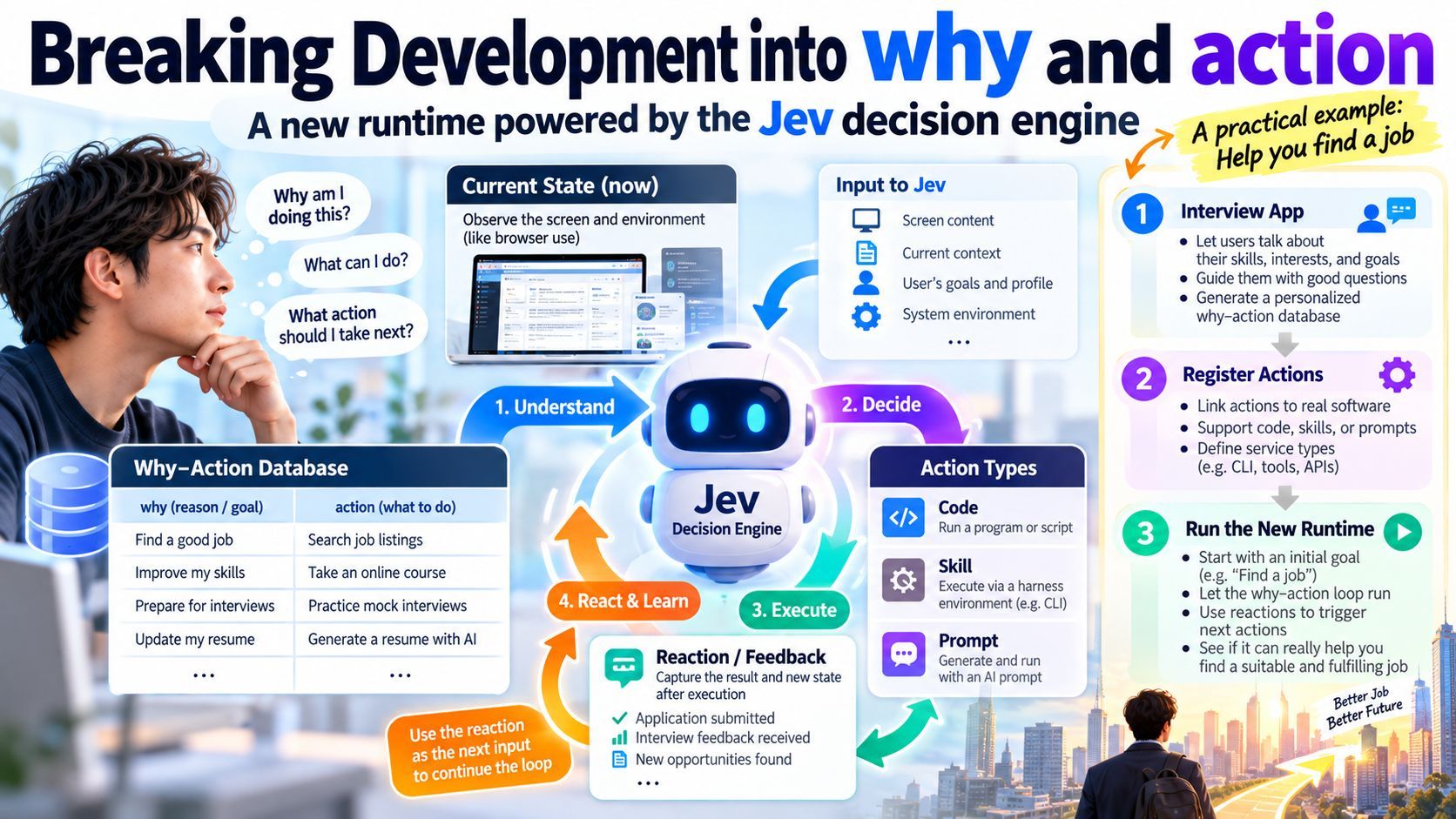
Starting from JVE, a judgment engine that appeared in 2026, this post abstracts development into a key-value pair of why and action and imagines a new runtime driven by the current state: it takes in "now," decides which why-actions to prioritize and in what order, then runs them. A reaction after each action becomes new input that triggers the next Y; browser use watches "now," and an interview helps people build their own why-action database. The scope narrows to a small "find you a job" example in three steps.
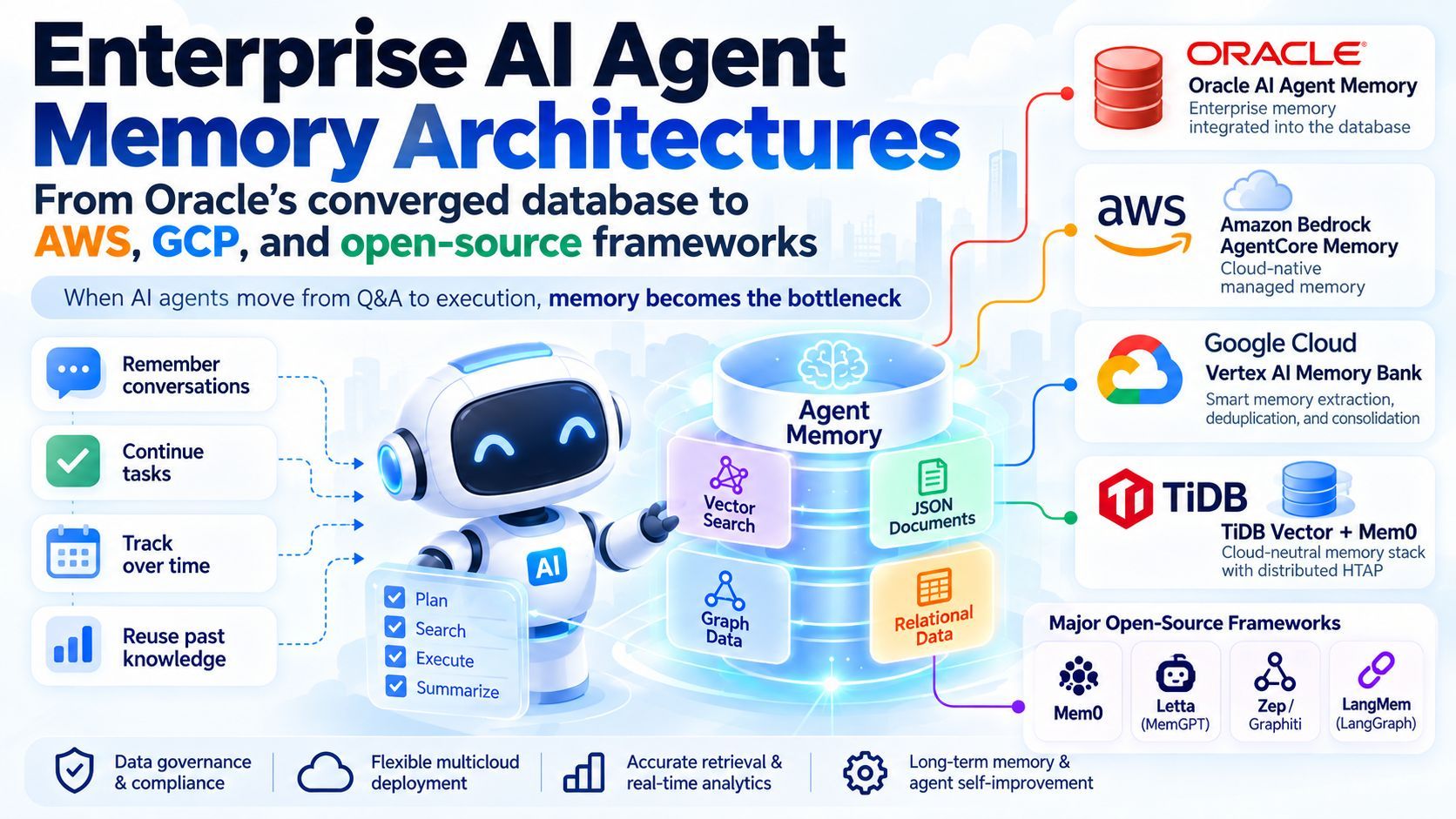
Once AI agents take on multi-day tasks, memory becomes infrastructure. This article covers Oracle AI Agent Memory's converged-database route, TiDB Vector plus Mem0's distributed HTAP route, the managed AWS Bedrock AgentCore Memory and GCP Vertex AI Memory Bank services, and four open-source frameworks: Mem0, Letta, Zep/Graphiti, and LangMem. It closes with selection guidance for regulated industries, cloud-native apps, multi-tenant SaaS, and temporal-logic use cases, plus three future trends.
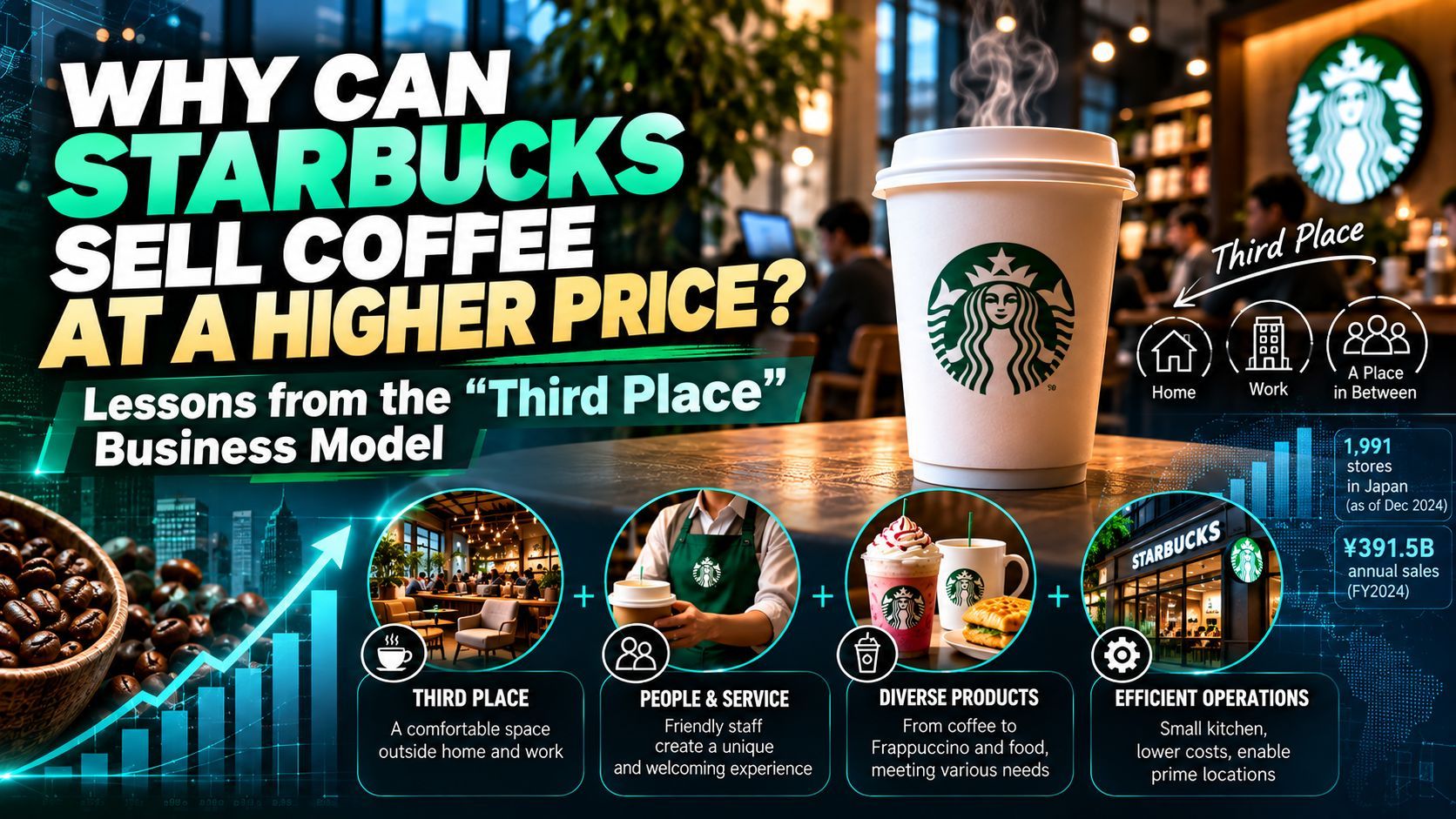
Starbucks charges 380–510 yen for a drip coffee—more than Doutor or Tully's—yet it is Japan's largest café chain. Using Starbucks as the example, this article traces the success factors behind it: the "third place" concept, friendly staff, product strategy, and store design. It then separates the narrow and broad definitions of a business model and lays out three ways to build one—strategic analysis, customer insight, and pattern adaptation—along with their trade-offs.
I attended the AI Film Hackathon in Tokyo at the Fujitsu Kawasaki Tower and used the AI animation tool Magnific for the first time. It ships with MiniMax H3 series models and Google Flash 3.8 TTS, while an AI Agent automatically operates the canvas to build the Base layer. At a roughly five-hour event I finished seventeen or eighteen audio-driven clips totalling nearly two minutes in under two hours, and the promo CM I made for a pet-care App won an award. I also sense coding agents giving way to more expressive AI products.
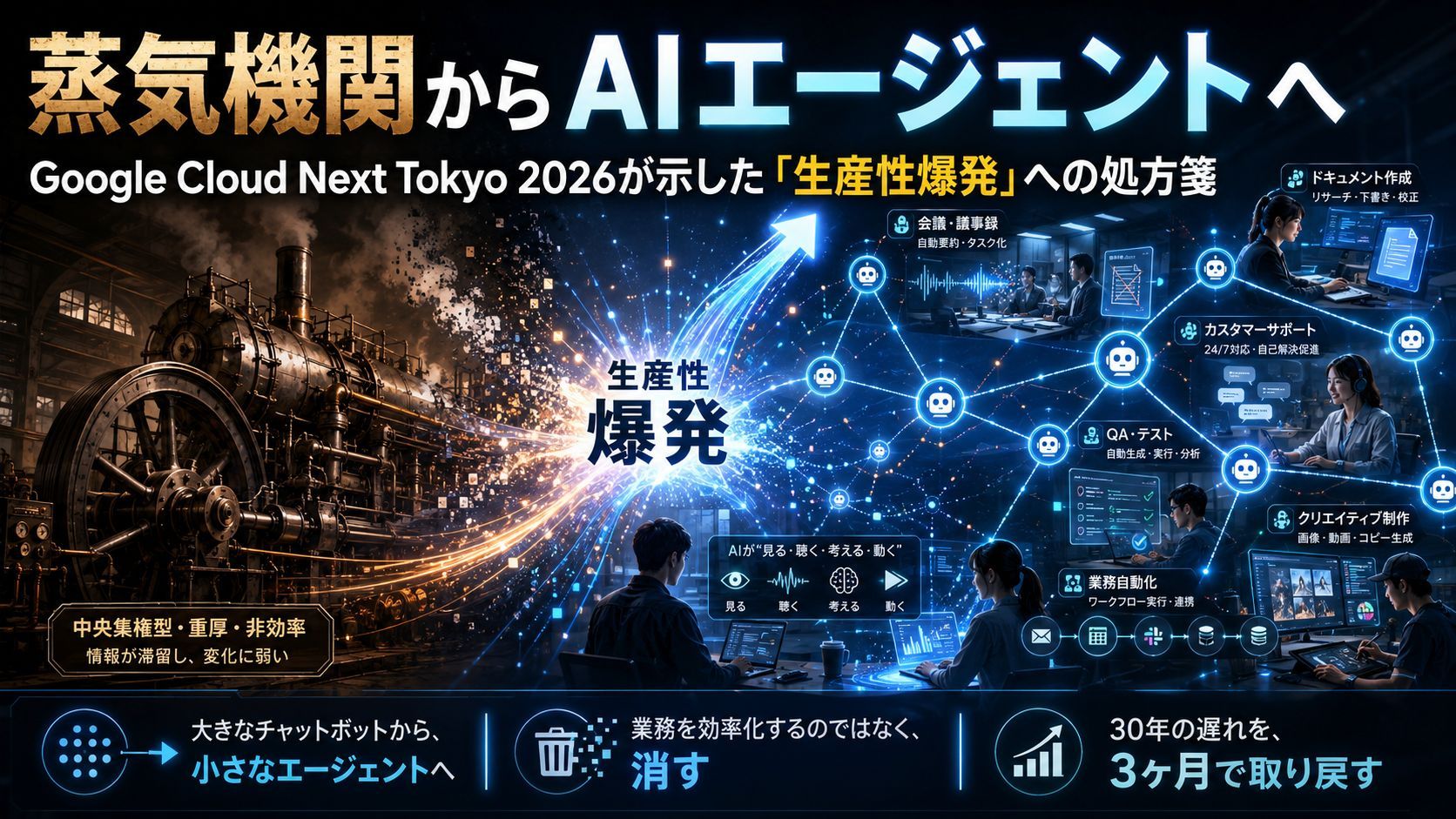
Based on Google Cloud Next Tokyo 2026, this article explores strategies for achieving a "productivity explosion" with AI. It highlights shifting from centralized chatbots to localized AI agents, legitimizing shadow AI into corporate assets, real-world case studies from Sompo Japan and Square Enix, and eliminating redundant workflows to augment human capability through multimodal AI.
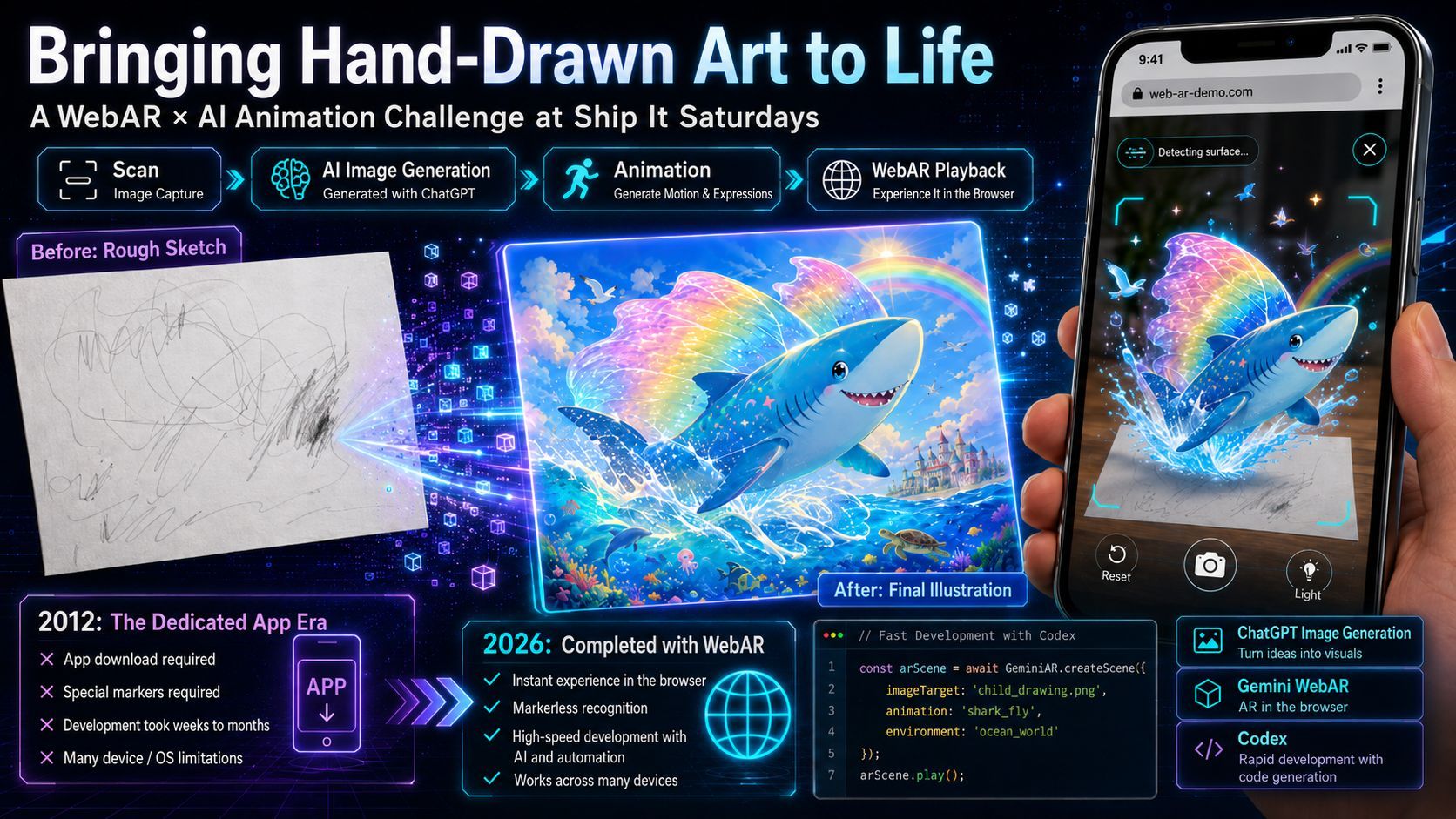
This is my second time participating in this event. During the project, I shifted focus to bringing a child's hand-drawn gift to life through AR animation. By leveraging ChatGPT for image generation and Codex for Web AR development, I completed the implementation in just ten minutes. Comparing this to my research in 2012, the evolution to browser-based, high-efficiency development by 2026 is truly striking. It was a deeply satisfying experience to create this small-scale AR project.
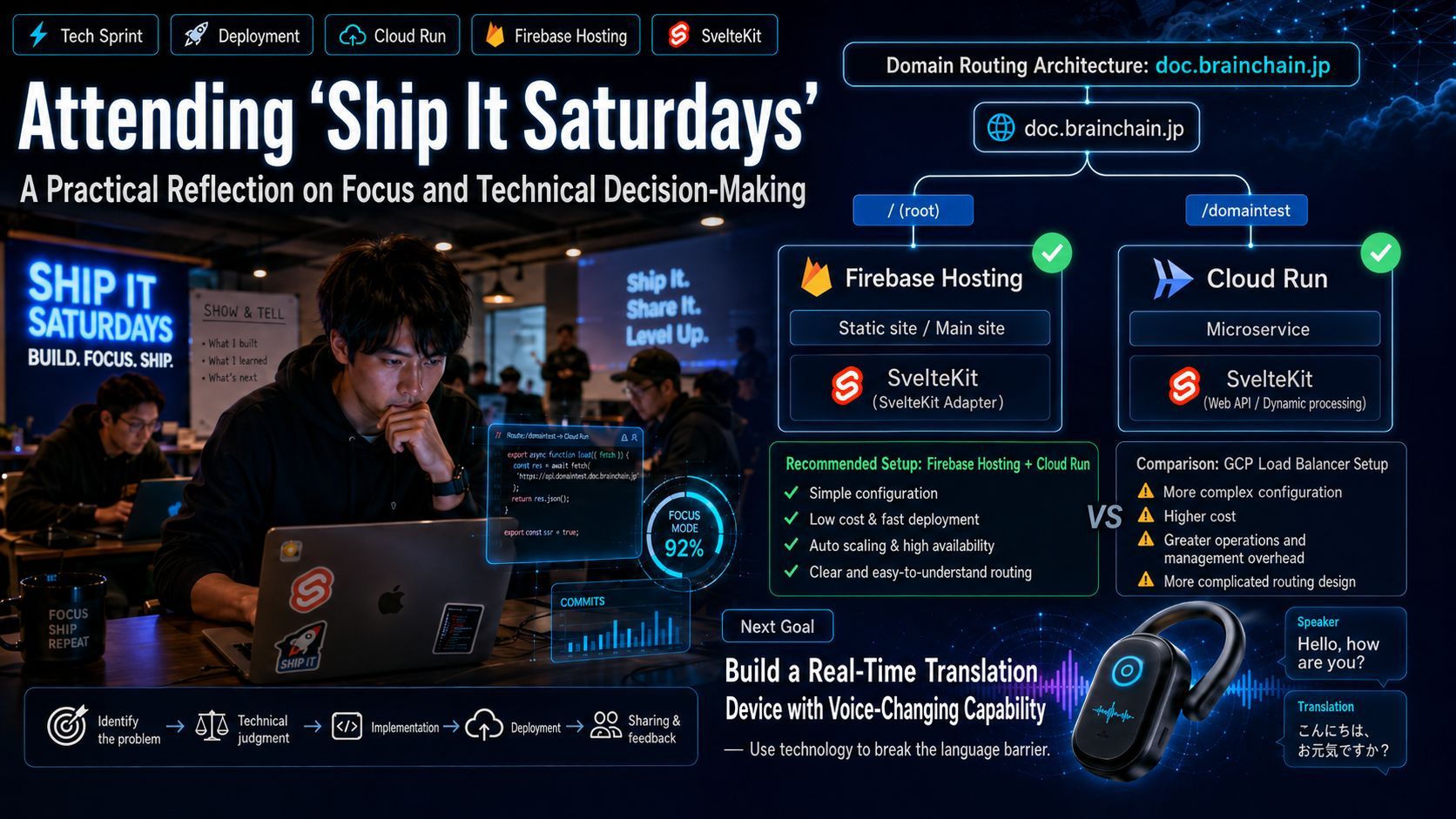
I participated in "Ship It Saturdays" to tackle long-standing technical tasks. I focused on deploying a Google Cloud Run project by using Firebase Hosting to route specific paths to Cloud Run services. After comparing this approach with GCP Load Balancers, I concluded that Firebase Hosting is optimal for cost and maintenance. This post outlines the implementation steps, including SvelteKit base path configuration and firebase.json rewrite rules.