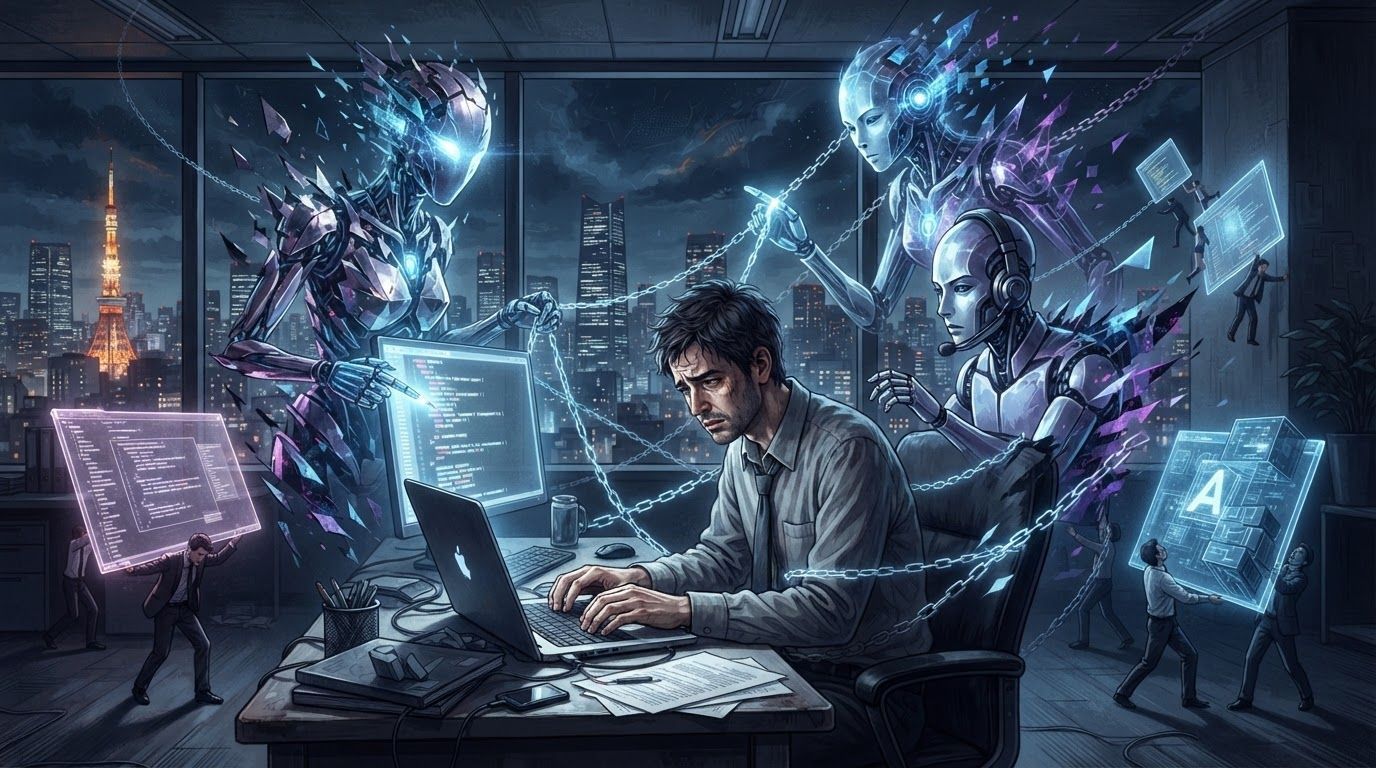
After leaving a company he had worked at for ten years, a Tokyo engineer finds the IT job market in chaos: AI does not screen people, it amplifies them. Non-technical operators with no bottom line pull in work, hire casually, and force projects onto engineers, while picking out AI-generated typos becomes a power game. He asks whether slowing the new industrial revolution might better serve humanity, and whether creation should be left to humans.
At forty and living in Tokyo, the author keeps running into the same problem during a career transition: when things don't go as planned, a sense of losing control pulls him into self-doubt. Psychology calls it intolerance of uncertainty, and having a name for it comes as a relief. Drawing on evolution, he explains why humans are wired to stay alert, how catastrophic thinking mistakes the worst case for fact, and how separating hypothesis from fact and returning attention to the present can help. He also examines how the AI era adds fuel to the fear of being replaced, arguing that the shift should be from competing with AI to harnessing it, and that this is not a burden individuals should carry alone.
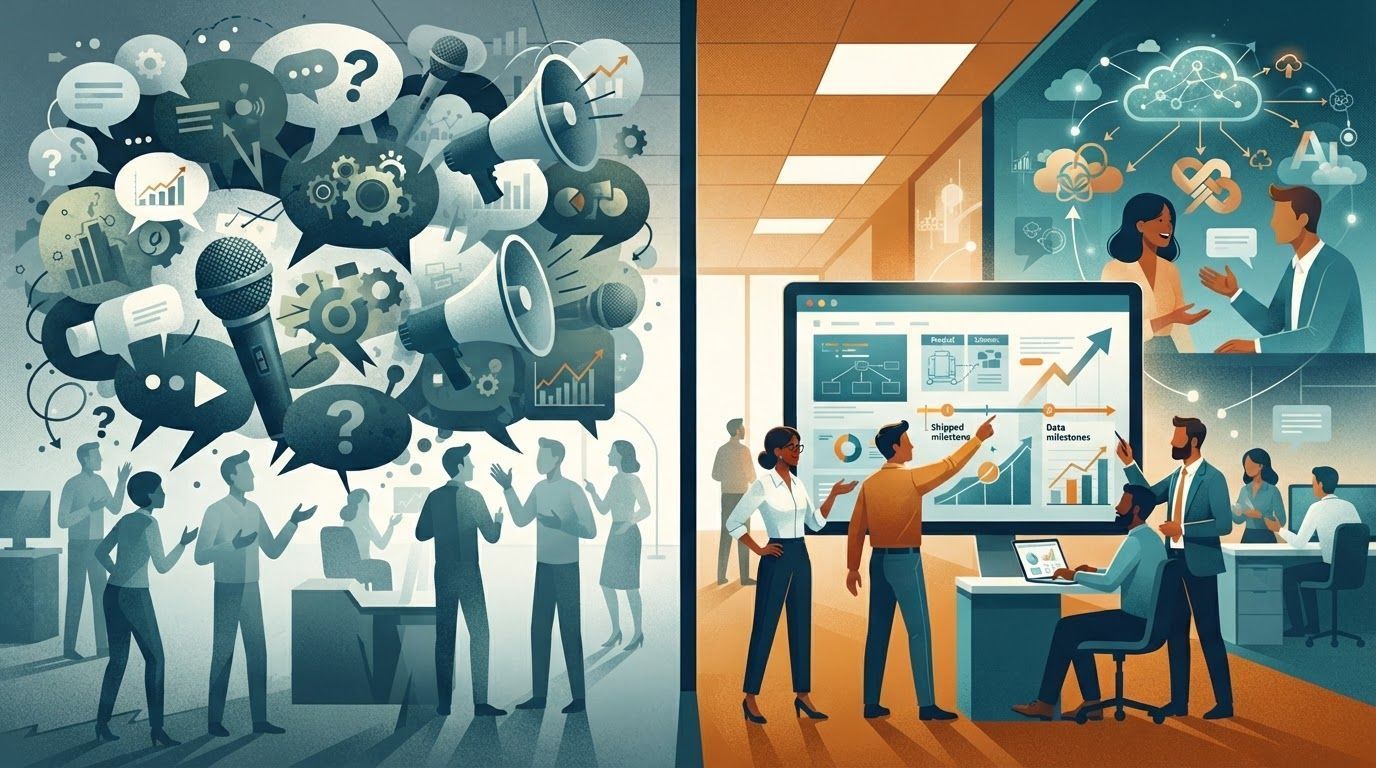
A month into a new job, the author hits the same wall he left behind: plenty of drive, no outlet for it. He traces the problem to a culture where talk outweighs action—endless arguments, concepts outnumbering shipped products. Drawing on his experience with Japanese clients, he argues for fixing the inside first: daily reporting, joint planning, and solid work before going out to knock on doors. He then pushes further: in the AI era software products are losing value, and the edge moves to cloud partnerships, cross-selling, and the ability to read people, adjust their state, and inspire them through narrative.
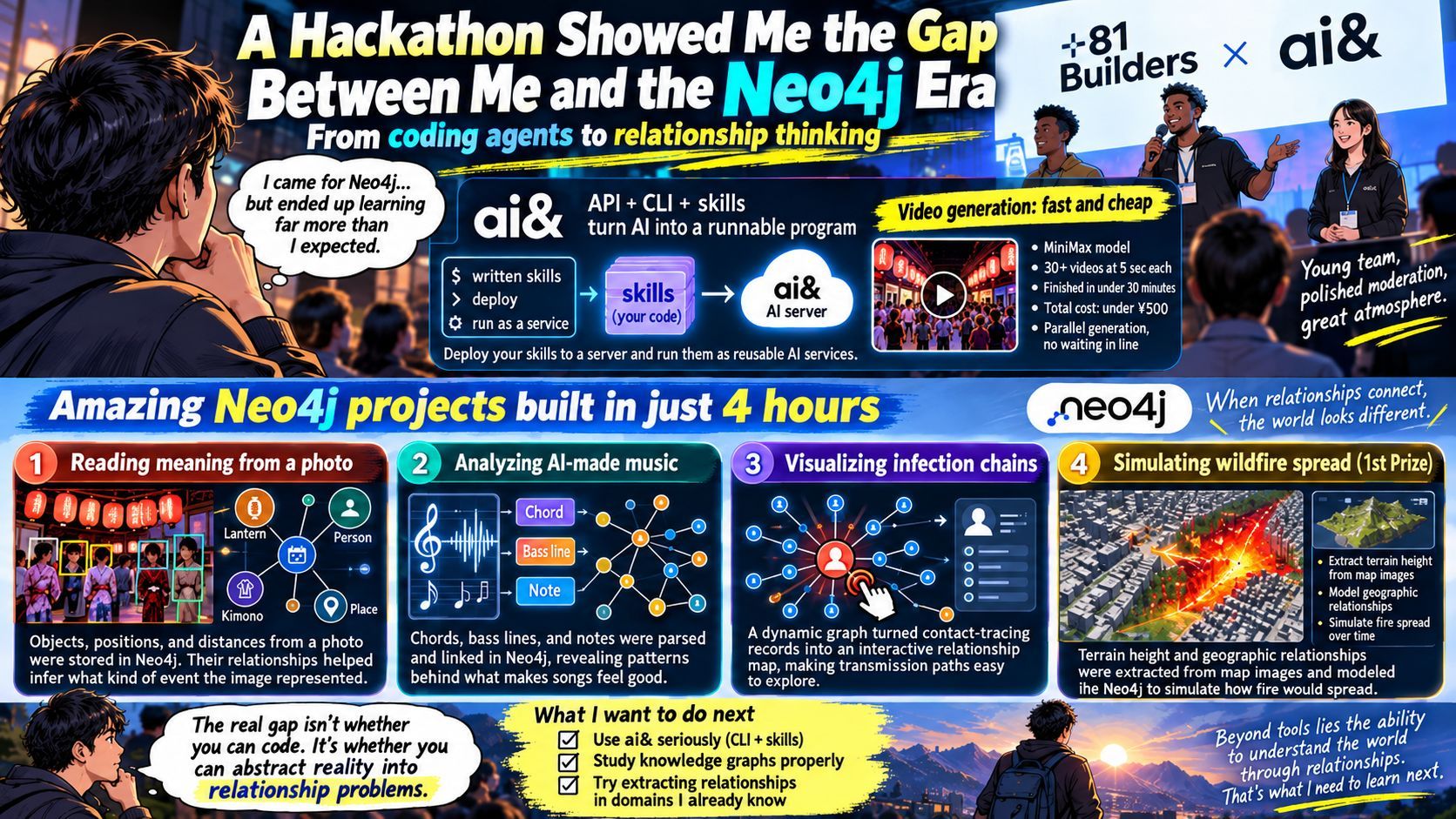
I joined a hackathon hosted by +81 Builders , where ai& showed how its CLI and skills turn an AI service into a deployable server, and MiniMax video generation proved fast and inexpensive. The bigger shock was what participants built with Neo4j in four hours: relationship analysis of photos, music analysis, a dynamic contact-tracing graph, and a fire-spread simulation. The experience made me realize that coding-agent fluency is no longer enough, and that I need to learn knowledge graphs.
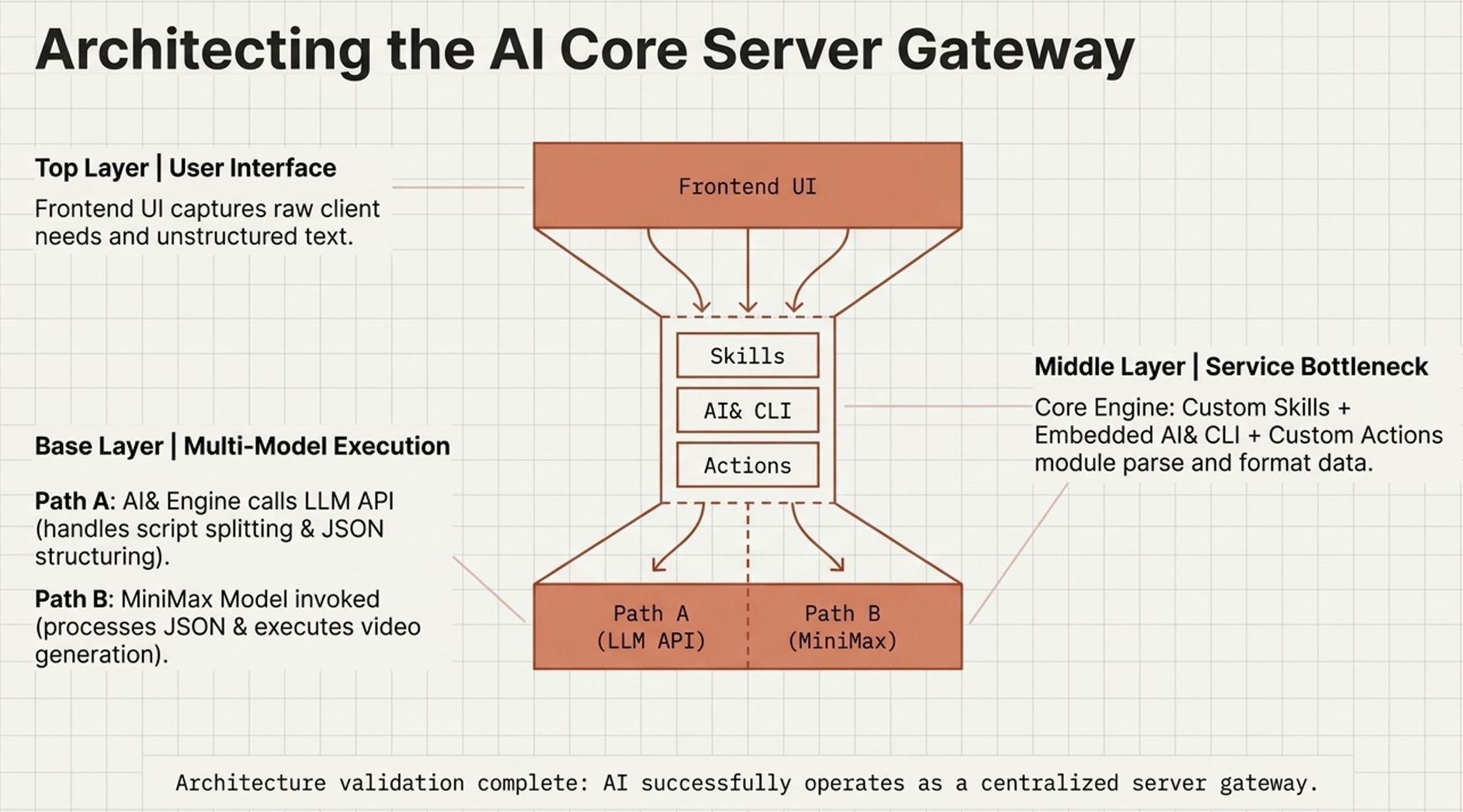
At a hackathon I built a tool that turns a story or blog post into video, validating three layers. The first automatically splits a story into sections, generates prompts, characters, and voiceover, then produces video section by section. The second wraps the AI& CLI in a service layer, using skills to drive the AI LLM API so non-programmers can use it. The third writes the voiceover first and uses it as a reference for MiniMax to generate visuals—a sound-driven approach. All three validations succeeded.
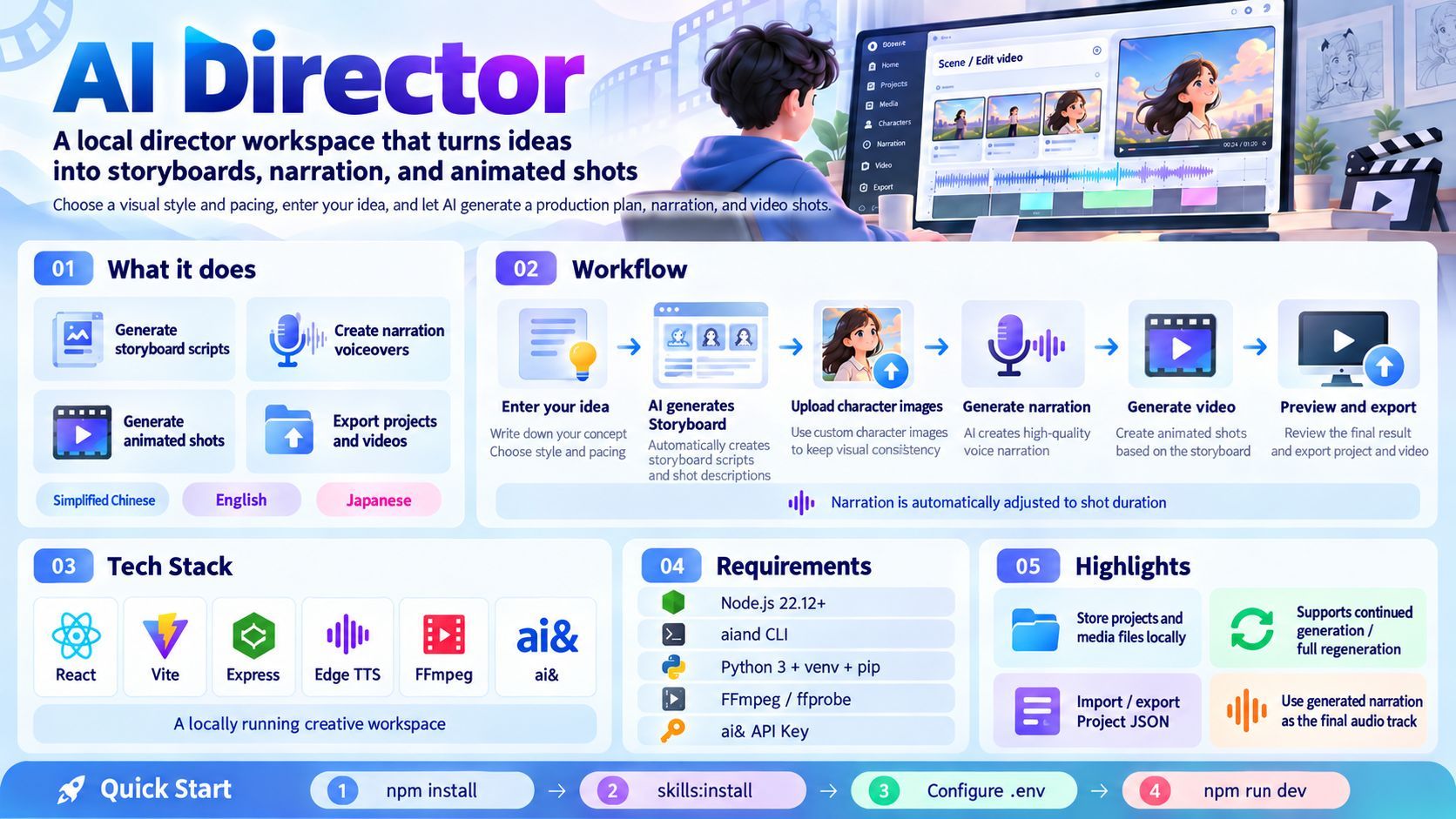
AI Director is a local director's workspace that breaks an idea into a storyboard, characters, voiceovers, and shots. It constrains AI output with validated project JSON, fits Edge TTS narration to each shot's duration, and generates video through ai&'s MiniMax H3. This article walks through the production flow, timeline handling, the boundaries of paid tasks, the local-first data design, and the engineering choice to load and validate the Skill explicitly.
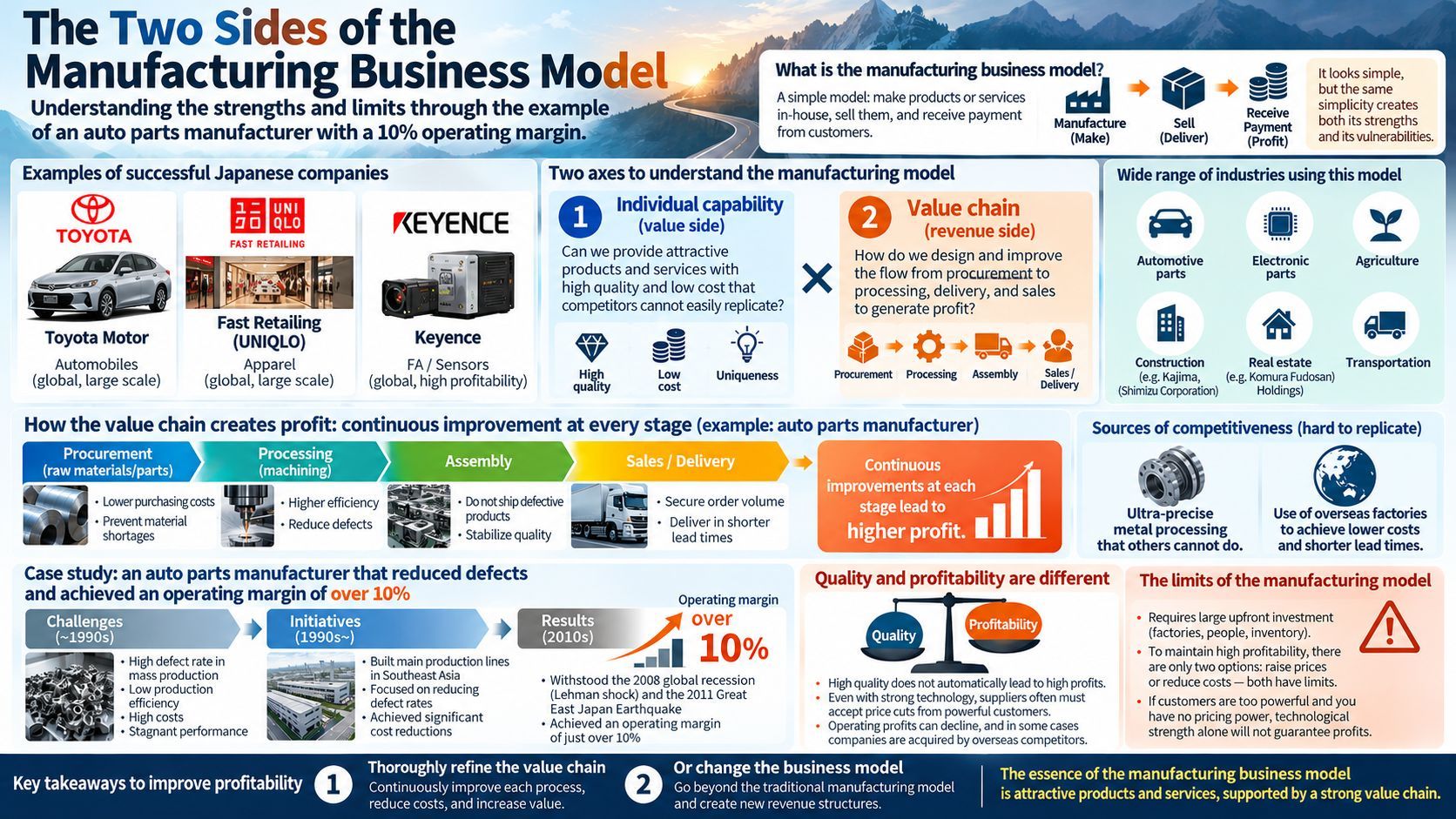
The make-and-sell model looks simple: a company manufactures and sells its own products and is paid by customers. Yet its strengths and its fragility come from the same place. Two axes matter: standalone strength—high quality, low cost, and things rivals cannot do—and the way revenue is earned across the value chain of procurement, processing, and delivery. One ultra-precision parts maker stagnated on mass-production defects, moved its main line to Southeast Asia in the 1990s, and improved defects so thoroughly that it held an operating margin above 10 percent through the 2008 recession and the 2011 earthquake. But quality and profit margin are different things: a supplier that cannot refuse price-cut demands does not recover, and was acquired. The only ways out are to overhaul the value chain or change the model.
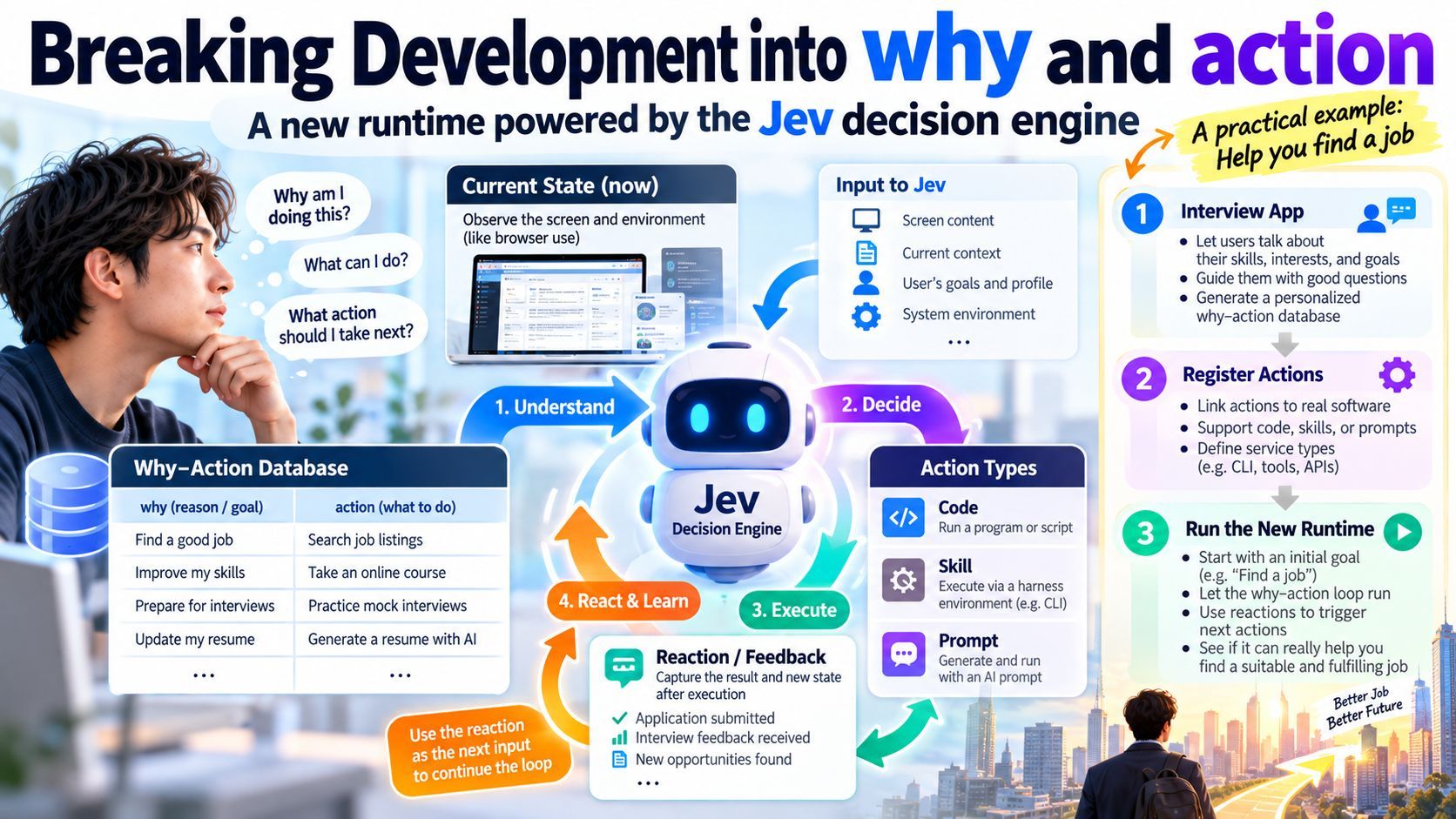
Starting from JVE, a judgment engine that appeared in 2026, this post abstracts development into a key-value pair of why and action and imagines a new runtime driven by the current state: it takes in "now," decides which why-actions to prioritize and in what order, then runs them. A reaction after each action becomes new input that triggers the next Y; browser use watches "now," and an interview helps people build their own why-action database. The scope narrows to a small "find you a job" example in three steps.
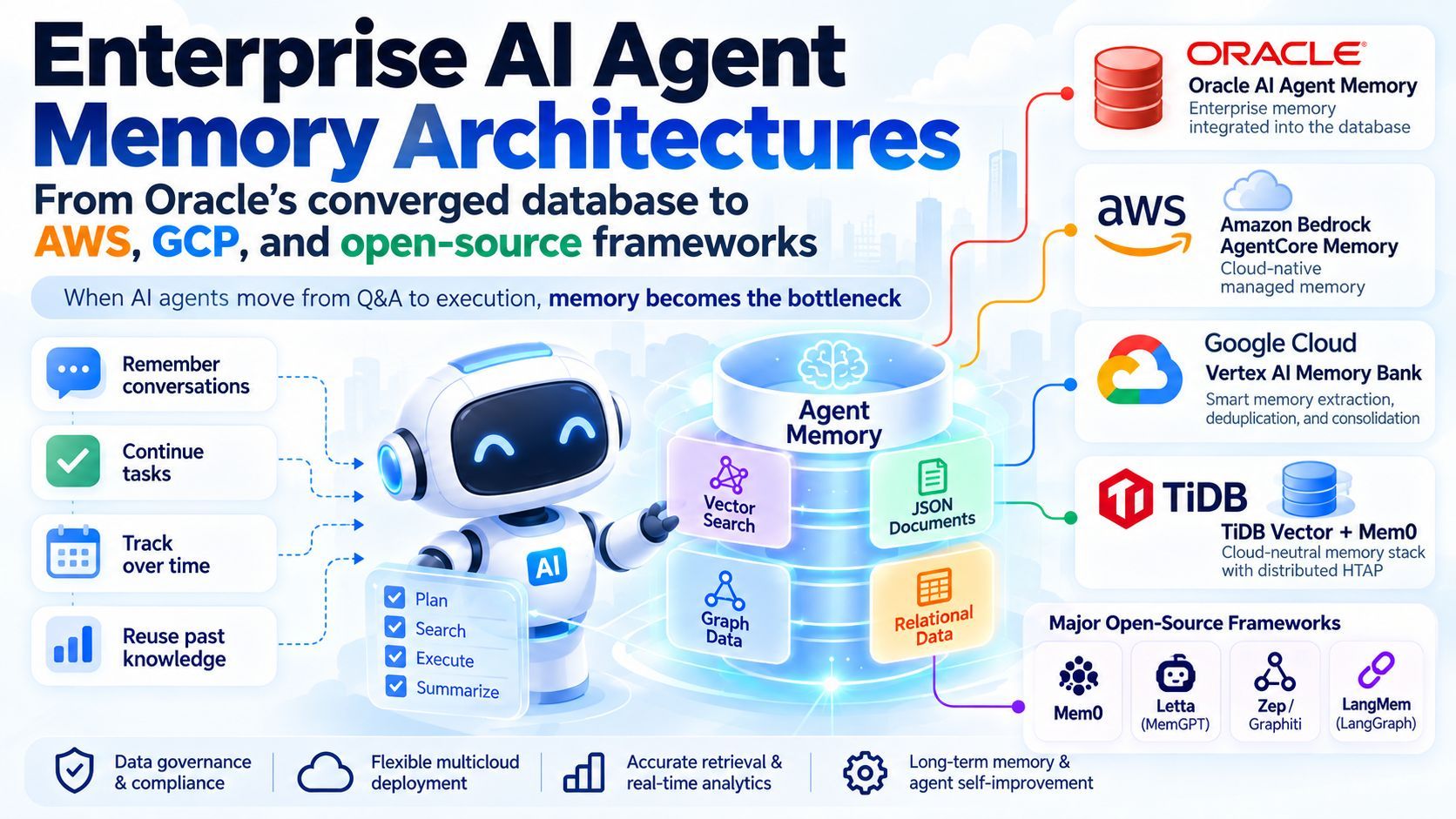
Once AI agents take on multi-day tasks, memory becomes infrastructure. This article covers Oracle AI Agent Memory's converged-database route, TiDB Vector plus Mem0's distributed HTAP route, the managed AWS Bedrock AgentCore Memory and GCP Vertex AI Memory Bank services, and four open-source frameworks: Mem0, Letta, Zep/Graphiti, and LangMem. It closes with selection guidance for regulated industries, cloud-native apps, multi-tenant SaaS, and temporal-logic use cases, plus three future trends.
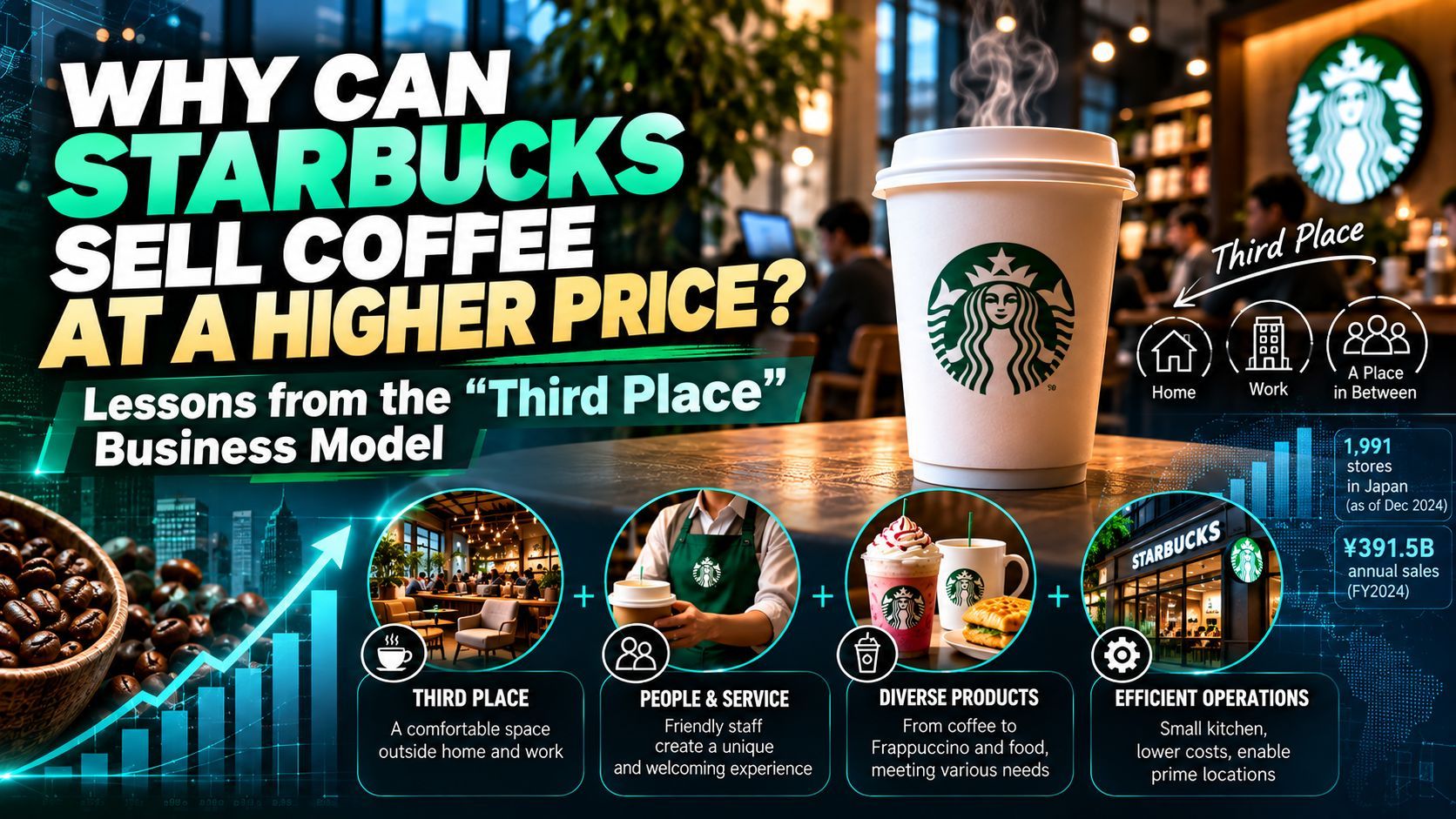
Starbucks charges 380–510 yen for a drip coffee—more than Doutor or Tully's—yet it is Japan's largest café chain. Using Starbucks as the example, this article traces the success factors behind it: the "third place" concept, friendly staff, product strategy, and store design. It then separates the narrow and broad definitions of a business model and lays out three ways to build one—strategic analysis, customer insight, and pattern adaptation—along with their trade-offs.
A look at a voice-processing system I built in September from one app plus a set of servers. Long call recordings are compressed and uploaded to Google Cloud, then picked up by a CPU-only, GPU-less machine that runs faster-whisper for speech-to-text and launches DeepSeek Harness as a CLI to run skills. The cloud system lets you upload your own skills and script files, and when processing finishes it notifies my phone while a script converts the content into three languages and posts it to my blog. It matches MUSE and Dota in core functionality while doing long-form transcription on CPU at very low cost. Next up is an automatic decision engine so the system can choose which Action Skills to run and in what order.
I attended the AI Film Hackathon in Tokyo at the Fujitsu Kawasaki Tower and used the AI animation tool Magnific for the first time. It ships with MiniMax H3 series models and Google Flash 3.8 TTS, while an AI Agent automatically operates the canvas to build the Base layer. At a roughly five-hour event I finished seventeen or eighteen audio-driven clips totalling nearly two minutes in under two hours, and the promo CM I made for a pet-care App won an award. I also sense coding agents giving way to more expressive AI products.