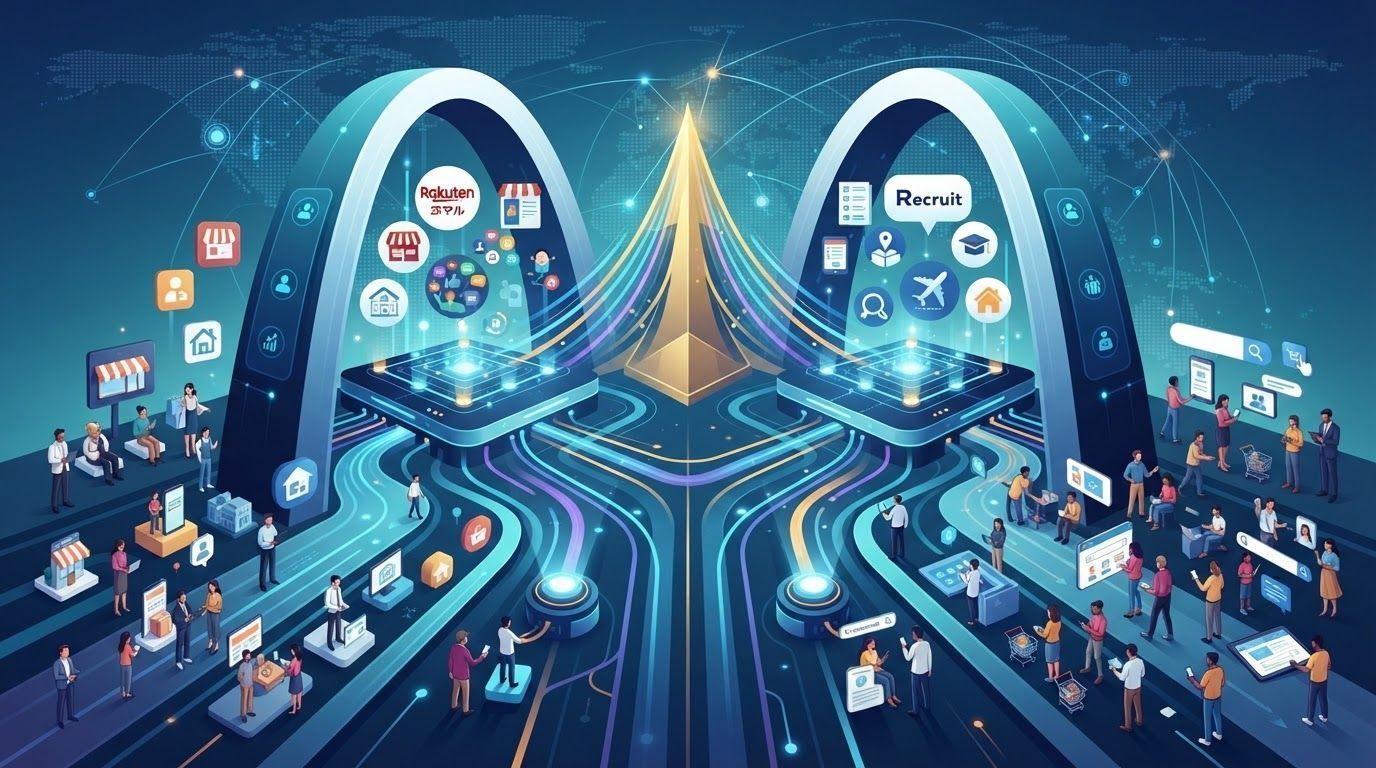
The matching model connects supply and demand, provides a marketplace, and earns money by brokering. This article breaks it down along two axes—the source of value and the way profit is captured—then examines Rakuten's mall model against Amazon's retail model, Recruit's replication of the structure across industries, and the winner-takes-all dynamic that emerges once the internet erases distance. It closes with the bargaining power of dominant platforms and the terms they set.
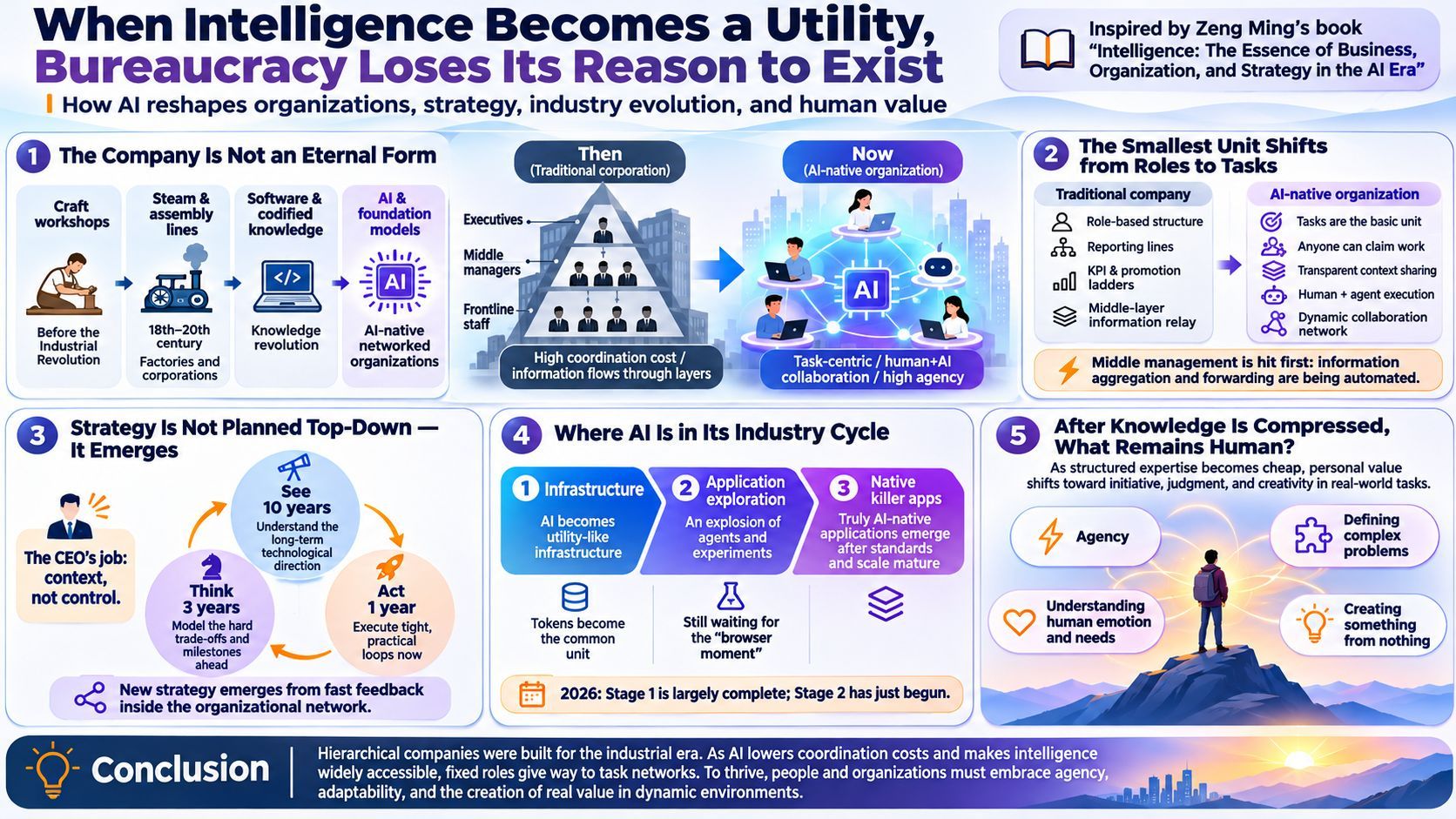
Zeng Ming argues in his new book Intelligence that the industrial-era corporation and hierarchical management are fading. Once large models turn general intelligence into infrastructure like water and electricity, the basic unit of organization shifts from the job to the task, and strategy emerges from the organization rather than from top-down plans. The piece traces the three stages of AI diffusion, the endgame of model companies once token becomes a unit of measure, and an application layer still waiting for its browser moment — then asks what is left for humans once structured knowledge is taken over.
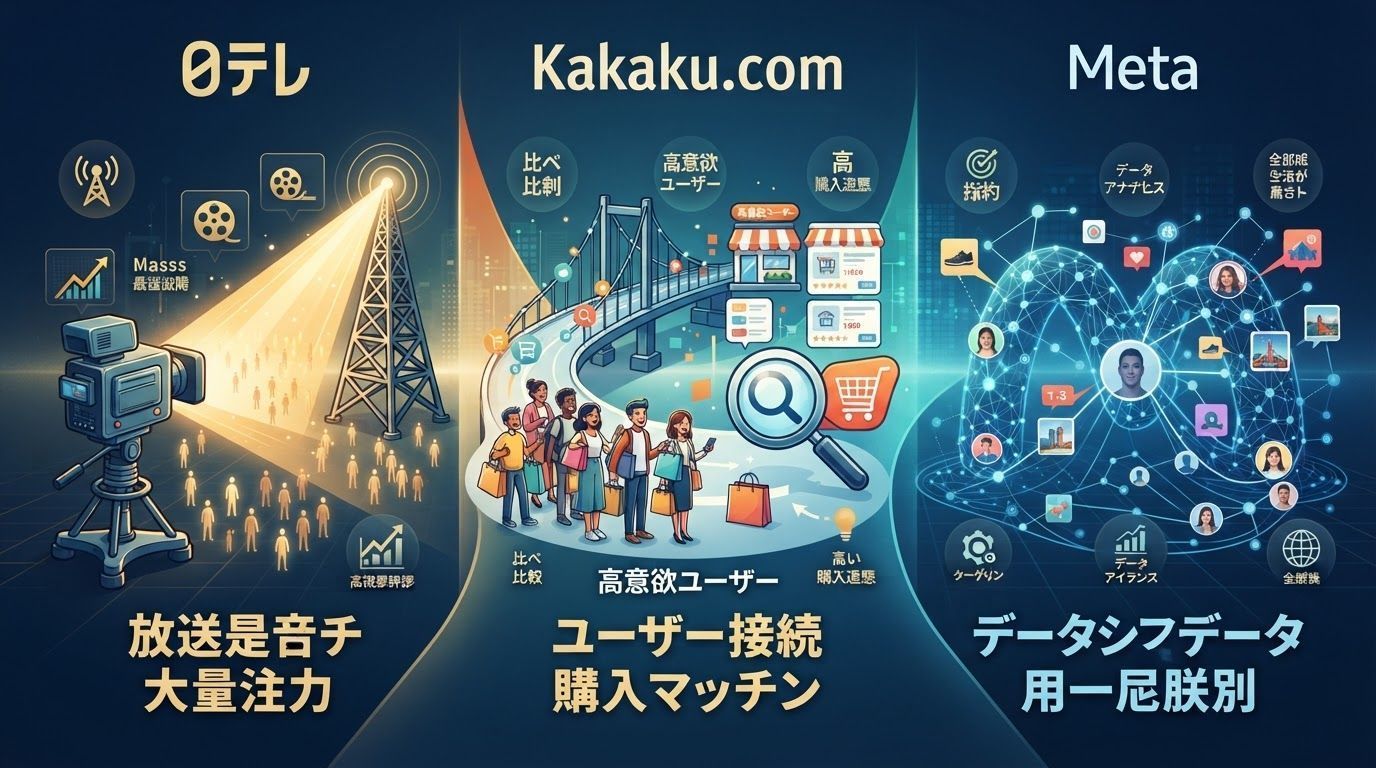
Three companies—Nippon TV, Kakaku.com, and Meta—all depend on advertising, but each sells a different scarce resource: TV ratings, high-intent shoppers, and user data for targeting. This article compares their revenue structures, strengths, and limits, including the social responsibility that comes with platform scale.
Japanese newspaper ad revenue fell from ¥755 billion to ¥242 billion, a 67.9% drop, while circulation declined 46%. Drawing on Nippon Television Holdings, Meta Platforms, and Kakaku.com's Tabelog, this article unpacks the advertising model as a three-party market: a medium gathers attention through its own appeal, then connects audiences with sponsors and takes a cut. It traces how the newspaper cycle—content, circulation, influence, ad rates—broke down, why online advertising wins on measurable effectiveness, and why media appeal and verifiable results are the model's two make-or-break conditions.
When agents do most of the work, critical thinking does not happen by default. It slides from cognitive offloading to cognitive surrender, accumulating debt in outputs that look clean and pass their tests. This essay offers six questions to ask before prompting, a way to make verification a habit rather than a green check, practices for actually reading what was generated, and a case for treating your prompt as a mirror of your understanding. The work can be delegated; the judgment and the accountability cannot.
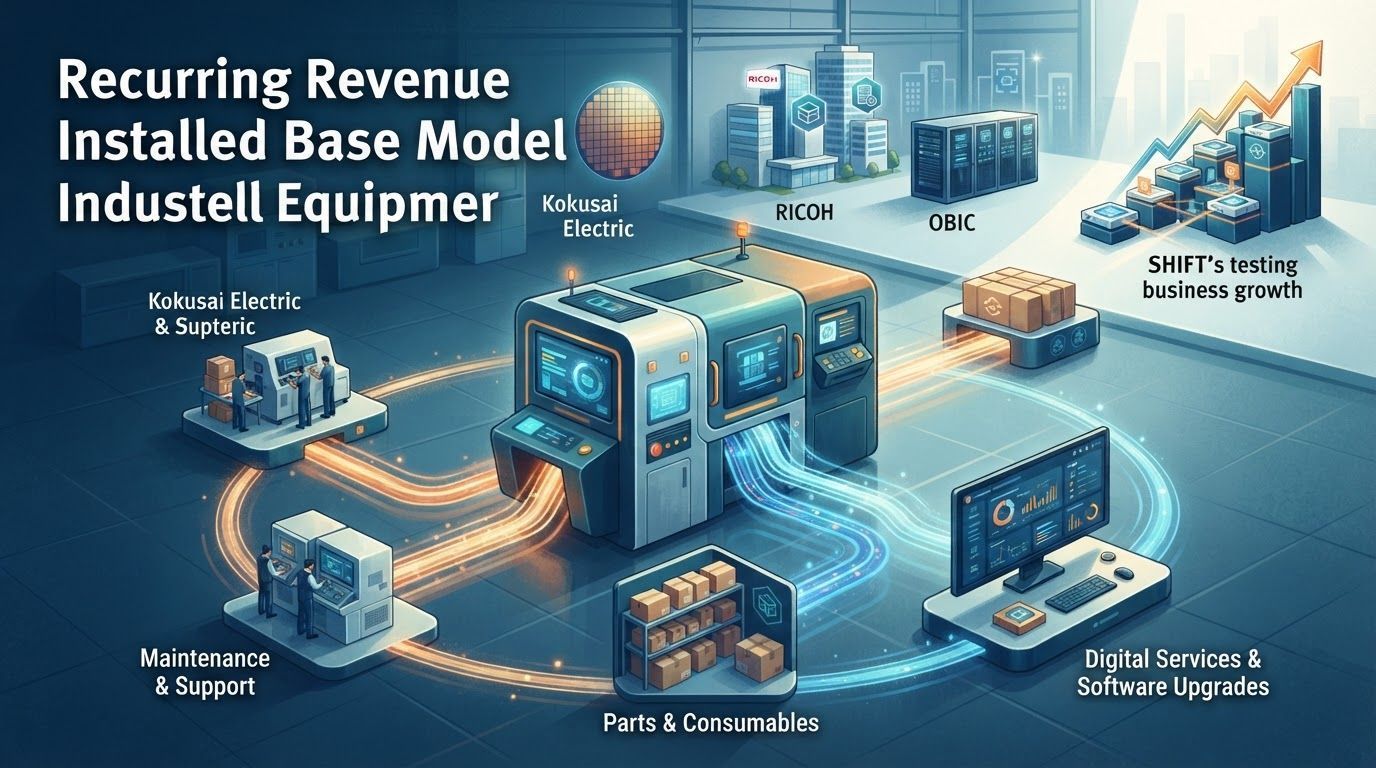
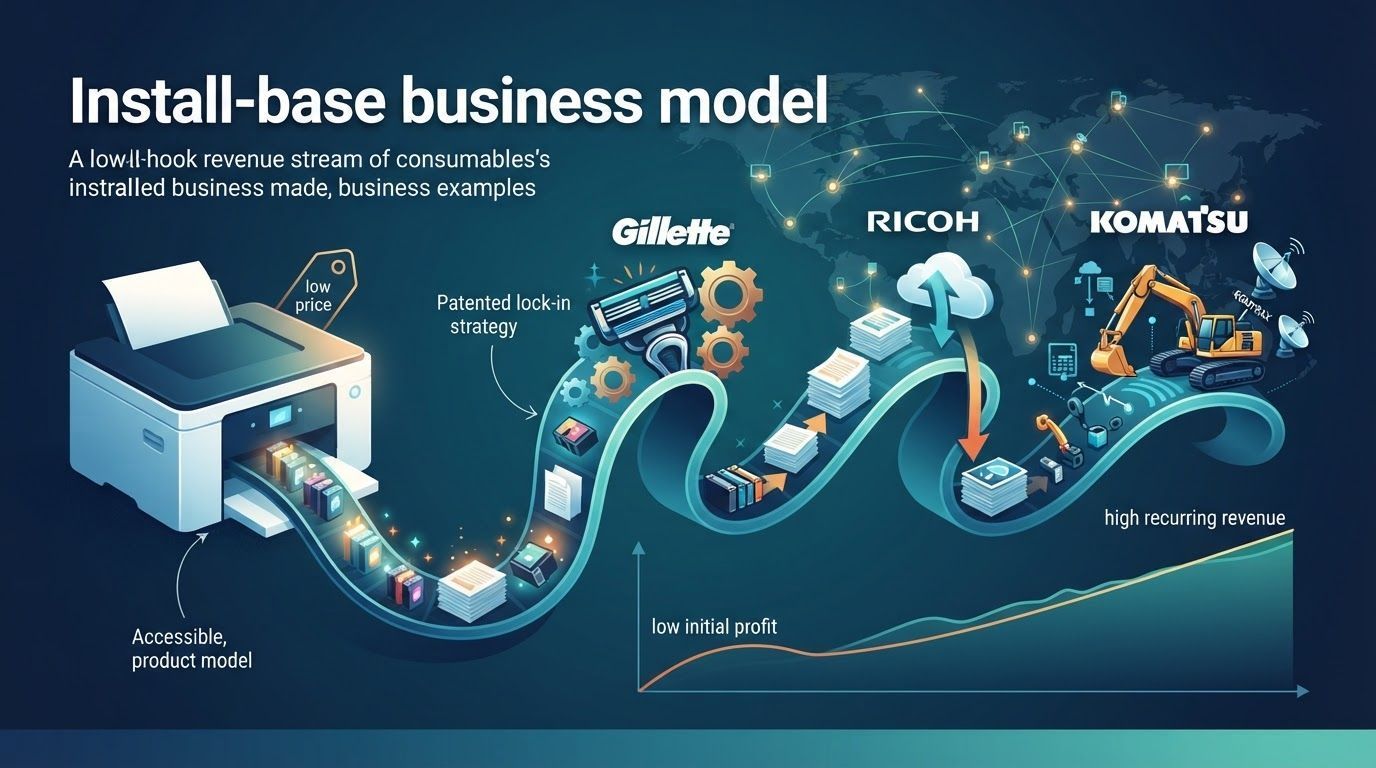
The sale of a machine is only the beginning. Drawing on Kokusai Electric, Ricoh, and OBIC, this article explains the installed-base model: earning recurring revenue from consumables, parts, maintenance, and services; using service to smooth semiconductor cycles; converting office-equipment relationships into digital services; and turning IT maintenance into a high-margin business through in-house work and standardization. SHIFT's testing business offers a contrast, along with the limits of stability.
A copier's profit often comes not from the machine but from toner, consumables, and service contracts sold afterward. The installed-base model uses a cheap hook product to build an installed base, then recovers value through recurring consumption and service. Gillette patented the blade-to-handle connection; Ricoh is struggling amid paperless work; Komatsu's KOMTRAX turns parts sales into selling uptime. These cases show the conditions the model needs—and the limits that can break it.
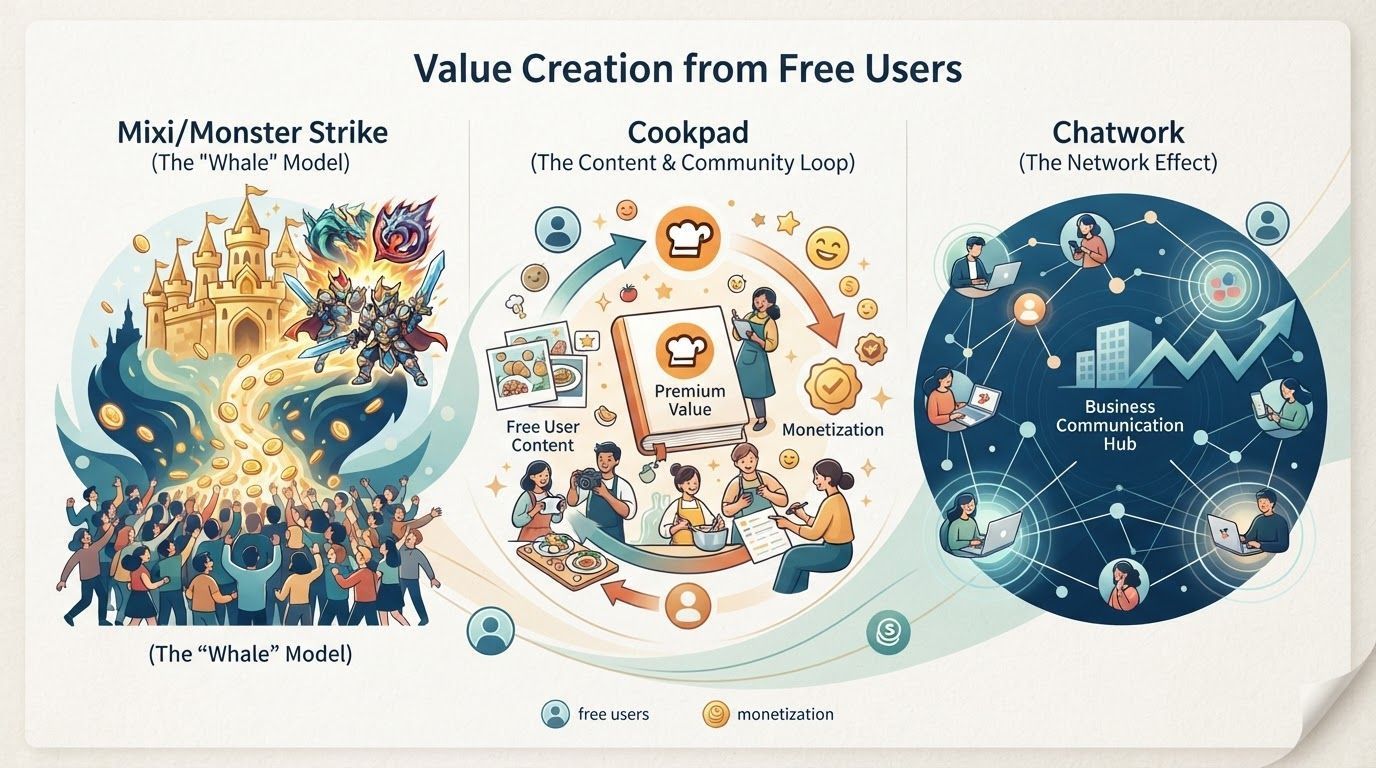
Freemium is often treated as a price list: attract people with a free tier, then convert some of them into payers. But what really decides whether it works is the value the free side produces. Through Mixi's reliance on a few heavy spenders, Cookpad's community of free recipe writers, and Chatwork's use of free users to build network scale, this article compares three revenue structures, their vulnerabilities, and why low marginal costs let SaaS growth eventually turn into profit.
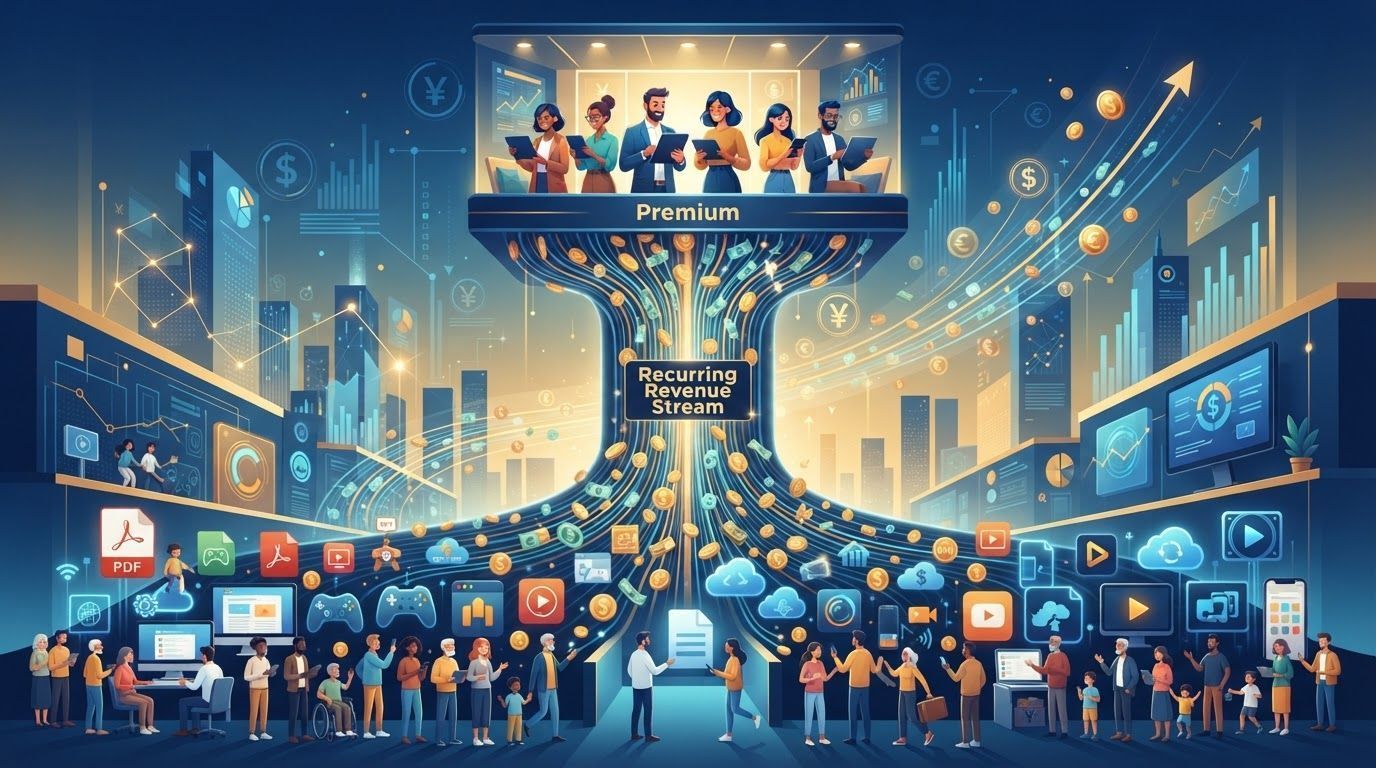
Freemium joins "free" and "premium" into one word: a minority of paying users supports a majority of free users. Chris Anderson's 2009 book Free helped the model spread. Adobe's free PDF reader and free-to-play mobile games are classic cases. The article argues that freemium is not a one-time sale: it depends on recurring revenue, and on gathering enough free users so that some of them will keep paying.