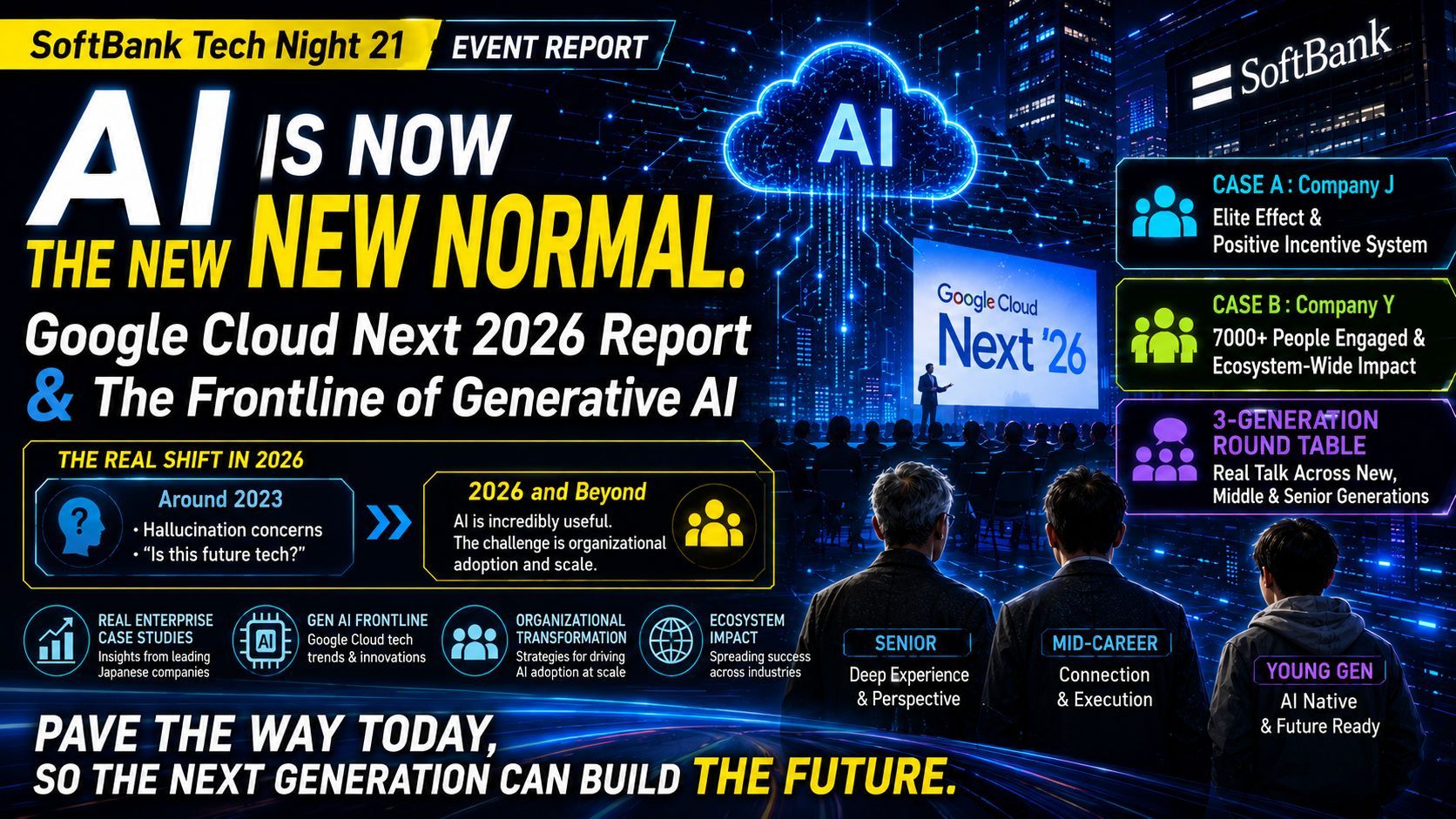
An event report on the Google Cloud '26 debriefing session hosted by SoftBank. It highlights the shift in 2026 AI implementation from a "performance barrier" to an "organizational barrier." The article provides an in-depth analysis of two corporate success stories, the generational gap, key factors for company-wide adoption, and the mission of today's engineers.
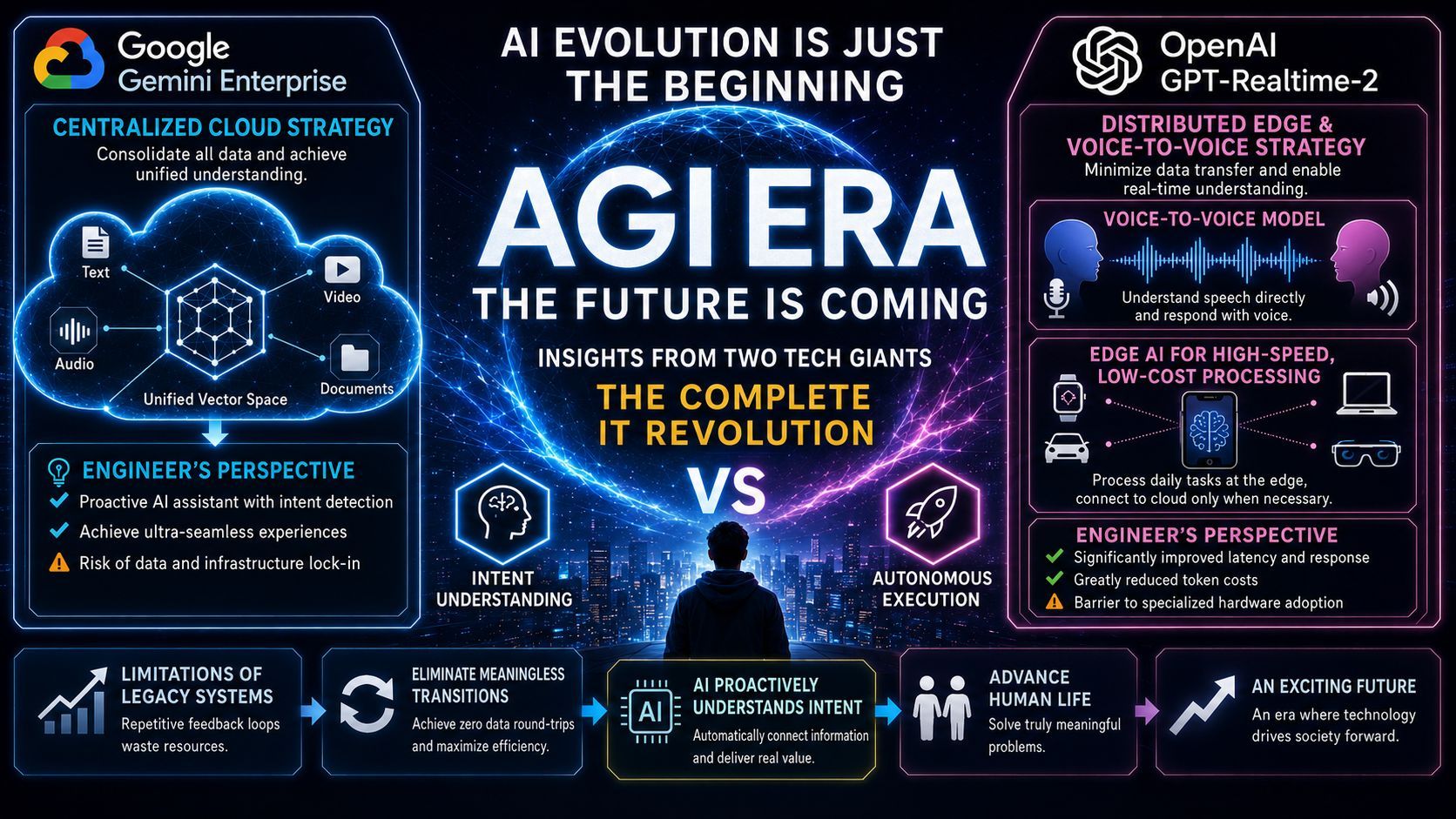
The arrival of the AGI era marks the prologue to a "complete IT revolution." This article delivers a thorough comparison between Google’s "centralized cloud" strategy and OpenAI’s "decentralized edge & Voice-to-Voice" strategy. It explores everything from the limitations of current RAG (Retrieval-Augmented Generation) to the future outlook of the next-generation automated society that engineers must prepare for.
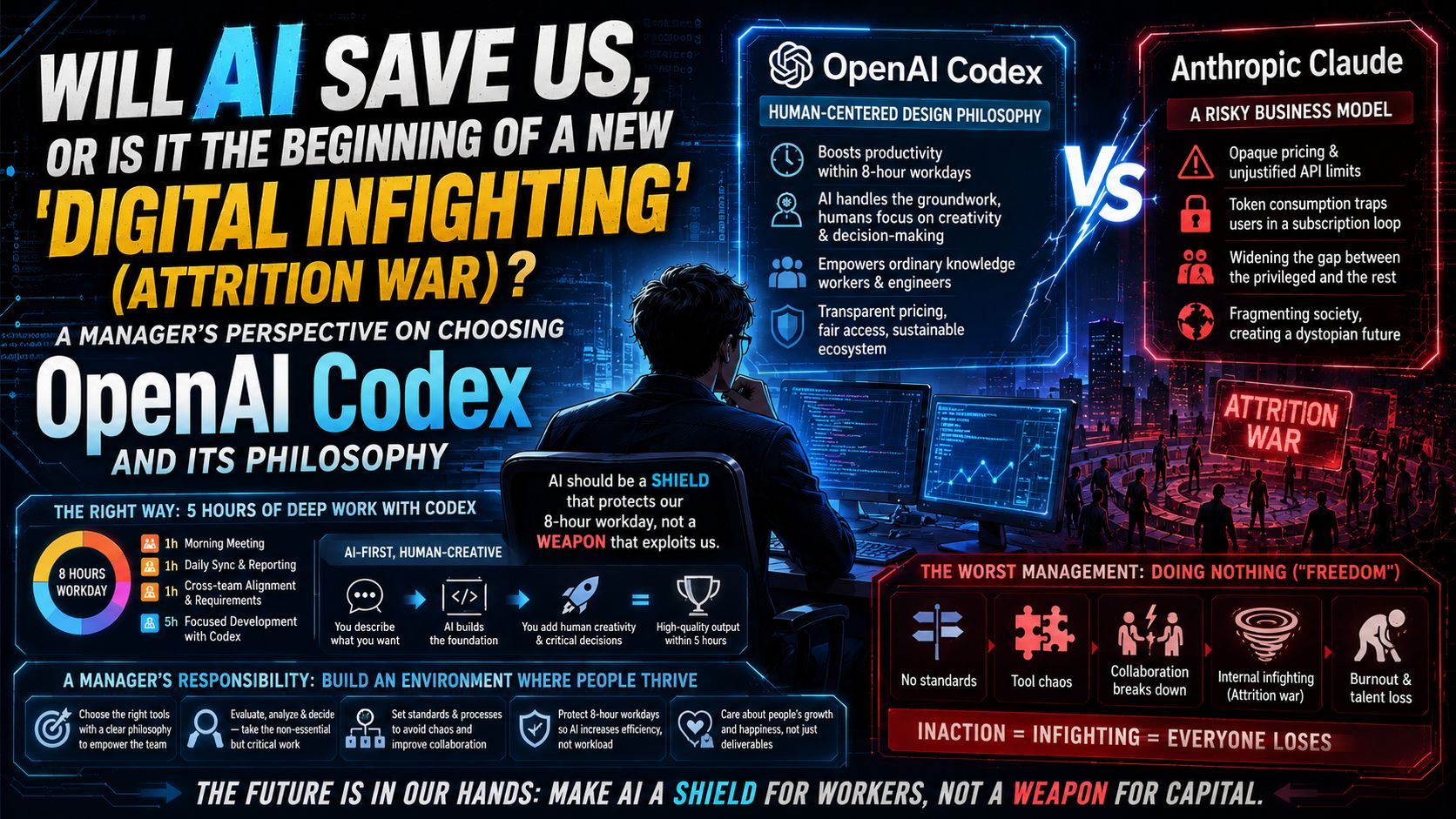
In today's rapidly evolving AI landscape, this article explores a real-world question faced by managers: "Why are we still just as busy as before, even though our productivity has boosted?" It provides a critical perspective on looking past the hype to discern the "philosophy" behind technology, ensuring that AI benefits do not become a mere excuse to extend working hours. By comparing the business models of OpenAI and Anthropic, the text discusses the "human-centric way of working" truly needed in the AI era and the proper leadership approach that managers must adopt.
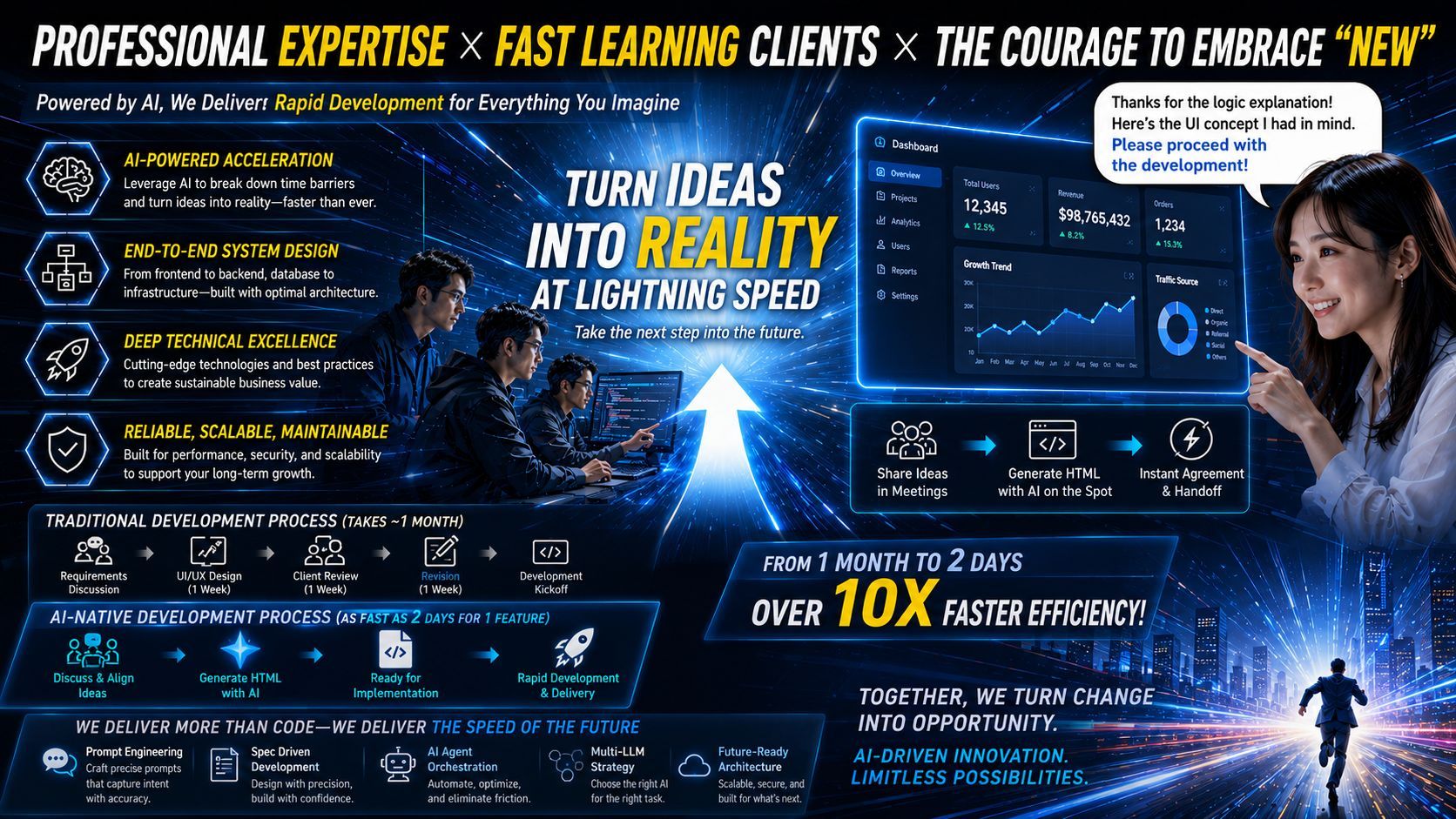
Driven by the evolution of AI technologies like VibeCoding, traditional system development cycles have transformed into an era of "hyper-speed." As the conventional process from planning to implementation collapses, this article deeply explores the "true value" IT professionals must possess to survive. Discover how we can reconstruct the development process to provide "speed to the future" rather than just mere execution.
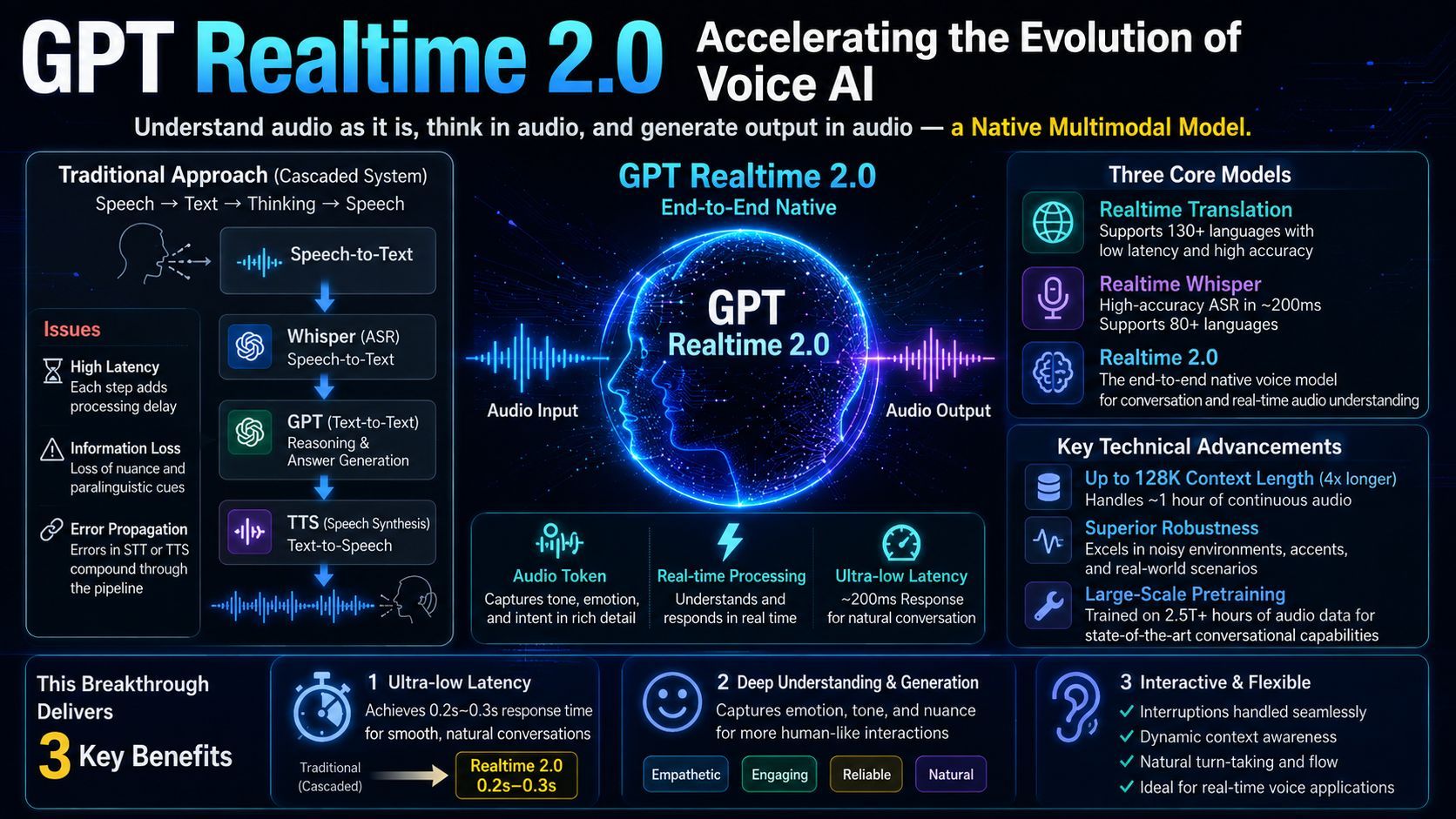
This comprehensive report dives into the technical details of "GPT Realtime 2.0" announced at OpenAI Build Hour, alongside real-world enterprise use cases for voice AI agents. It covers everything from the ultra-low-latency end-to-end architecture, emotional expression, and advancements in tool calling, to a practical implementation guide for developers.
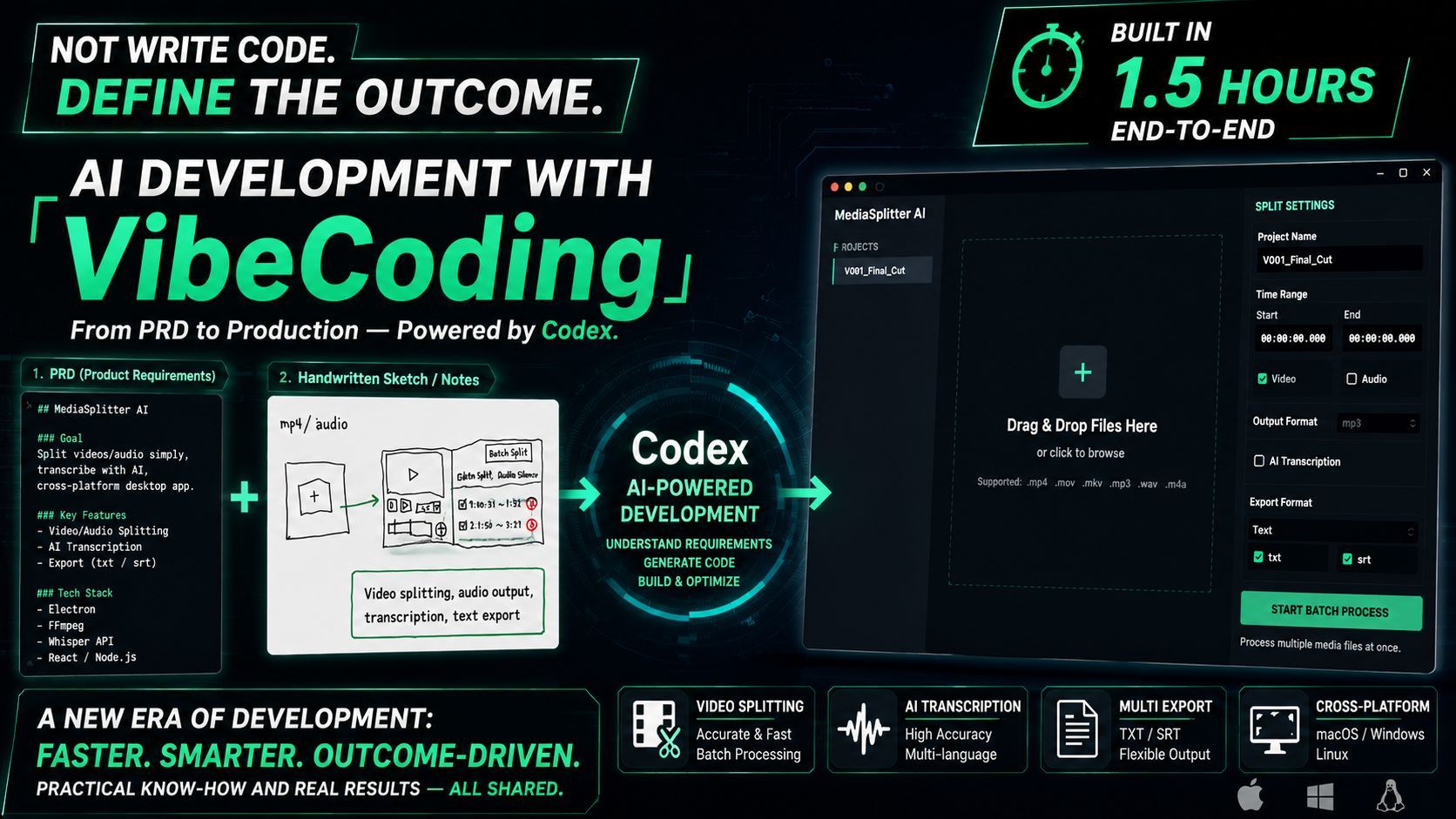
Stop "writing code." Start "defining completion." This is a real-world experimental log validating the AI-driven development methodology known as "VibeCoding." Moving straight from a PRD, a cross-platform desktop application (MediaSplitter AI) featuring video splitting and AI transcription was fully built in just 1.5 hours. This article opens up the entire blueprint for development process innovation in the AI era, alongside concrete, actionable know-how for success.
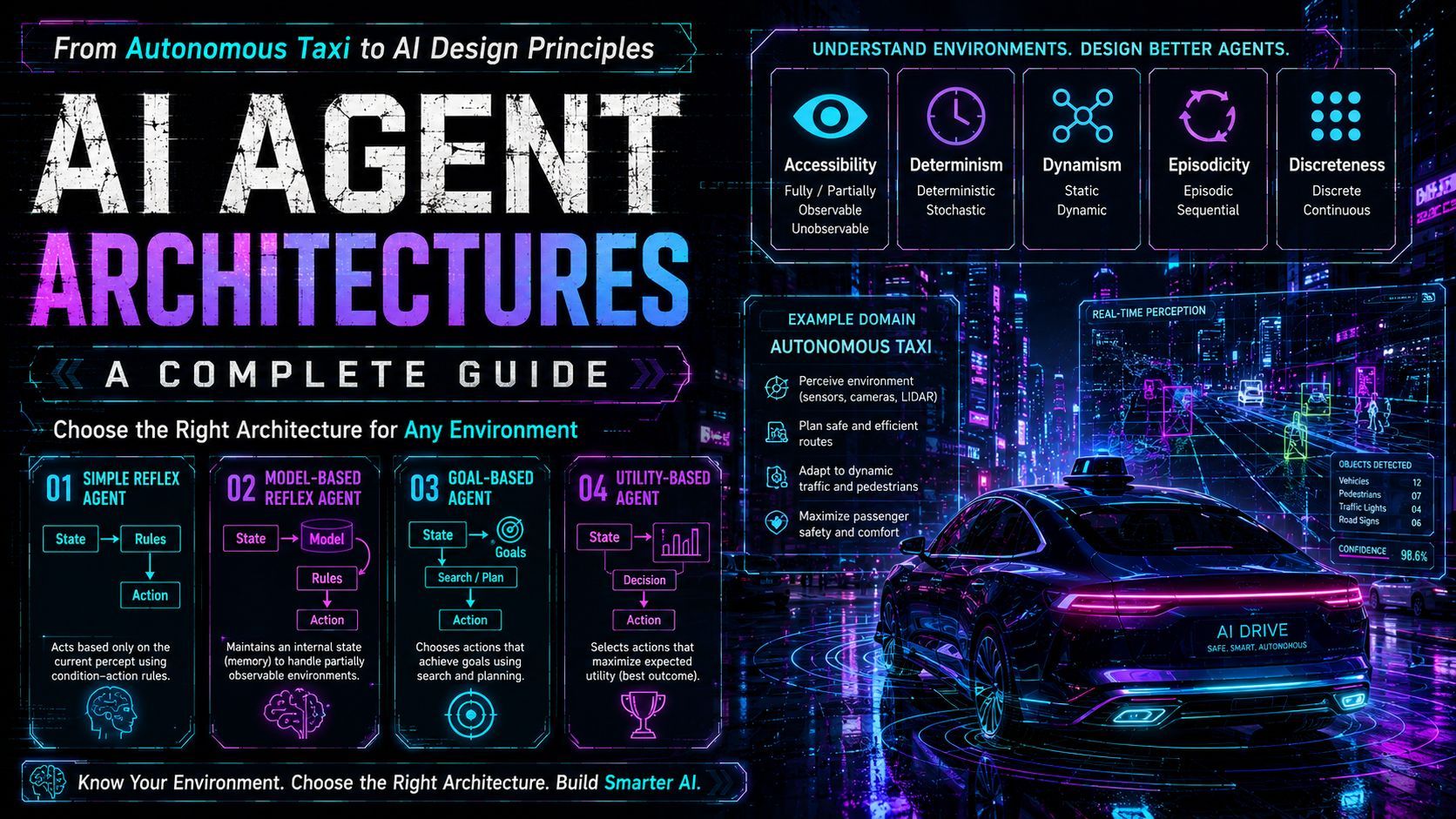
When designing AI agents, selecting the right architecture based on the complexity of the environment is essential. Using an autonomous taxi as an example, this article explains the structures of four types of intelligent agents: simple reflex, reflex with state, goal-based, and utility-based. By organizing environmental characteristics (such as observability and dynamism), you will learn the foundational knowledge required to create optimal AI designs.