
Editor’s Picks
Editor's picks
Categories
ChannelsLatest Articles
Latest stream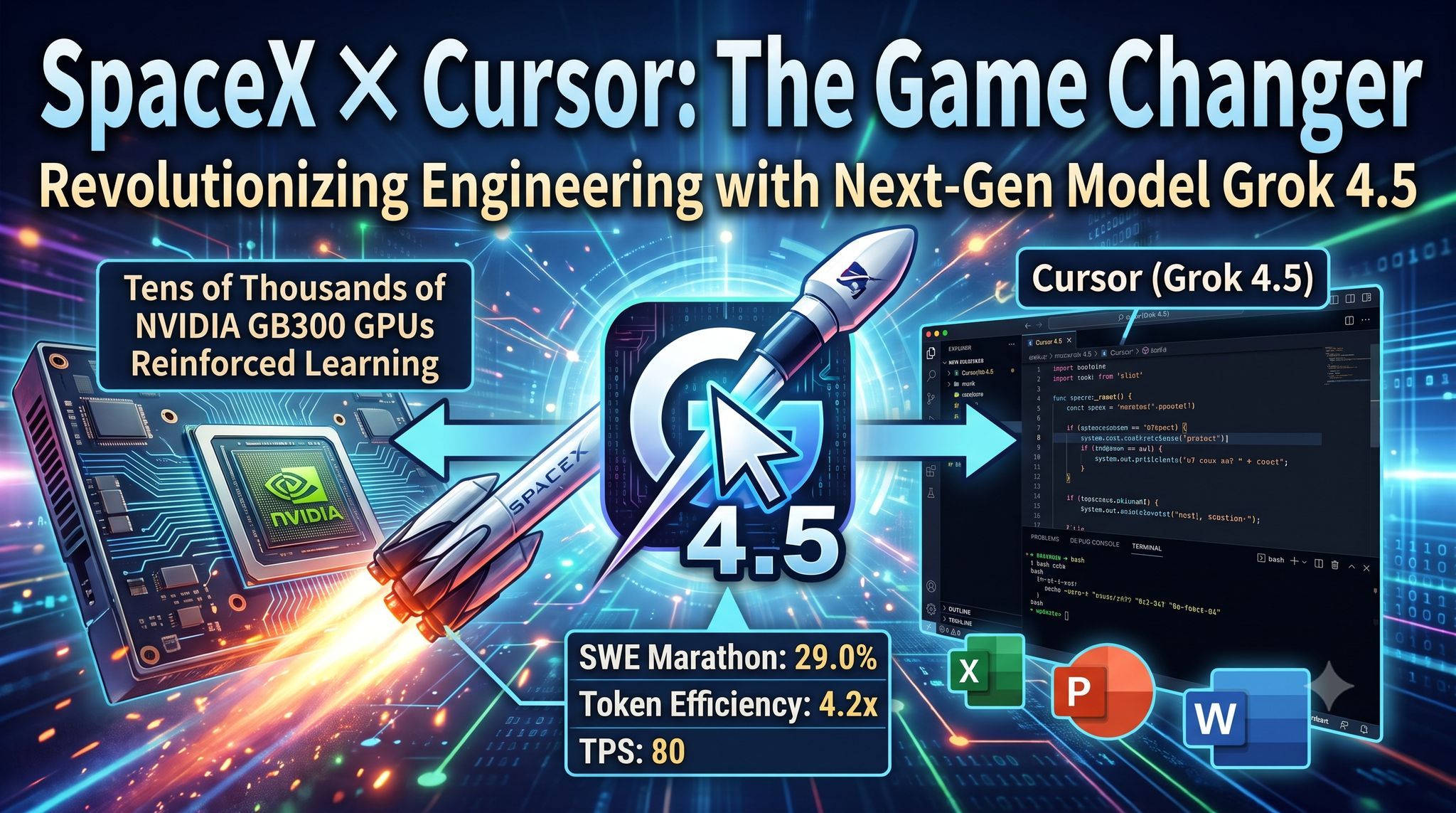
Grok 4.5 Release: Engineering Performance and Agent Capabilities with SpaceXAI and Cursor
This post explores the release of Grok 4.5 by SpaceXAI and its integration with Cursor. With a 62.0% score on the DeepSWE 1.0 benchmark, the model demonstrates enhanced engineering capabilities and interdisciplinary reasoning. Notable features include high-efficiency performance for agentic tasks using "One Prompt," alongside cost-effective pricing. It offers developers a powerful new tool for streamlining complex workflows and coding tasks.

Enterprise Transformation in the AI Era: Renewing Legacy Systems or Taking a New Leap
Using SoftBank and OpenAI’s partnership for the “social implementation of AI” as a starting point, this article explores two approaches to enterprise transformation: the realistic path of renewing legacy systems, and the idealistic path of fundamentally reshaping business models through AI. Should companies treat technology adoption as nothing more than a way to improve efficiency, or should they see it as a challenge to build a new business “airplane”? Through a dialogue with AI, this article examines what true transformation means for companies that want to survive.

From Apps to Agents: Unveiling the Vision Behind Project Solara
Microsoft's "Project Solara" marks a shift from app-centric computing to an "Agent-first" paradigm. This article analyzes how "Just-in-time UI" and enterprise infrastructure redefine hardware-software interaction, offering developers key insights into the evolution of future computing platforms and the architectural changes involved.
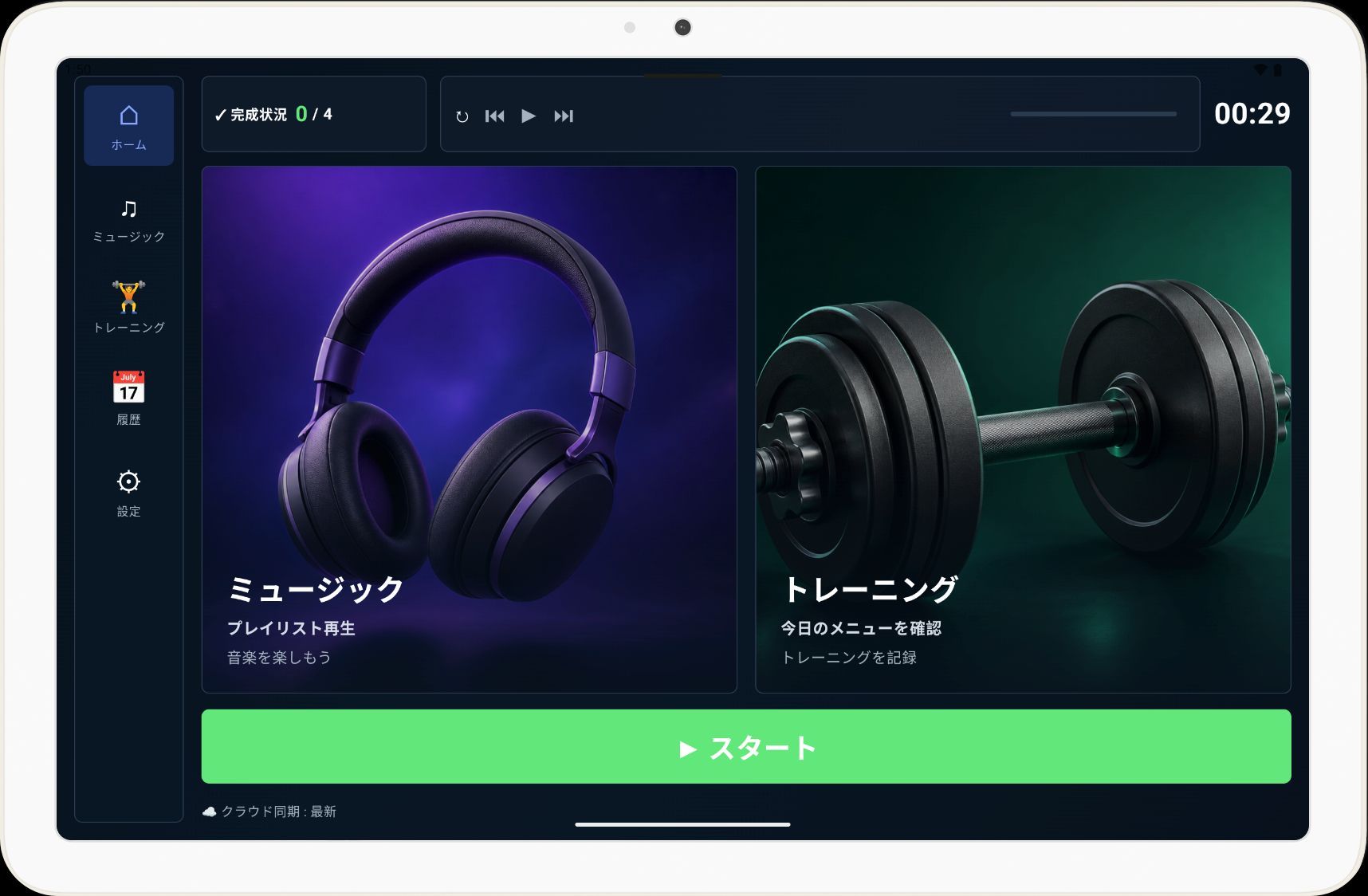
Saying Goodbye to "Fragmented Memory" at the Gym: Building a Custom Android Training Tool with VibeCoding
Struggling with lost counts or missed rest intervals at the gym? An Android engineer shares how they developed "GymPlayer," a custom fitness app built using VibeCoding and Codex. This post details the technical stack, including Kotlin, Jetpack Compose, and Firebase, used to resolve common pain points like audio/timer interference and flexible workout tracking. It is a personal case study on optimizing fitness routines through custom software development.
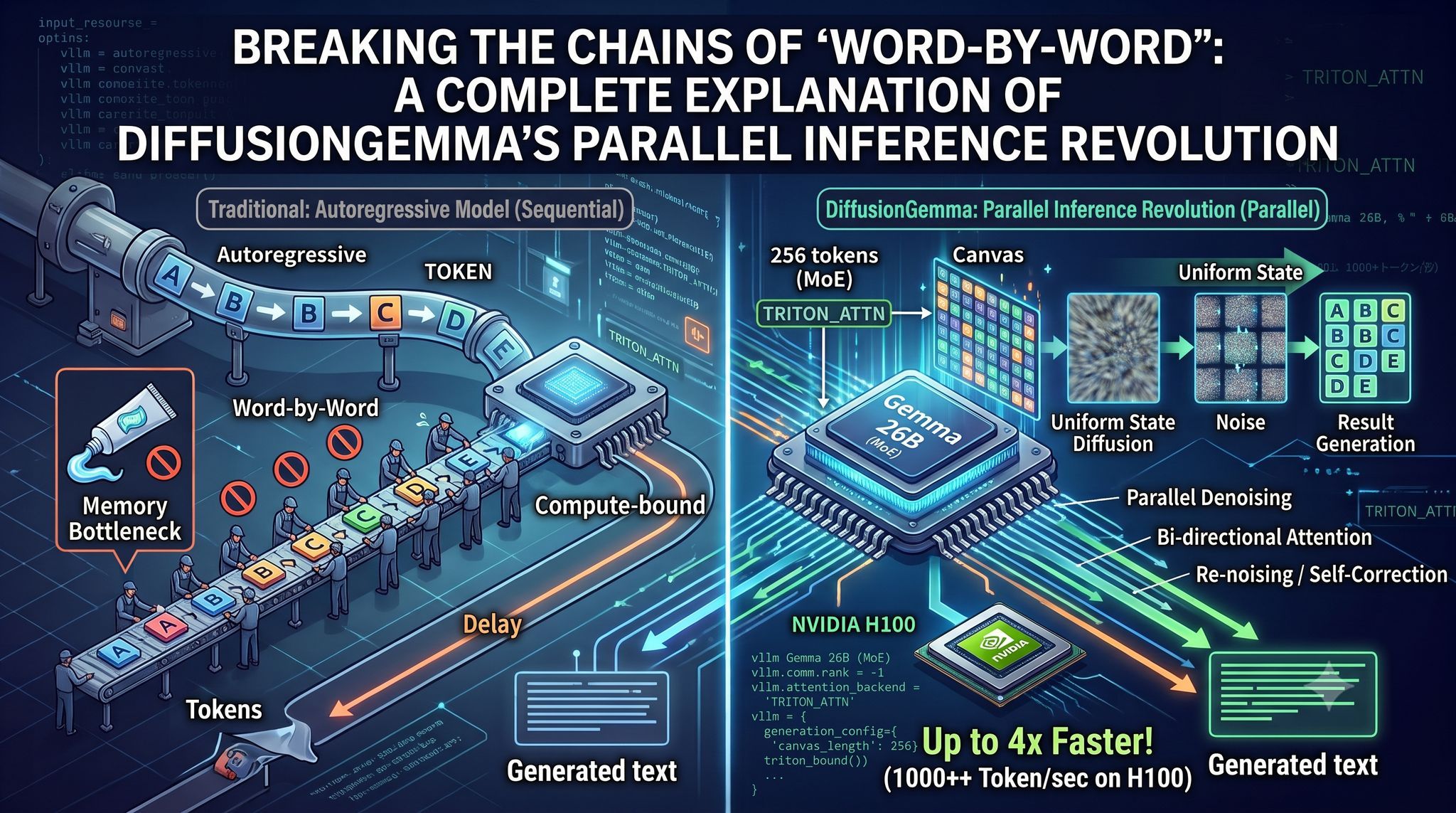
Decoding DiffusionGemma: A Parallel Inference Revolution Beyond Autoregression
This post explores DiffusionGemma, a novel approach designed to overcome the "word-by-word" bottlenecks of traditional autoregressive models. By utilizing "Uniform State Diffusion," the model generates and refines 256 tokens in parallel, shifting constraints from memory bandwidth to compute to achieve up to 4x faster inference. It features bidirectional attention for global context and re-noising capabilities for self-correction. Ready for deployment via vLLM, DiffusionGemma represents a significant advancement in maximizing LLM inference efficiency.
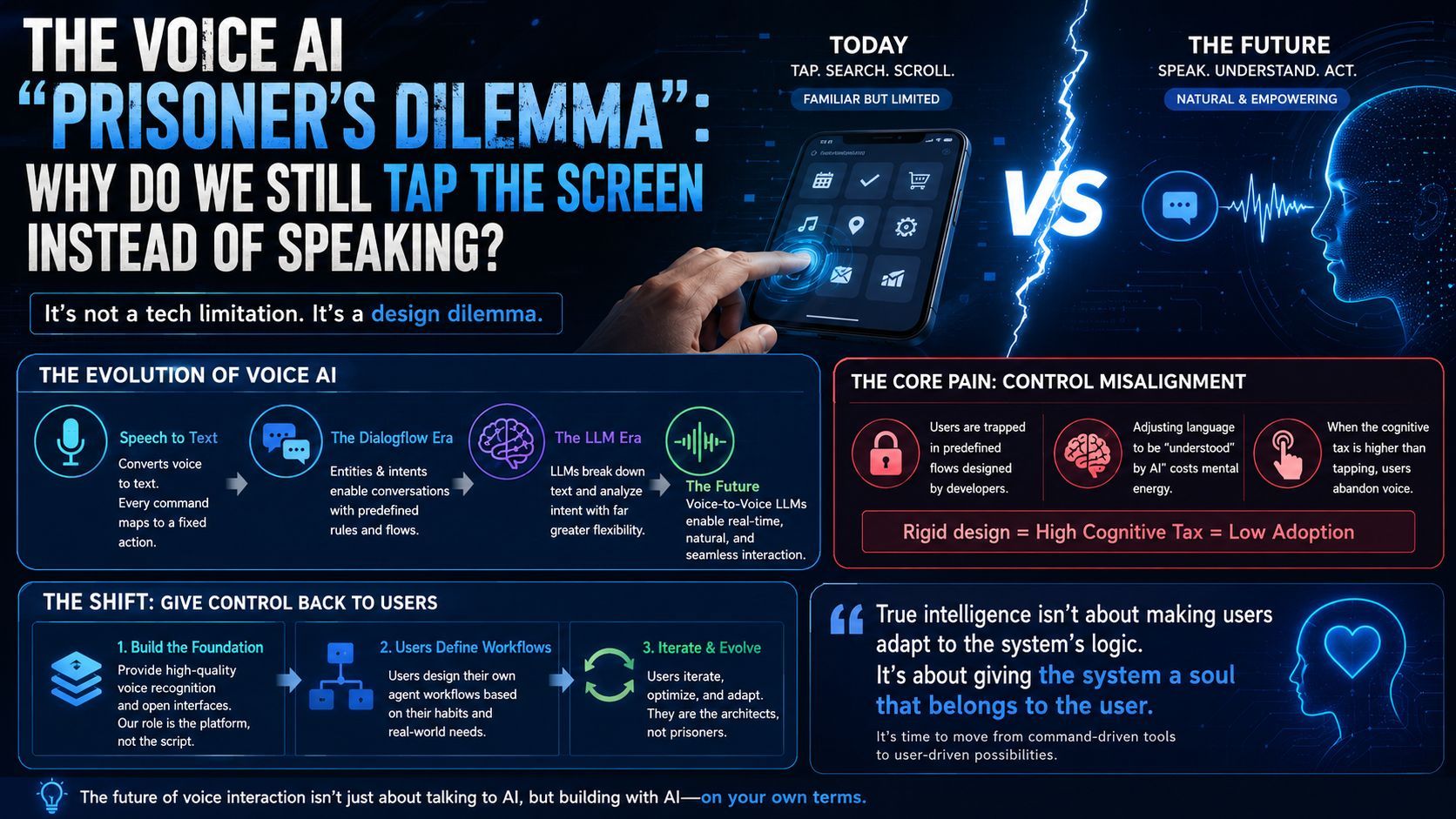
The "Prisoner's Dilemma" of Voice AI: Why We Prefer Tapping Over Speaking
Despite rapid AI advancements, voice interaction struggles to gain widespread adoption. The root cause is a "Prisoner's Dilemma" of design: users pay a "cognitive tax" to adapt to rigid, programmer-defined logic. This article advocates for a paradigm shift, moving from pre-set commands toward user-empowered agent workflows, allowing users to define their own processes and reclaim control over technology.
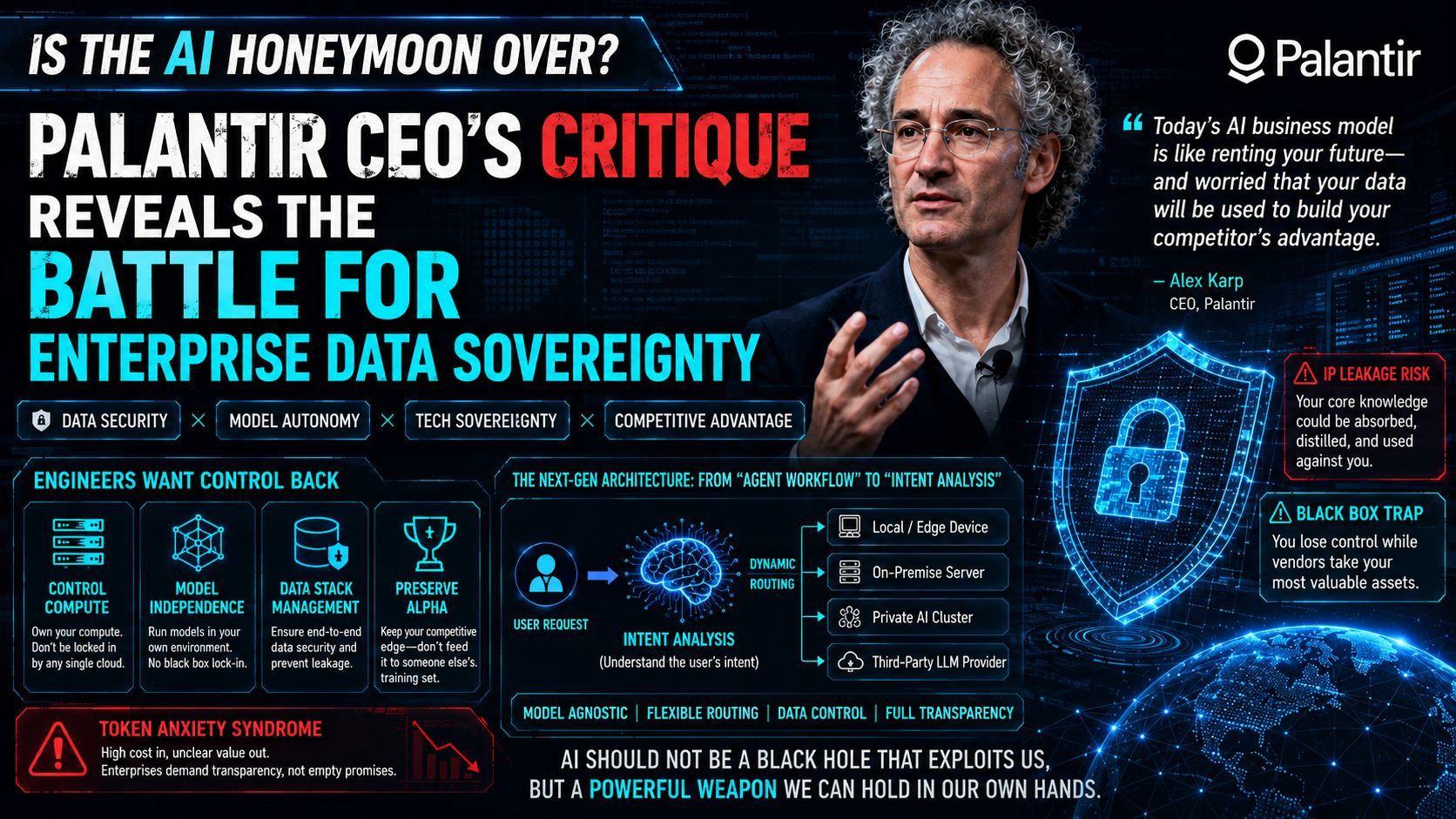
Is the AI "Honeymoon Period" Over? Palantir CEO's Critique on Data Sovereignty and Next-Gen AI Architecture
Through the lens of Palantir CEO Alex Karp's recent critique, this article examines the realities enterprises face when deploying AI. Beyond the hype, businesses grapple with high token costs, IP leakage risks, and the constraints of "black box" engineering. For engineers, regaining control over computational resources and data stacks is paramount. We explore the shift from agent-based workflows to an intent-driven, distributed architecture that prioritizes transparency, security, and model agnosticism.
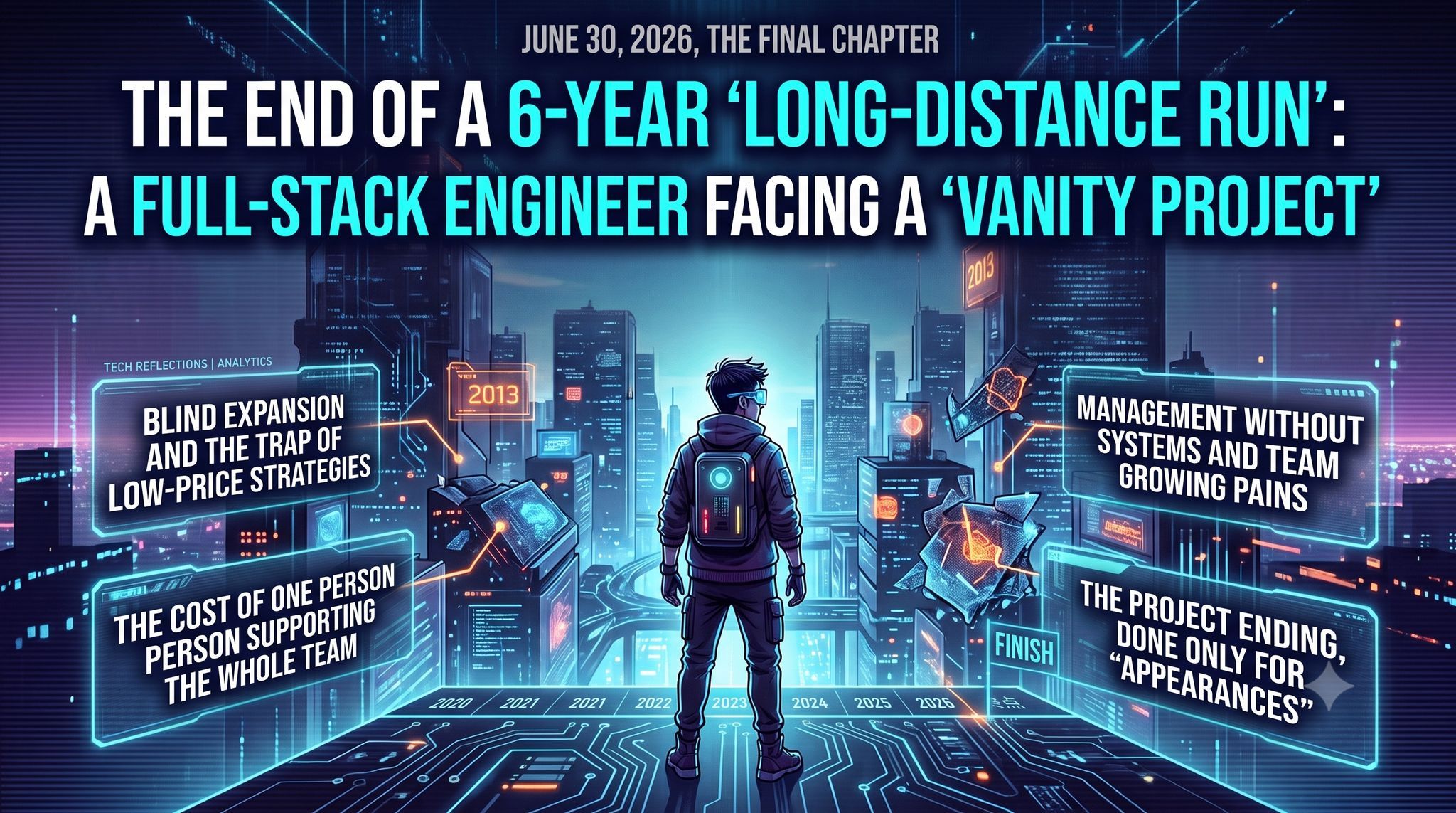
Ending a 6-Year Marathon: A Full-Stack Engineer's Reflections on "Vanity Projects"
On June 30, 2026, a 6-year project journey concluded as the client brought operations back in-house. This reflection explores the non-technical variables that dictate project survival, including the pitfalls of "vanity projects," the consequences of lenient management, and the challenges of being a full-stack resource. I share lessons on establishing rigorous evaluation systems, the necessity of mutual respect in client relationships, and the shift toward more sustainable, institutionalized business models.
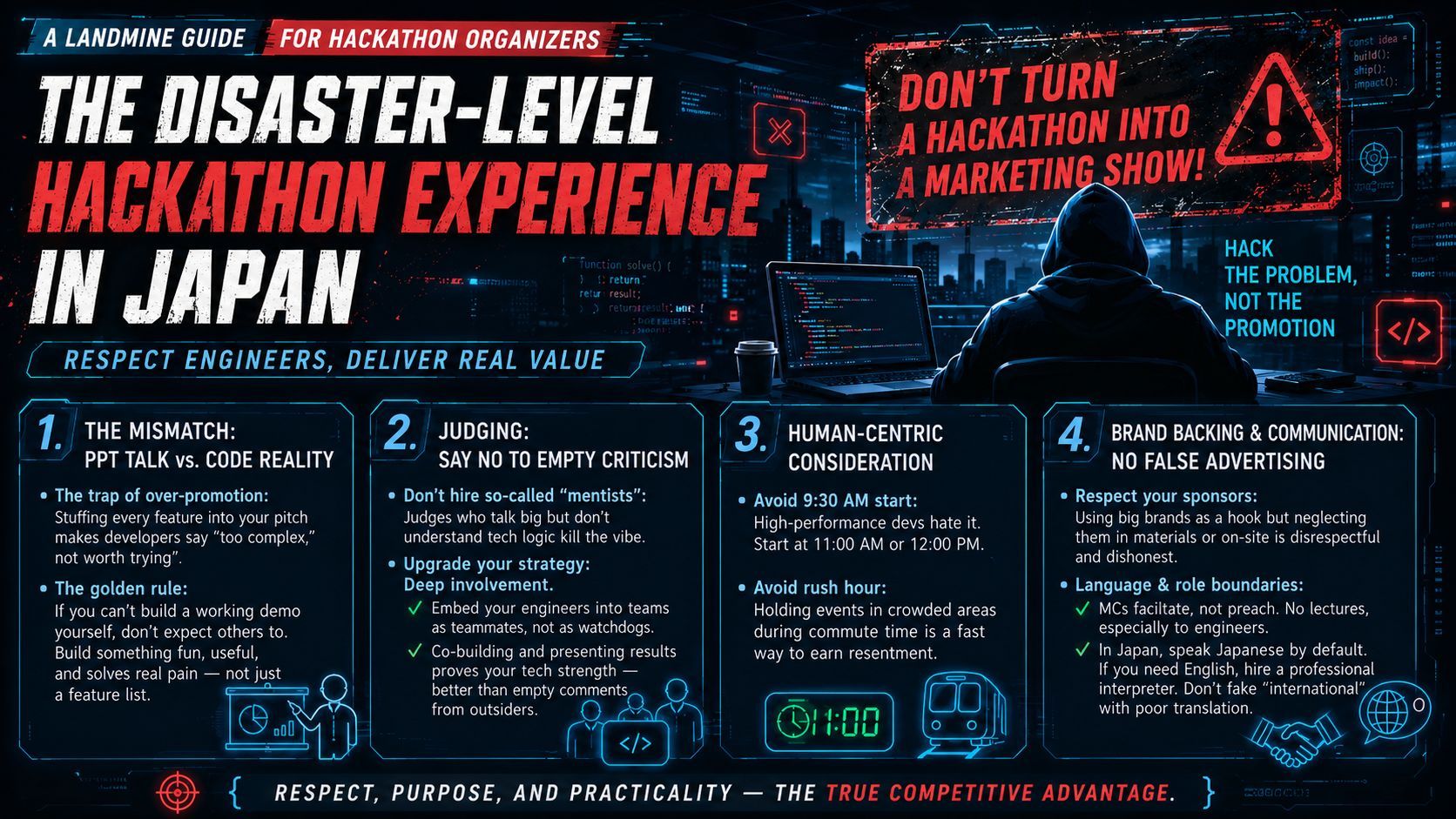
Hackathon Landmine Avoidance Guide: A Reflection on Engineering Best Practices
Reflecting on a recent "disastrous" hackathon experience, this guide offers actionable advice for organizers to avoid common pitfalls. The post critiques issues such as over-marketing, unqualified judges, poor scheduling, and communication breakdowns that alienate participants. It emphasizes that the core of a hackathon is technical exchange and value creation, not a promotional show. Respect for engineers and their workflows is presented as the most essential element for successful, high-quality events.