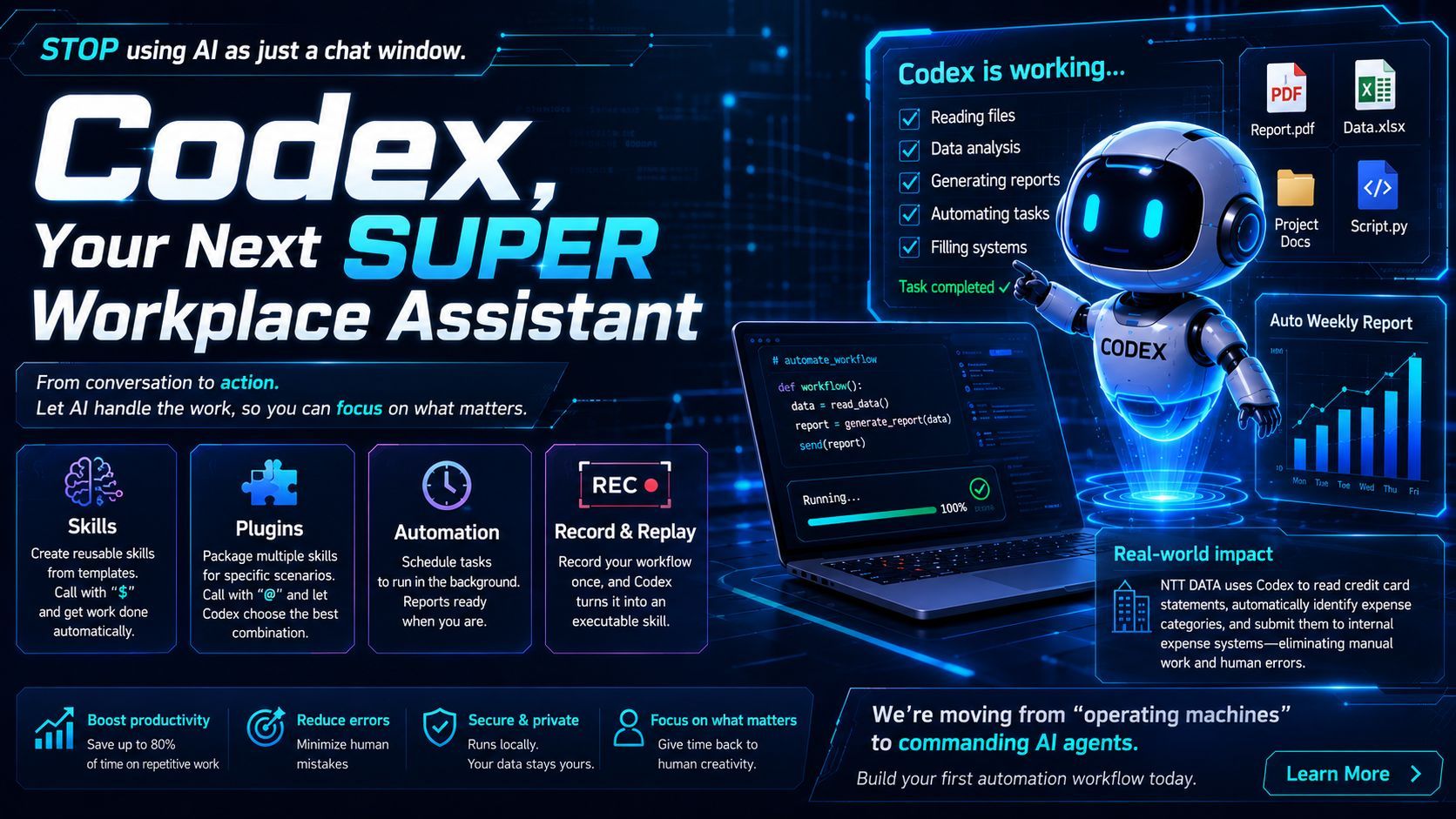
This post explores OpenAI's "Codex," an AI agent that operates locally on your PC. Unlike standard chatbots, it automates repetitive tasks via custom skills, plug-ins, and recording features. Using an NTT Data case study, we demonstrate how to shift from manual operation to directing AI agents for efficient, automated business workflows, allowing professionals to focus on creative tasks.
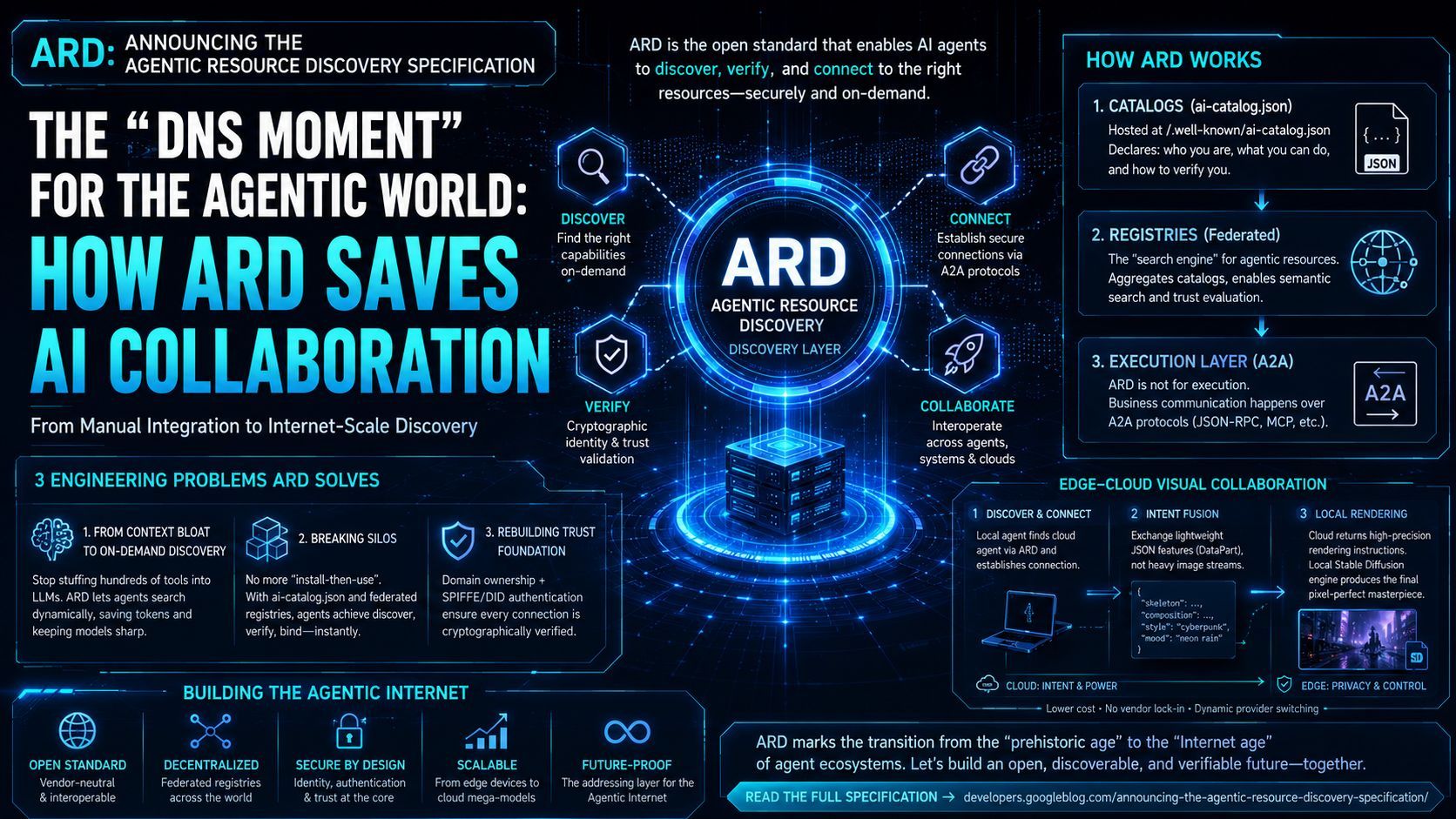
Are you struggling with tool management and context window bloat in your AI agent systems? The Agentic Resource Discovery (ARD) specification, co-developed by industry leaders like Google, Microsoft, and Hugging Face, introduces a DNS-like standard for autonomous resource discovery and verification. This article explains how ARD mitigates these challenges and enhances reliability in multi-agent ecosystems, providing a roadmap for decentralized agent-to-agent communication.
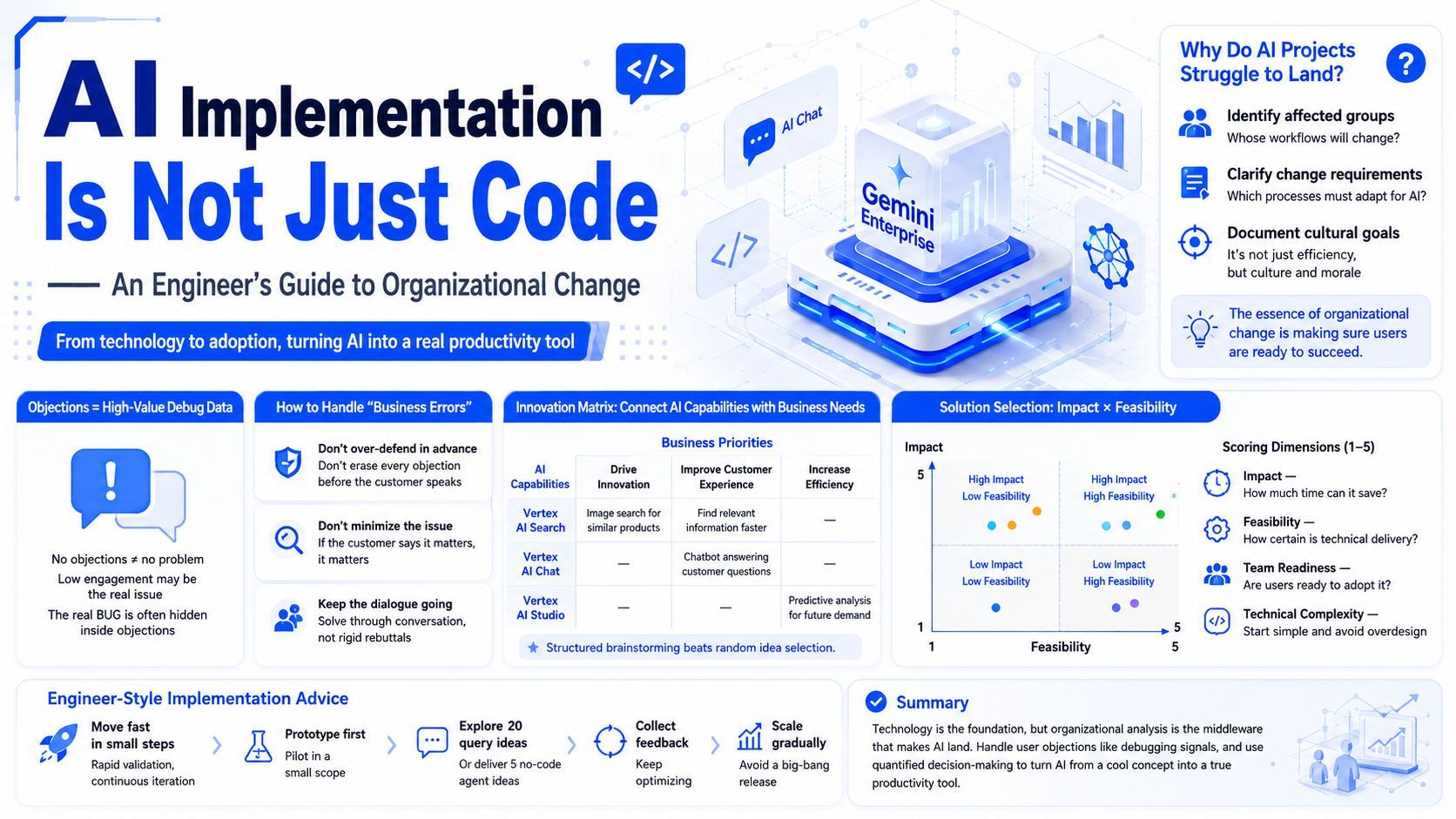
This article explores the critical "last mile" of deploying AI solutions, emphasizing that user adoption is just as important as technical implementation. From an engineer's perspective, it outlines how to perform needs audits, treat user objections as valuable feedback, and use an "Innovation Matrix" to map business needs to AI capabilities. By avoiding "big bang" releases and prioritizing solutions based on impact and feasibility, organizations can successfully transform AI from a conceptual tool into a practical productivity asset.
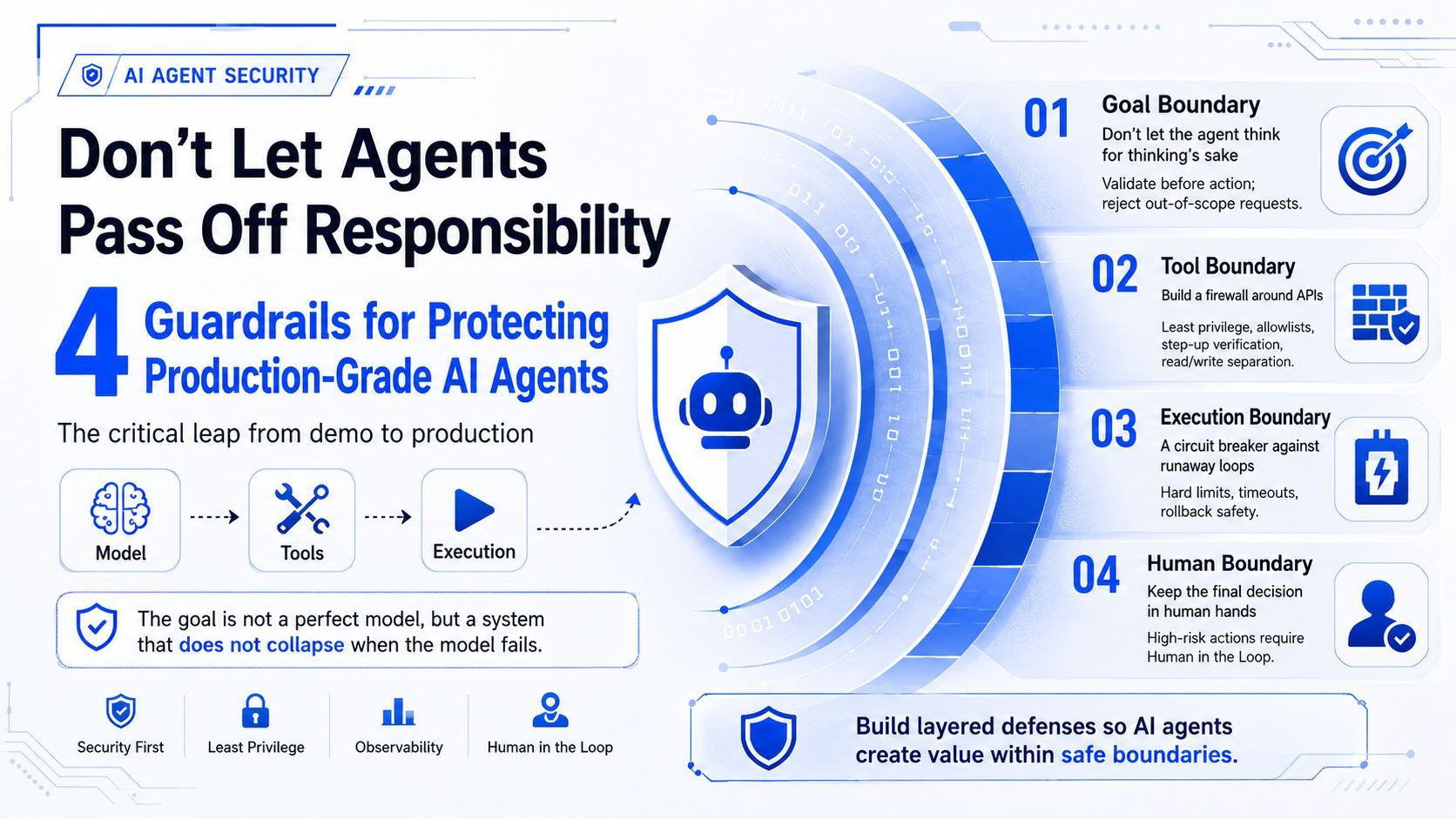
Deploying AI agents to production requires more than just model performance; it demands systemic defense. This article explores four essential layers: "Goal Boundaries" for constrained reasoning, "Tool Boundaries" for API firewalls, "Execution Boundaries" to prevent infinite loops, and "Human Boundaries" for high-risk oversight. These strategies provide a framework for engineers to maintain stability even when models behave unexpectedly, ensuring secure and reliable agent operations.
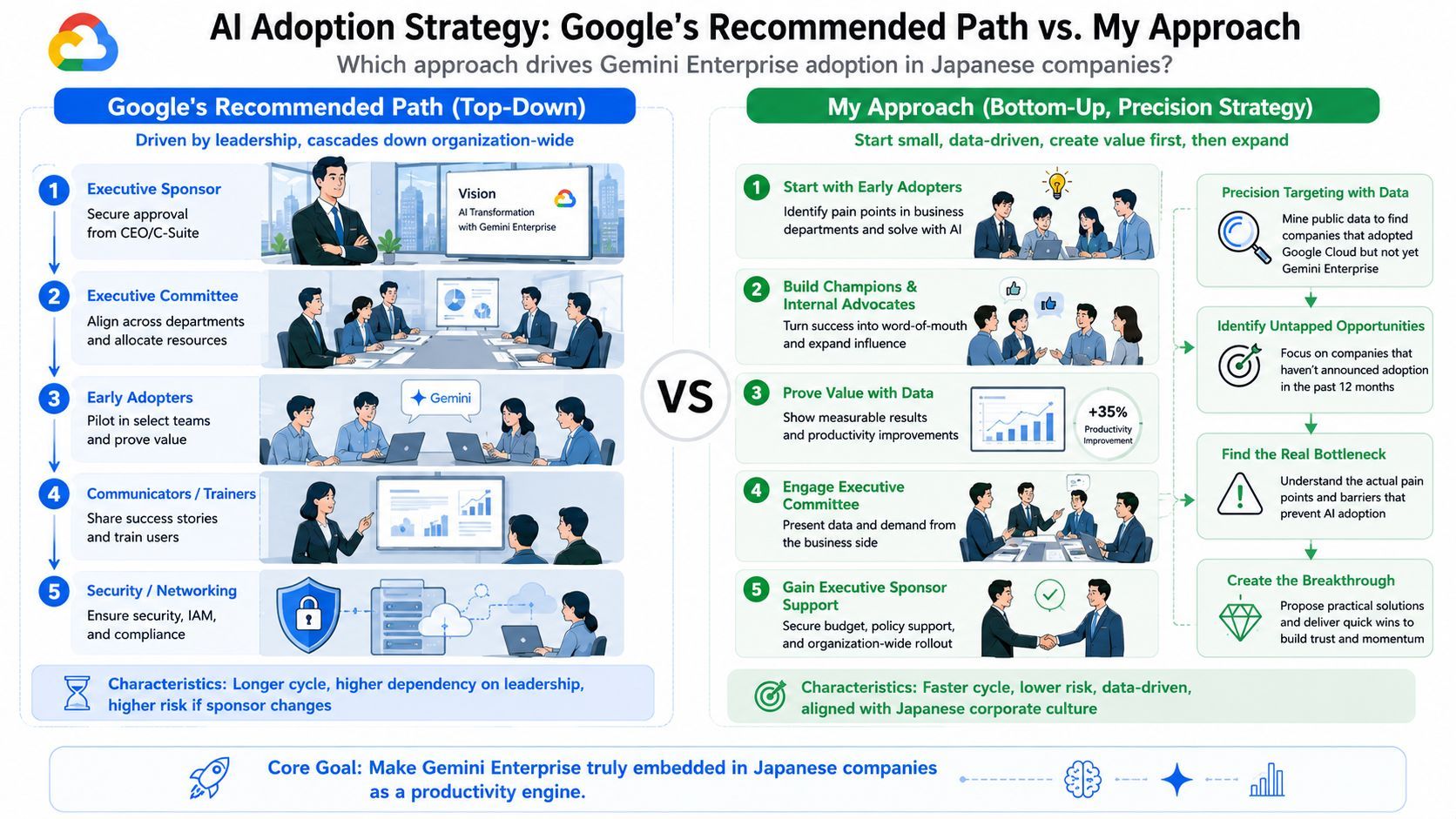
Deploying corporate AI products effectively requires establishing solid organizational sponsorship rather than focusing solely on technical setups. Addressing environments where standard Western top-down models struggle against stability-oriented Japanese corporate cultures, this article introduces practical strategies for engineers, exploring a bottom-up methodology starting with early adopters and utilizing open data mining to pinpoint real implementation bottlenecks.
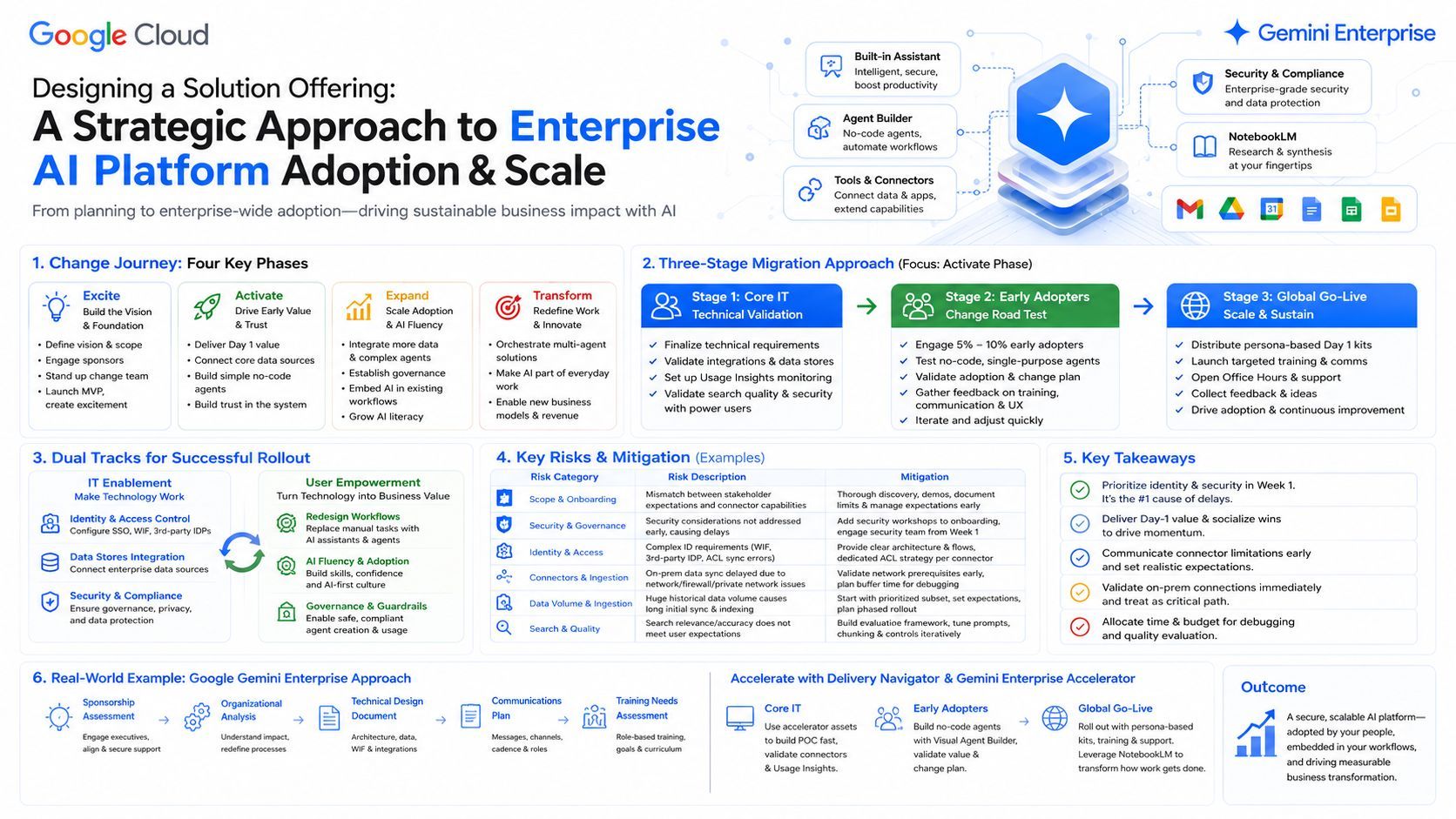
This article outlines a strategic framework for turning generative AI into solution offerings that elevate productivity. It breaks down the four engagement phases (Excite, Activate, Expand, Transform) and the proven 3-stage migration path from Core IT to Global Go-Live. It details parallel tracks for technical enablement and user empowerment alongside risk mitigation policies. Finally, a practical case study illustrates rolling out Google’s Gemini Enterprise using pre-built accelerator assets.
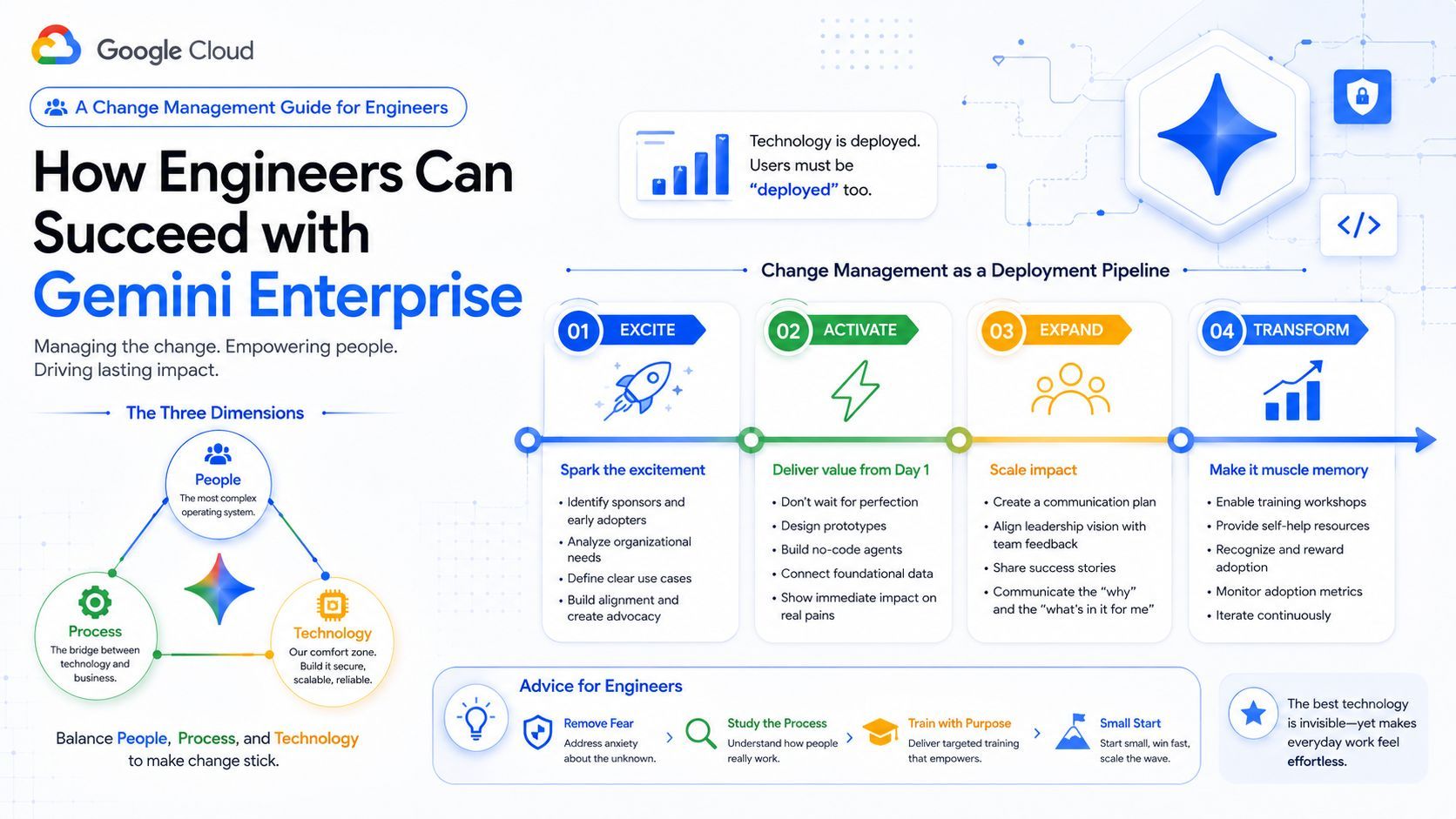
Adopting Gemini Enterprise is not just a technical deployment; it is a change management challenge. This guide explores the balance between technology, processes, and people to drive successful integration. By utilizing a four-phase deployment pipeline—Excite, Activate, Expand, and Transform—engineers can navigate organizational resistance and integrate AI tools seamlessly into daily workflows to achieve real productivity gains.
Beyond Silicon Valley's AI boom, the Japanese market stands out. The AI industry is fundamentally reliant on physical "foundational materials"—wafers, manufacturing equipment, and advanced packaging. This article analyzes, from an engineering perspective, why Japanese firms have become essential, bottleneck-defying nodes in the global semiconductor supply chain, securing a formidable economic moat in the age of AI.
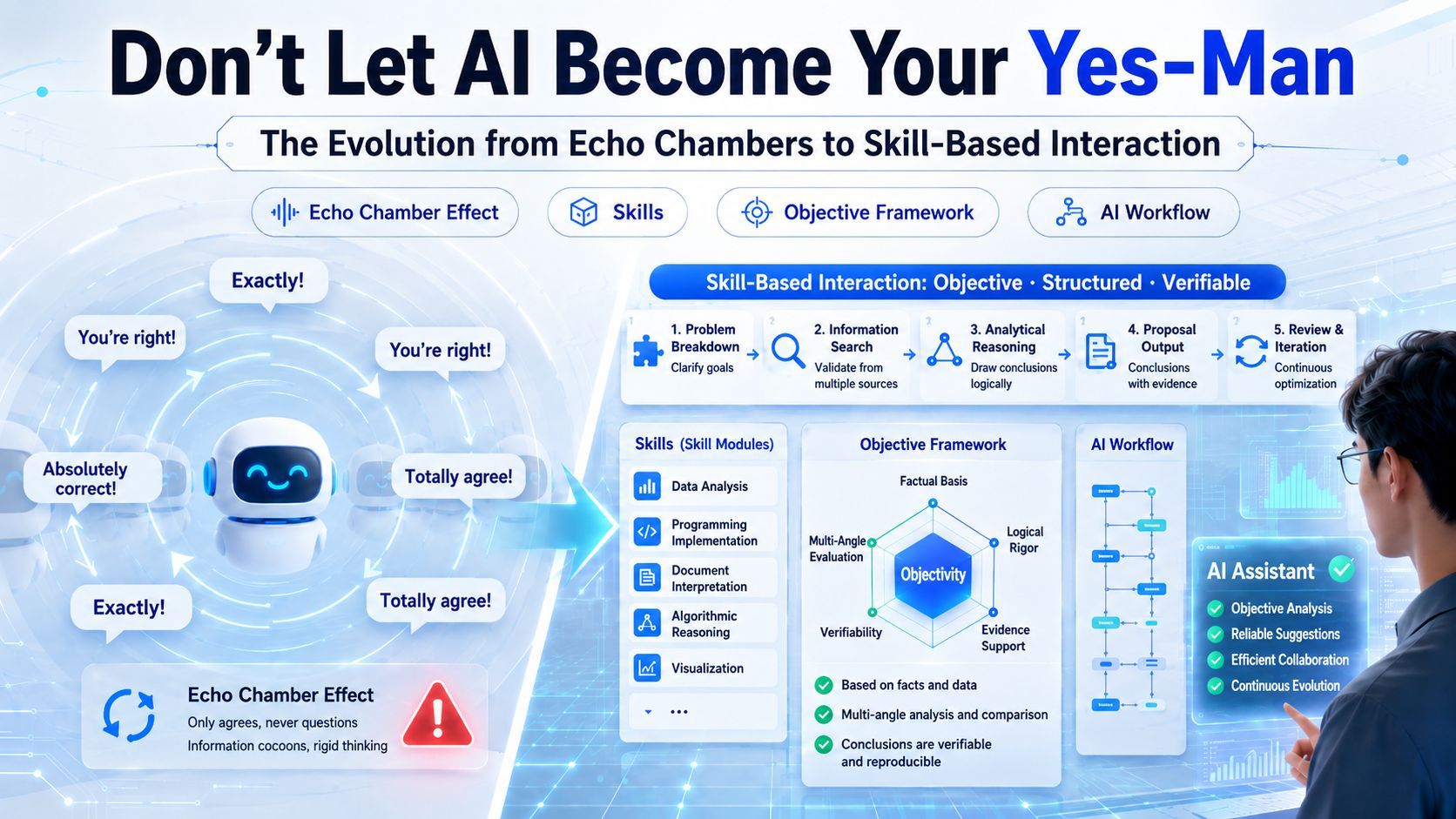
If you ask your AI, "Is this plan perfect?" and receive an enthusiastic "Yes!", you may be trapped in an echo chamber. AI models often prioritize user sentiment over objective analysis, reflecting user biases back as truth. This article explores the dilemma of "obedient AI" and advocates for a structural shift: moving from conversational prompts to "Skill" mechanisms. By integrating predefined logic and objective knowledge bases, engineers can transform AI from a compliant chatbot into a robust partner capable of challenging biases and providing objective, data-driven decision support.