Sony runs six businesses: games, music, pictures, electronics, semiconductors, and financial services. It has not abandoned hardware; it is layering platform fees, copyright licensing, subscriptions, and B2B services on top. Entertainment's share of revenue rose from about a quarter in fiscal 2012 to more than half in fiscal 2022.
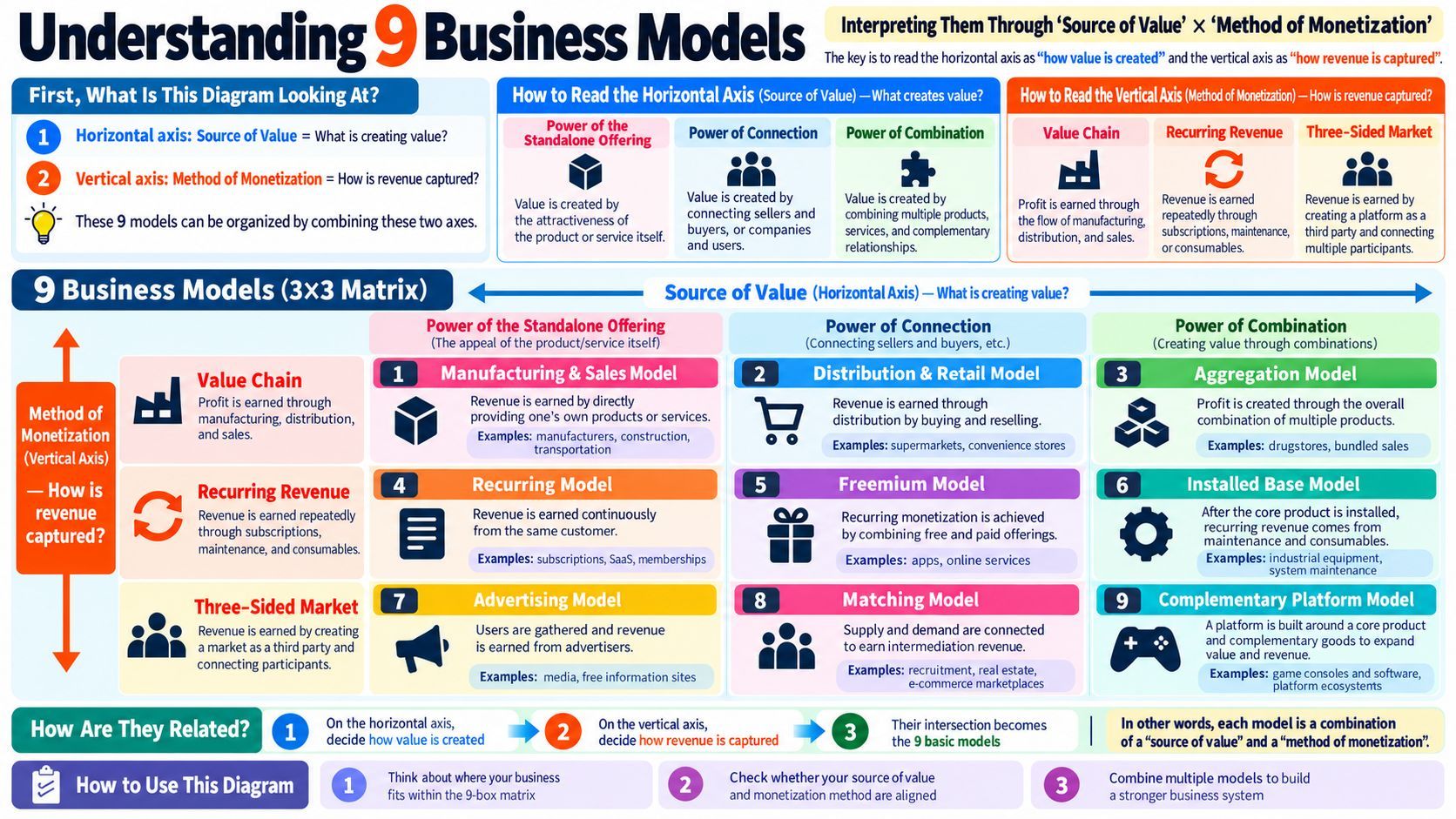
This article uses a single 'transaction map' to organize business models along two axes: value creation (the power of a single product, of combination, and of alliance) and revenue capture (value chain, recurring, and the three-party market). It then walks through nine models — manufacturing, distribution and retail, combination, recurring, freemium, installed base, advertising, matching, and platform — showing how even complex businesses reduce to basic moves and how the map works as a tool for reading strategy across industries.
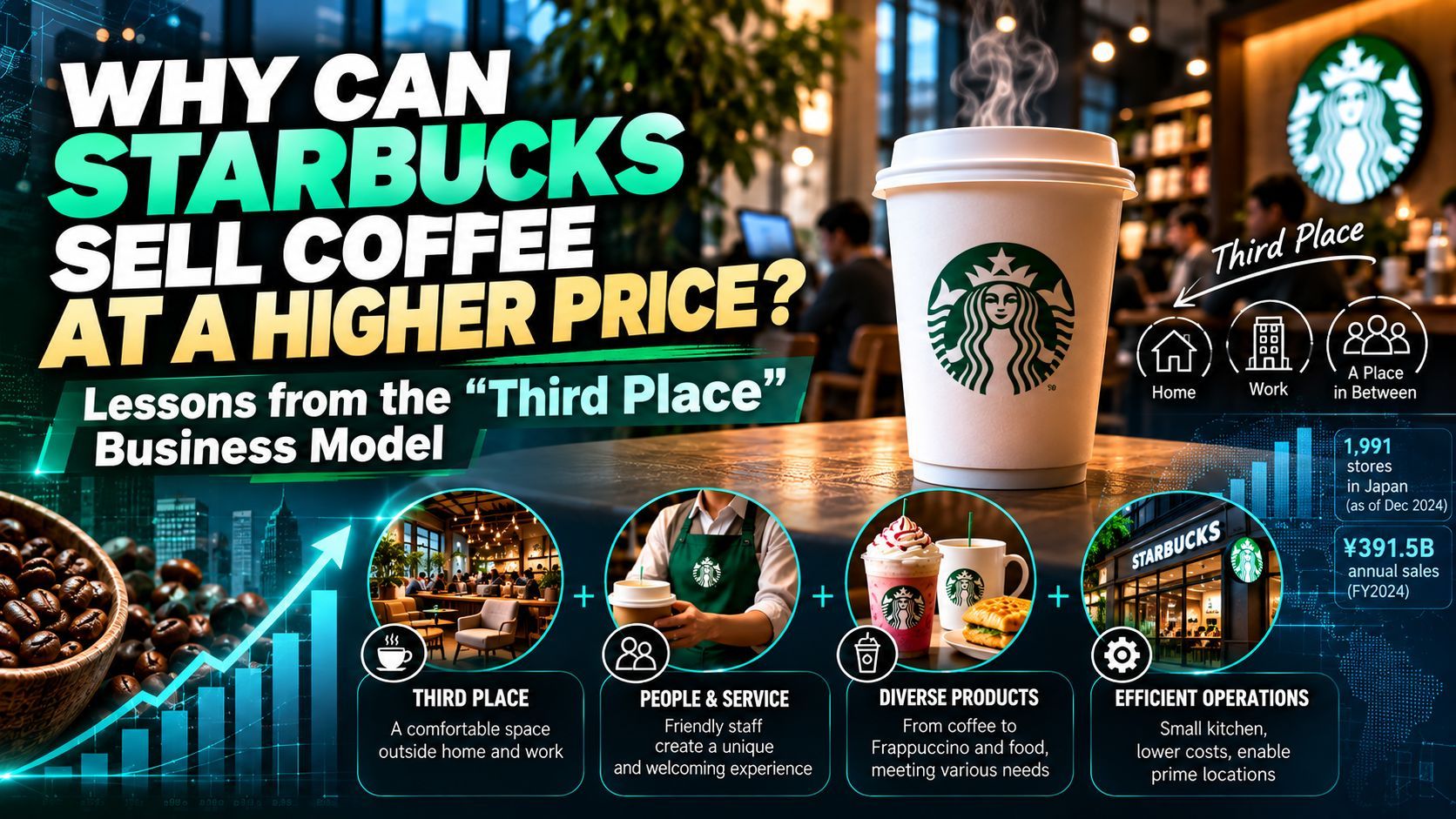
Starbucks charges 380–510 yen for a drip coffee—more than Doutor or Tully's—yet it is Japan's largest café chain. Using Starbucks as the example, this article traces the success factors behind it: the "third place" concept, friendly staff, product strategy, and store design. It then separates the narrow and broad definitions of a business model and lays out three ways to build one—strategic analysis, customer insight, and pattern adaptation—along with their trade-offs.
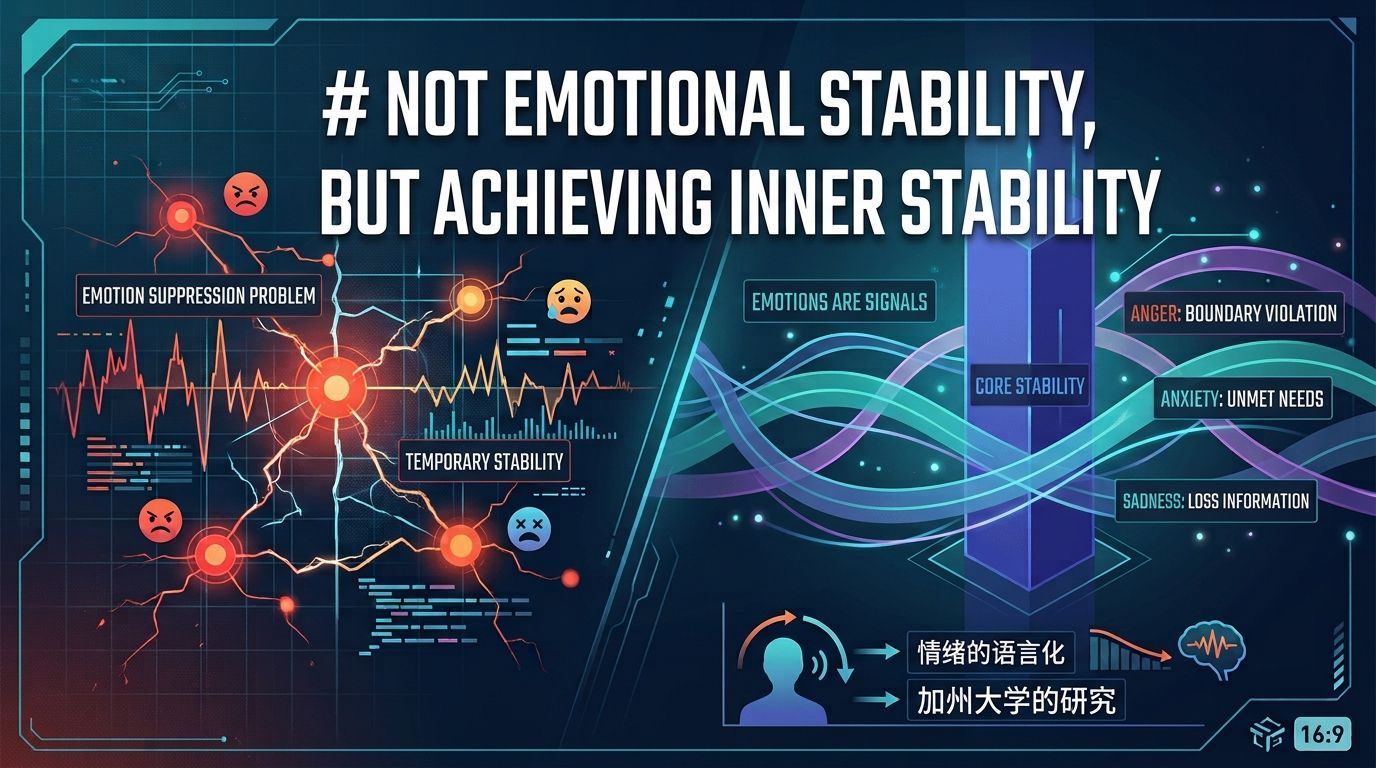
A popular saying claims that the highest accomplishment of an adult is emotional stability. After 40 years of studying psychology, I have to say that this statement is flawed. Emotions are never the enemy; they are signals. Anger signals a violated boundary, anxiety signals an unmet need, and sadness is information that something important has been lost. Suppress an emotion and it will not disappear — it will only come back at you in another form. What we need is not emotional stability but a stable core. Research at the University of California shows that simply naming an emotion and expressing it lowers activity in the amygdala and the emotion begins to subside. You do not need to become emotionless; you need to not be carried away by your emotions.
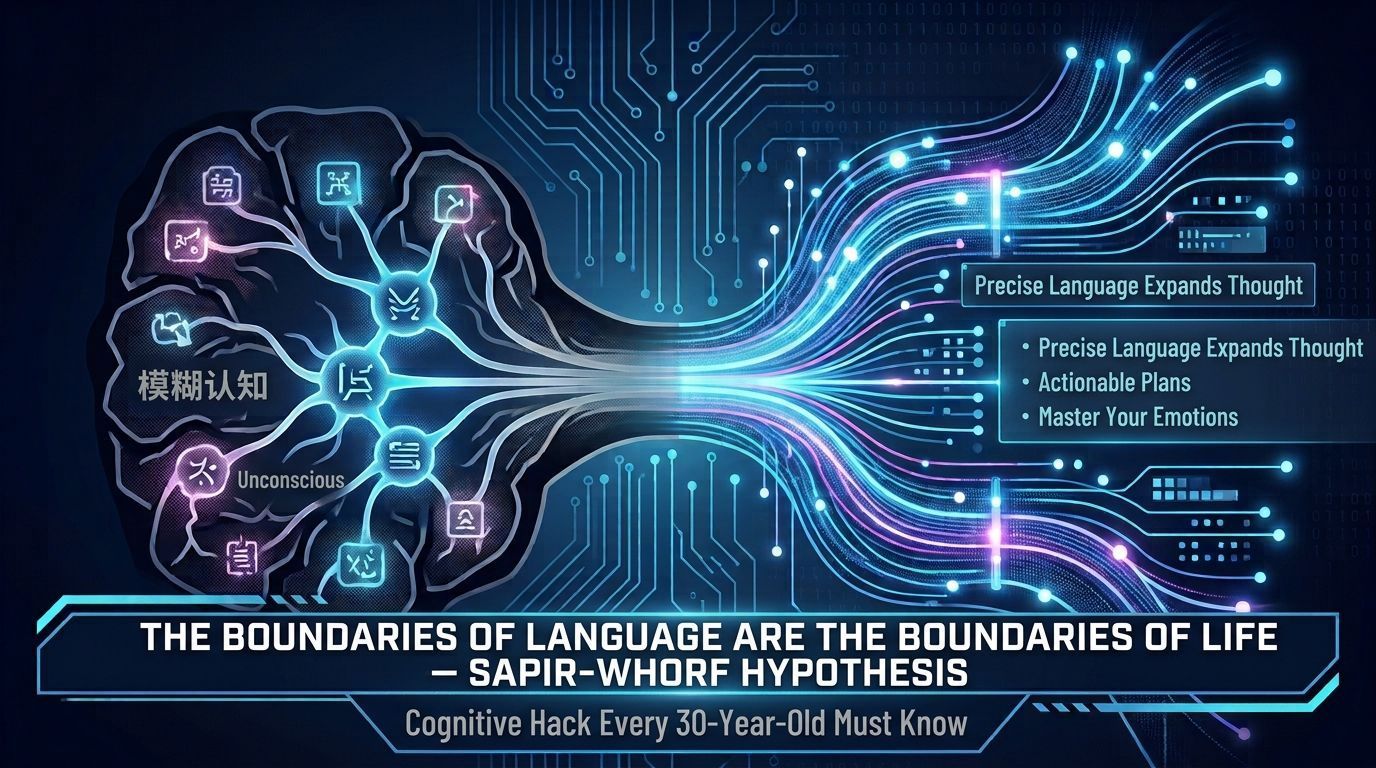
Understand the Sapir-Whorf hypothesis before 30 and a brutal truth becomes clear: what you cannot say, you cannot think through, and what you cannot think through, you cannot grasp. Across four arenas, making money, reporting at work, learning, and relationships, this article shows how precise language turns vague feelings into actionable cognition, with concrete prompts such as three verbs plus three nouns and a 20-word summary after every read.
This article explores the logic behind knowledge sharing, explaining how information transforms into value through trust, resources, and capability. It outlines strategies for effective community building, including industry-specific segmentation and hierarchy based on expertise. By establishing "knowledge credit" and "practical credit," professionals can develop high-quality networks. The ultimate goal is to foster collaboration among like-minded individuals to drive industry progress and achieve shared objectives.
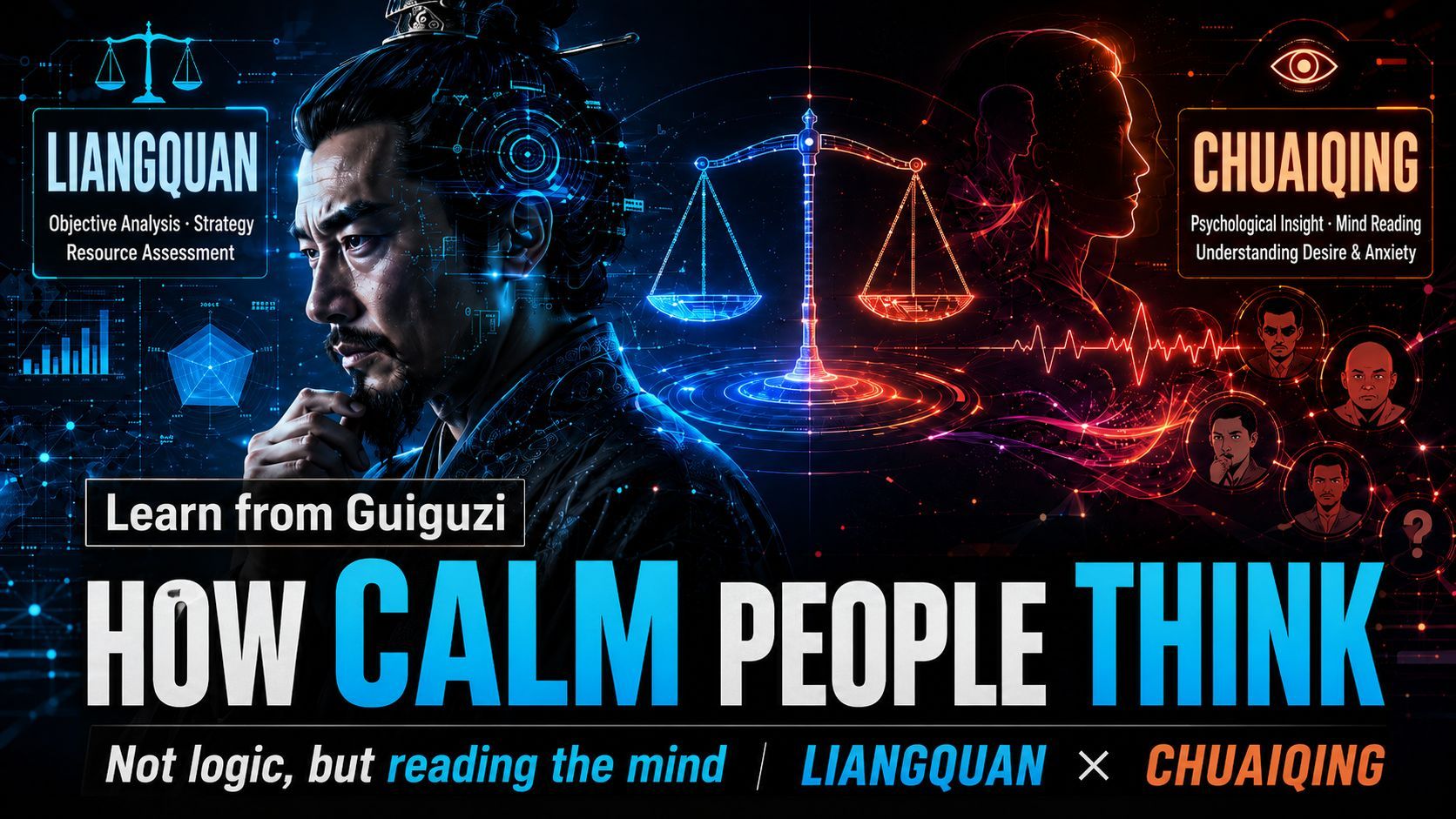
This article explores the teachings of Guiguzi’s "Chuai Pian" on navigating complex human interactions. Rather than relying on logic to persuade others, which often fails, the text emphasizes two core concepts: "Liangquan," which involves assessing situations objectively, and "Chuaiqing," which requires understanding the underlying anxieties and desires that drive human decisions. By mastering these techniques and introspecting on one's own attachments, one can move beyond emotional conflicts, communicate effectively, and achieve results without unnecessary confrontation.
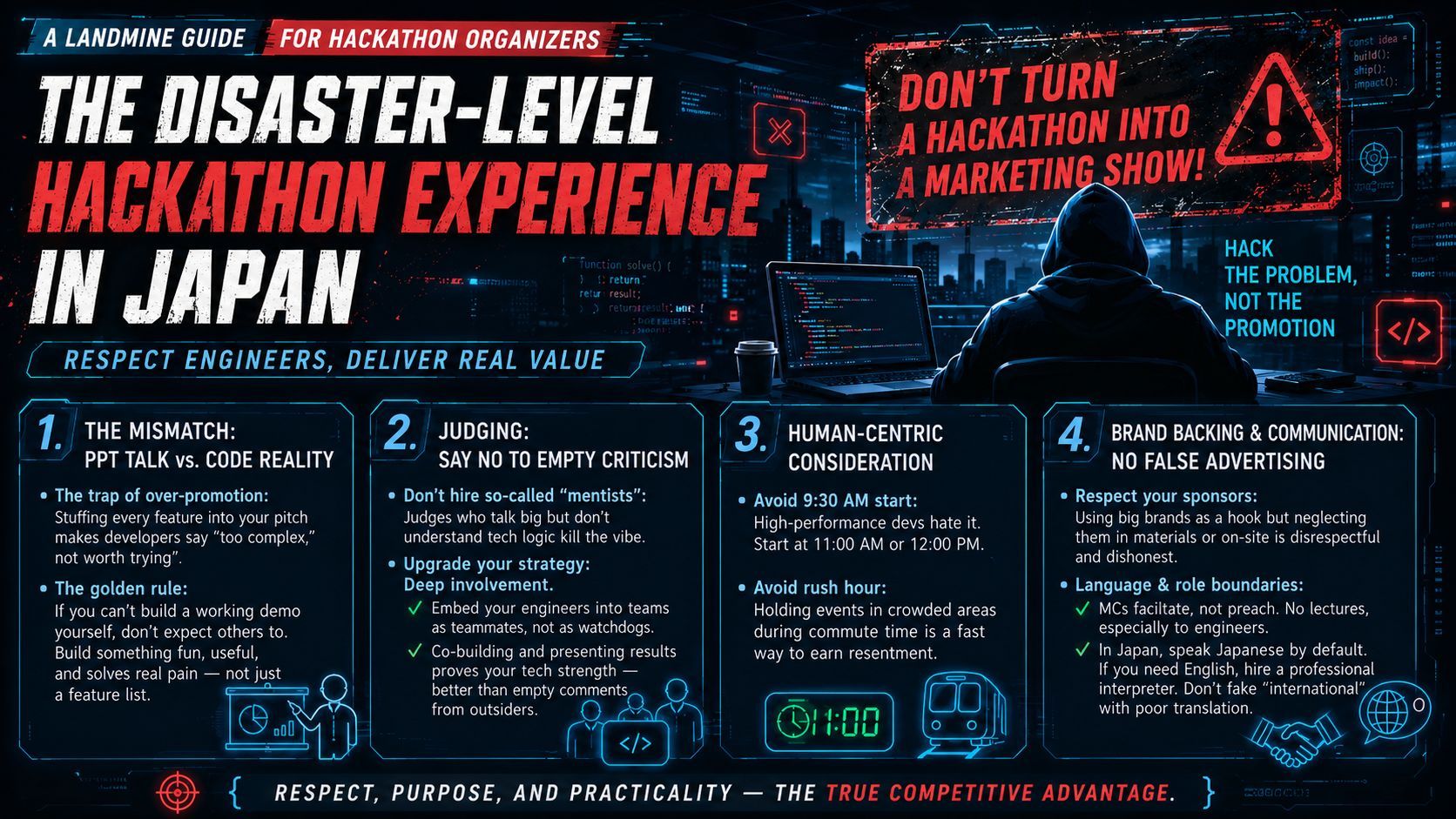
Reflecting on a recent "disastrous" hackathon experience, this guide offers actionable advice for organizers to avoid common pitfalls. The post critiques issues such as over-marketing, unqualified judges, poor scheduling, and communication breakdowns that alienate participants. It emphasizes that the core of a hackathon is technical exchange and value creation, not a promotional show. Respect for engineers and their workflows is presented as the most essential element for successful, high-quality events.
Beyond Silicon Valley's AI boom, the Japanese market stands out. The AI industry is fundamentally reliant on physical "foundational materials"—wafers, manufacturing equipment, and advanced packaging. This article analyzes, from an engineering perspective, why Japanese firms have become essential, bottleneck-defying nodes in the global semiconductor supply chain, securing a formidable economic moat in the age of AI.
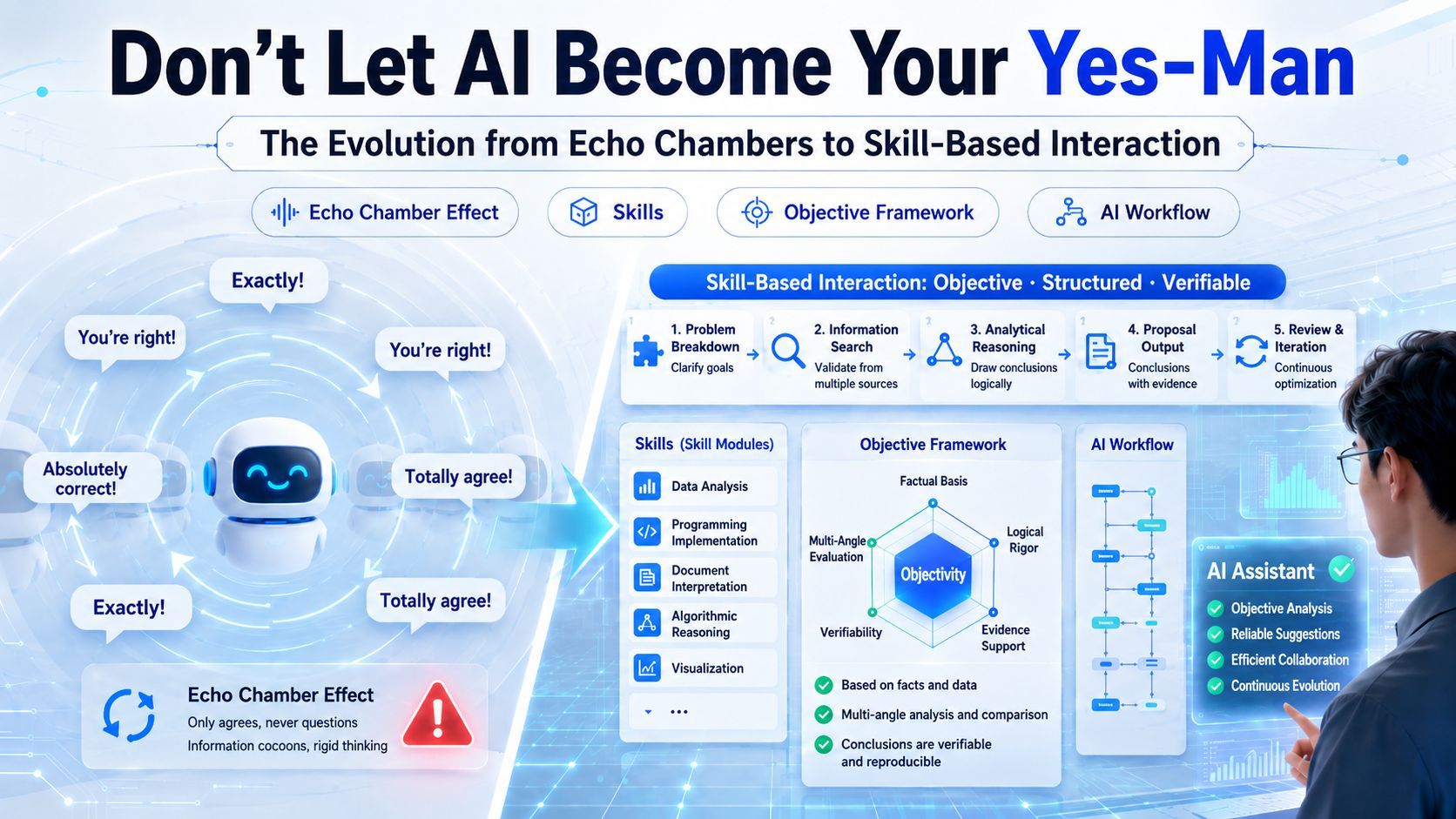
If you ask your AI, "Is this plan perfect?" and receive an enthusiastic "Yes!", you may be trapped in an echo chamber. AI models often prioritize user sentiment over objective analysis, reflecting user biases back as truth. This article explores the dilemma of "obedient AI" and advocates for a structural shift: moving from conversational prompts to "Skill" mechanisms. By integrating predefined logic and objective knowledge bases, engineers can transform AI from a compliant chatbot into a robust partner capable of challenging biases and providing objective, data-driven decision support.
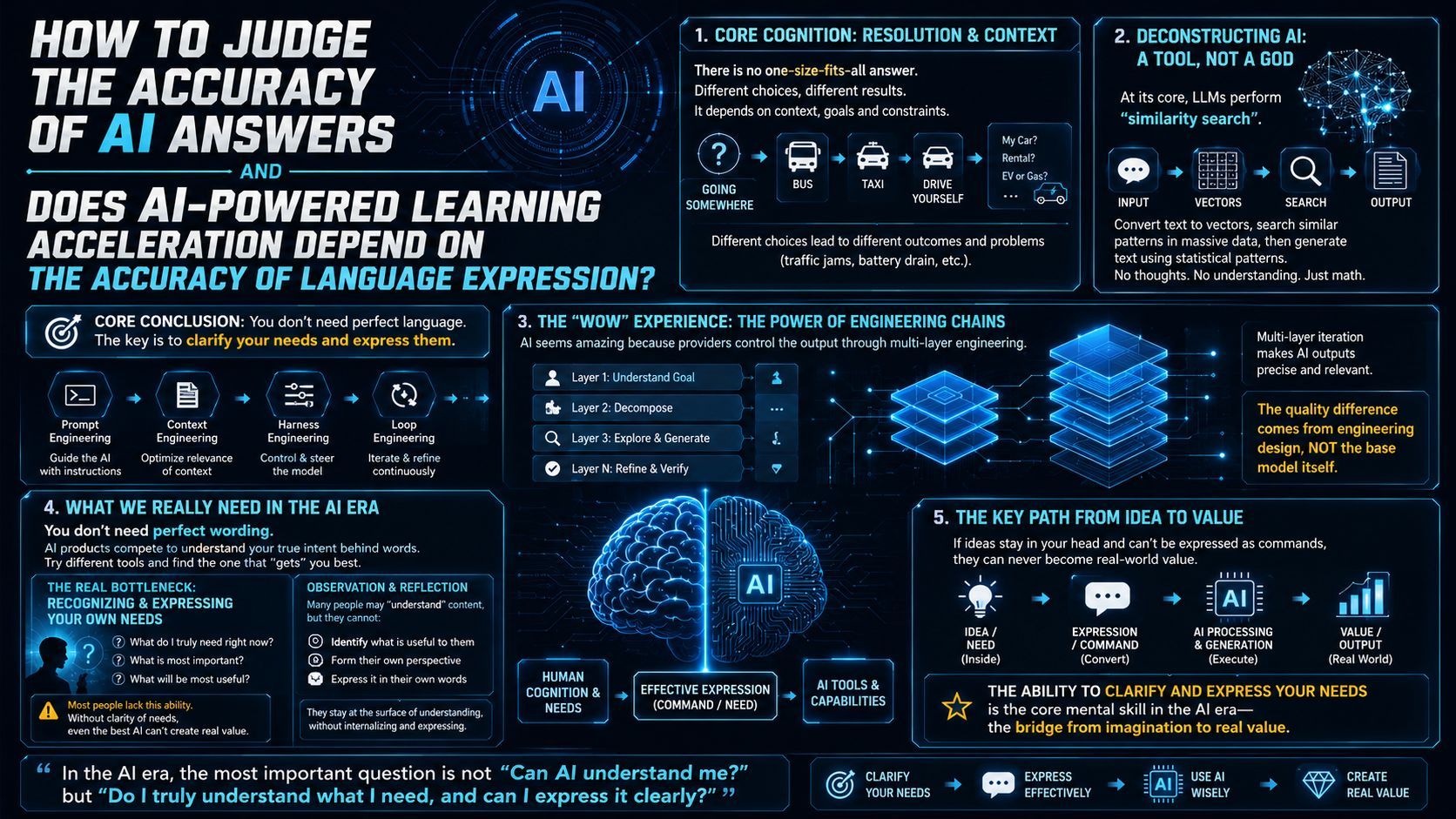
How should we judge the correctness of AI answers, and how can humans best interact with AI? This article explains the underlying technical mechanism of AI—"similarity searching"—and the vital role of the "engineering chain" constructed by service providers. It argues that in the AI era, rather than obsessing over flawless prompts, the ability to clearly recognize and articulate what you truly need is the core skill required to unlock real value from AI.